
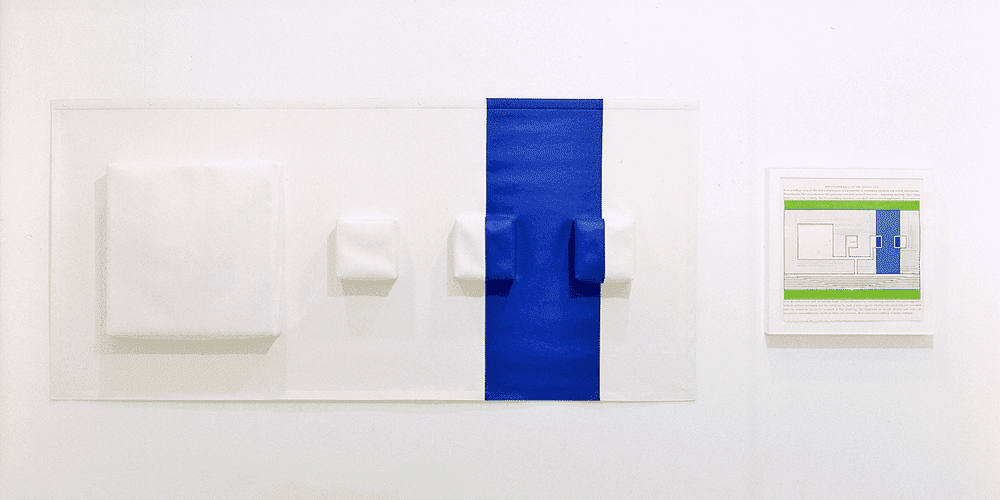
Other artist initiatives before Store 5 ostensibly grew from radical 1970s and early 1980s activism, where artists collaborated to stand for their rights (e.g. artists’ fees) and, thereby, contemporary art. Pre-ordained definitions of art were questioned as well as the politics of inclusion and exclusion in public programs (e.g. the exclusion of women artists). By so doing, these artists furnished a better art world that many of us younger artists lazily lounged in a little, perhaps, too unthankfully.
Archives: Events
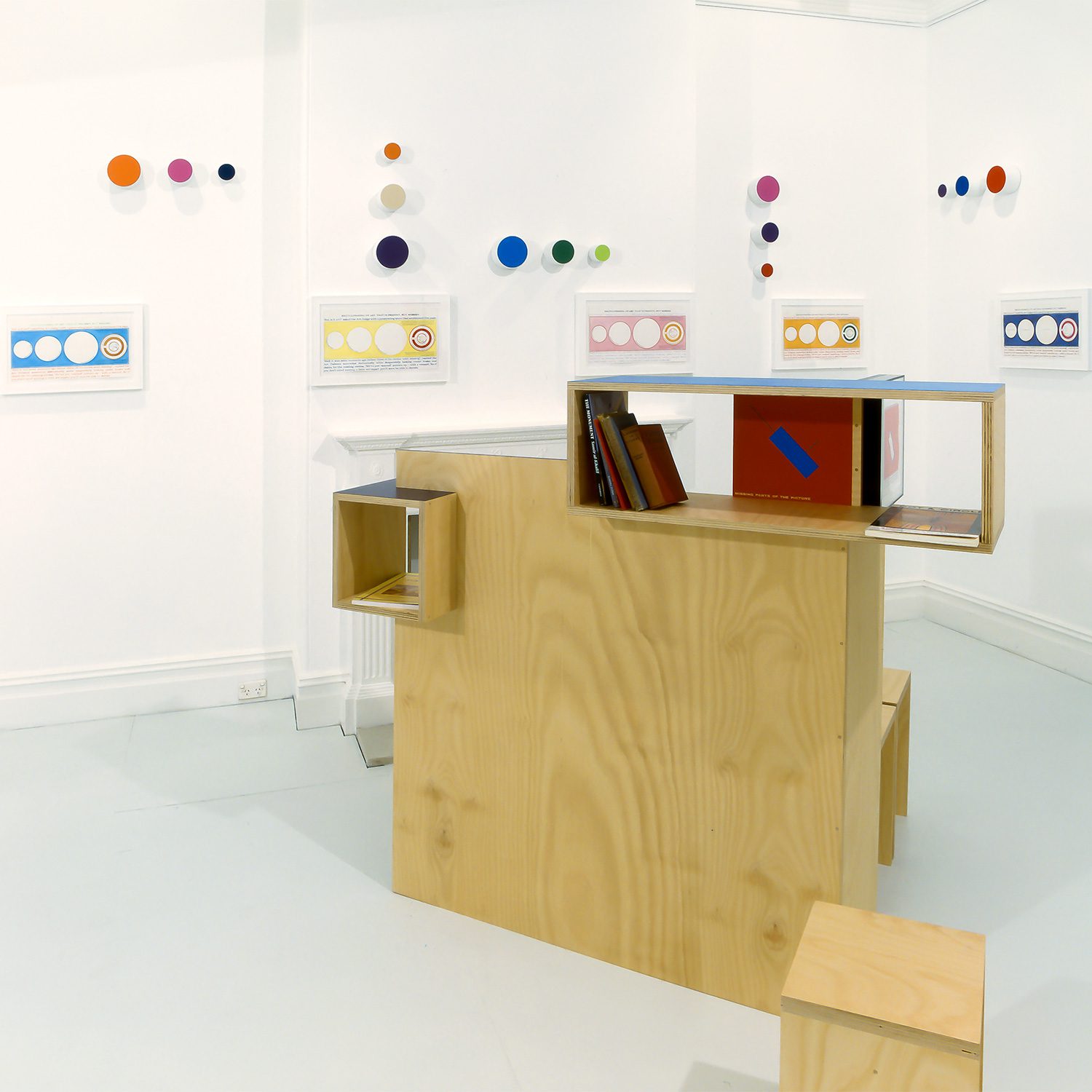
But is it art?
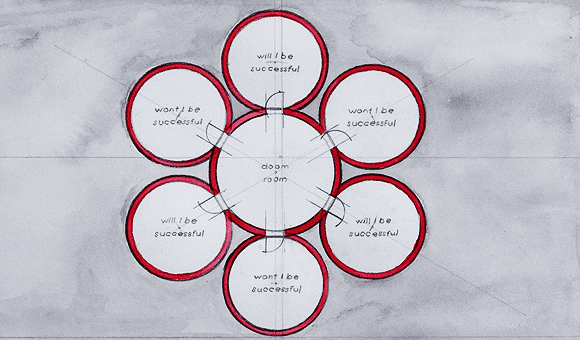
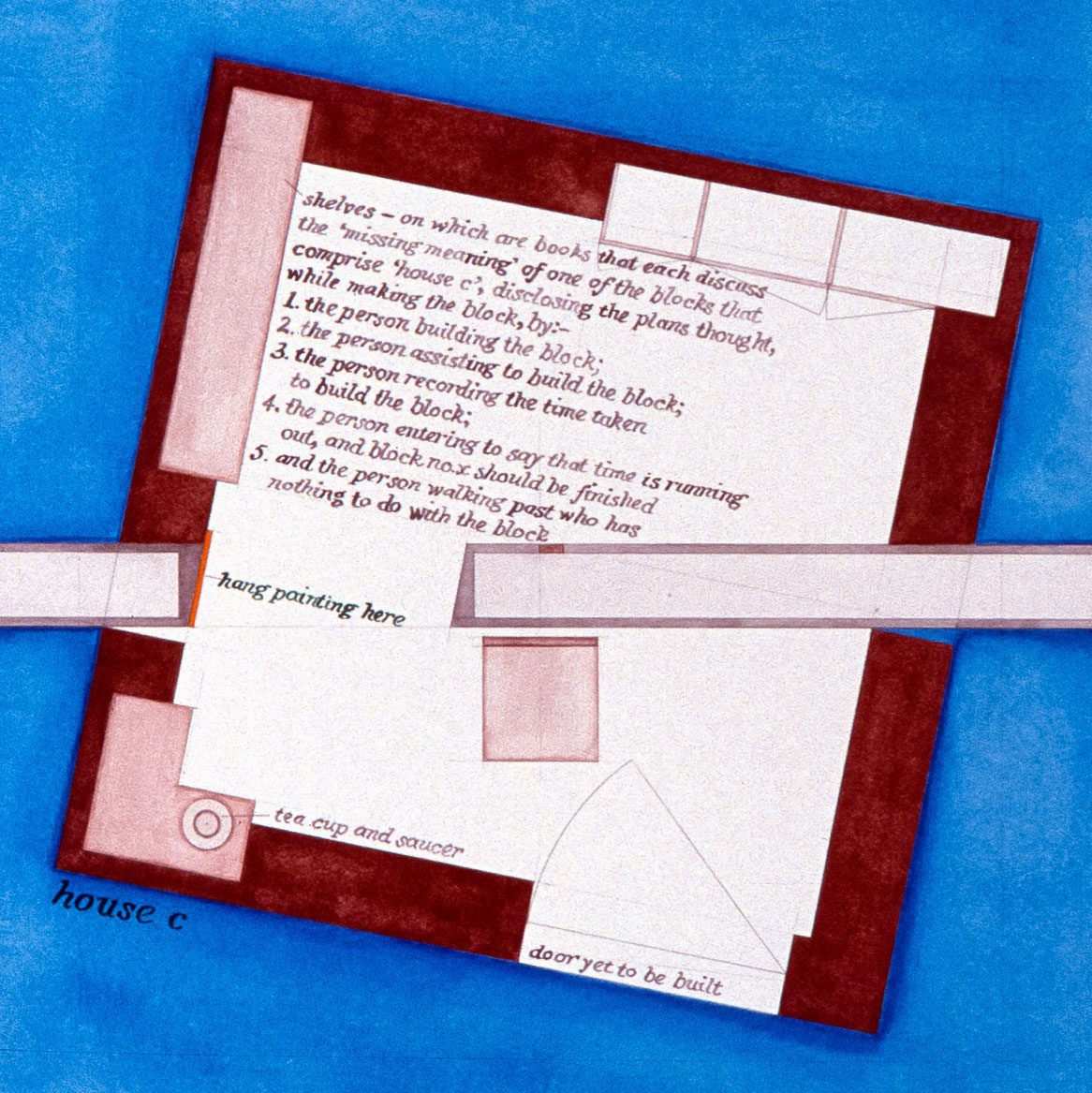
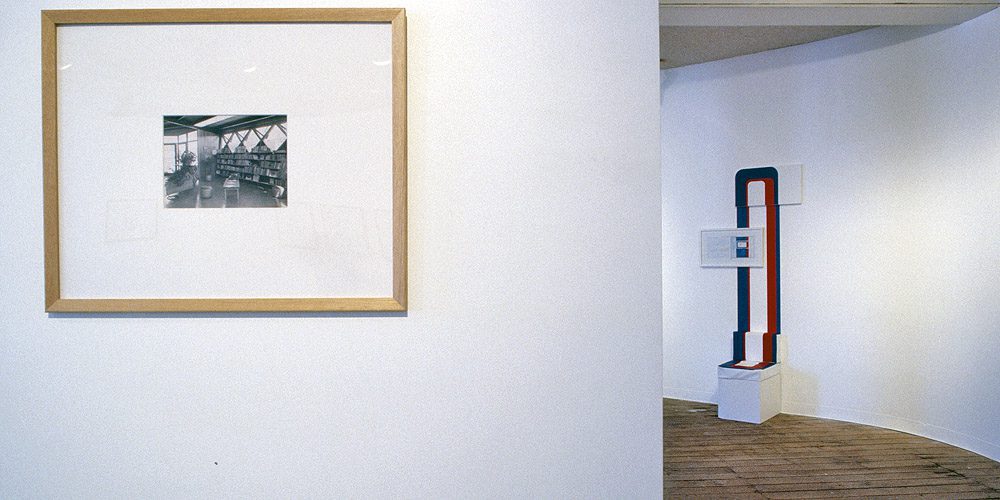
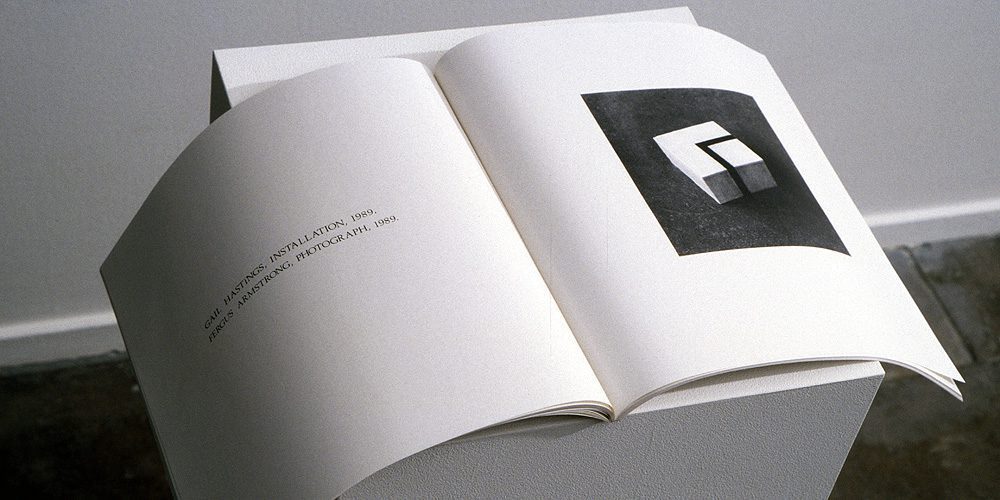
As in a detective story, or the scene of a crime, everything is primed or poised for meaning. That corridor to the library and that picture on the wall: everything in the mystery seems chosen, asking us why it is there. Everyone becomes a suspect. We bring our private eyes along and take partial views of the whole. In the meantime we interview eyewitnesses, flick through art catalogues, and try to second-guess the spooks. It’s an environment of suspicion, and we have to read between the lines. It’s a bit like our current political situation, a culture of duplicity … . Along the way Hastings calls our attention to art. To the status of the art object as material and on our own processes of production and reception.
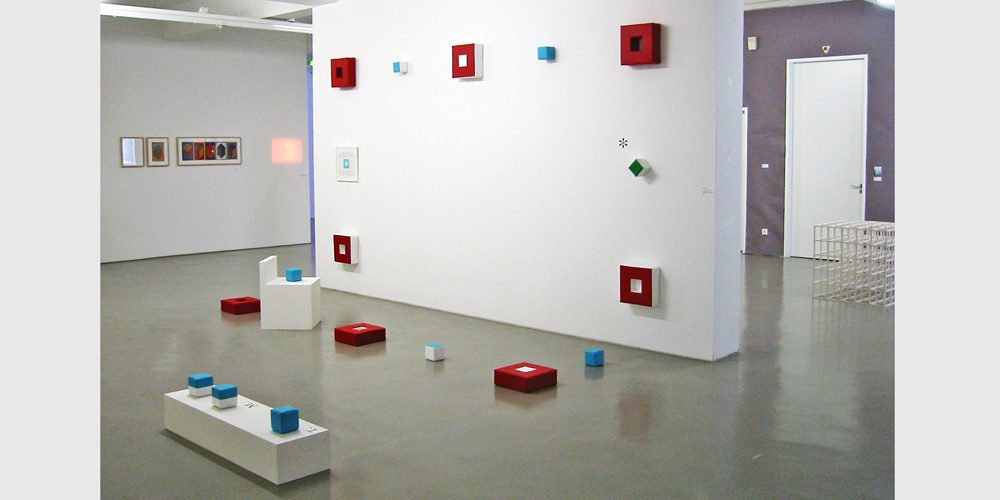
Kunst Nach Kunst / Art After Art
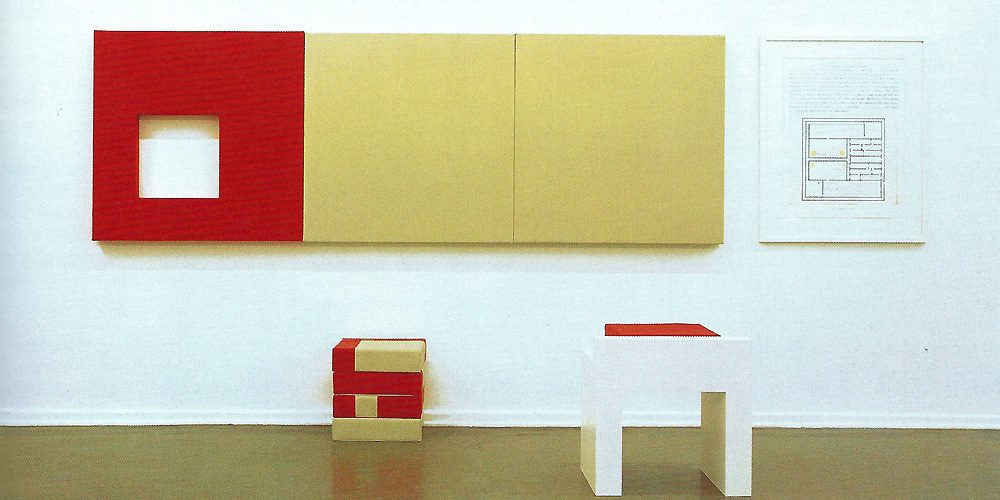
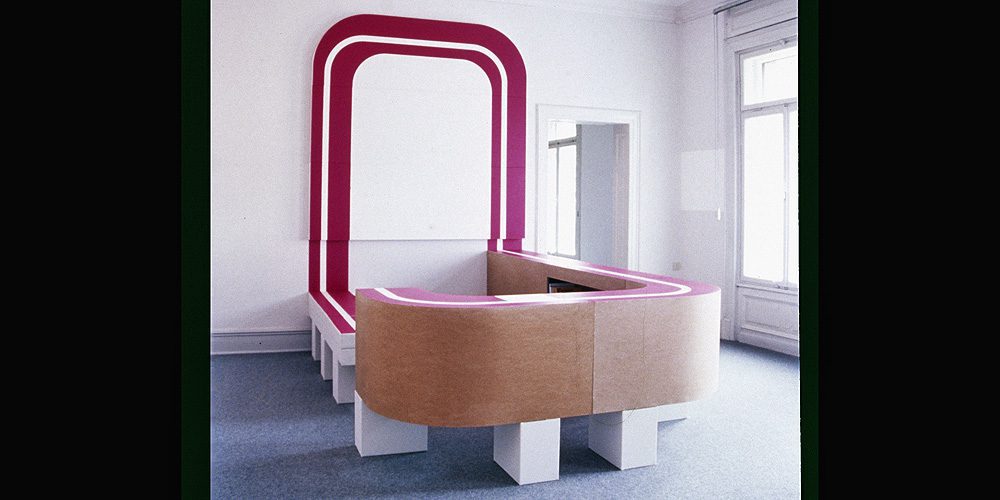
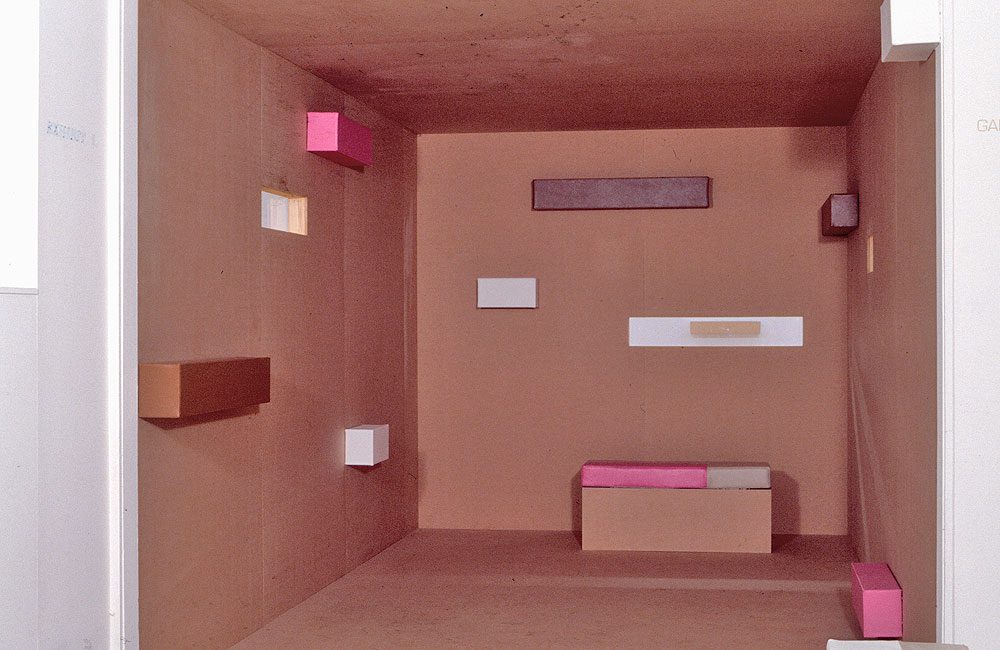
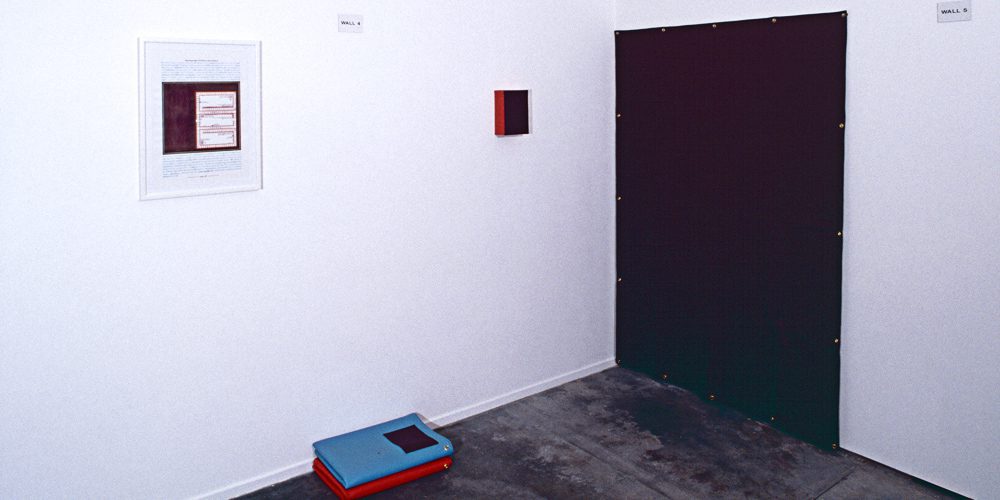
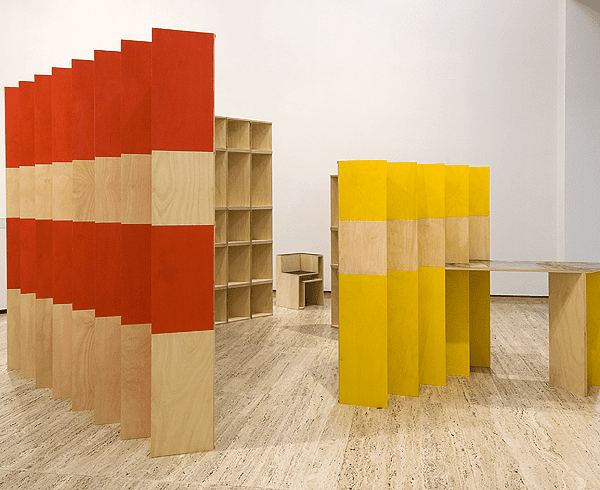
Simple geometric patterns with a coloration [of] clearly defined contours characterize Gail Hastings’ work. The proximity to Minimal Art is unmistakable [as] a conceptual interface of her works. … The title, “To complete a work of contemporary art” (1997), already indicates a direct reference to an apparently ‘unfinished’ contemporary art. This reference must be formally seen as playing with geometric arrangements that can be categorised somewhere between those of LeWitt and those of Hastings. The viewer might feel as if he or she were asked to complete the individual parts or fragments, which Minimal Art, for example, has left behind, so as to form a whole.
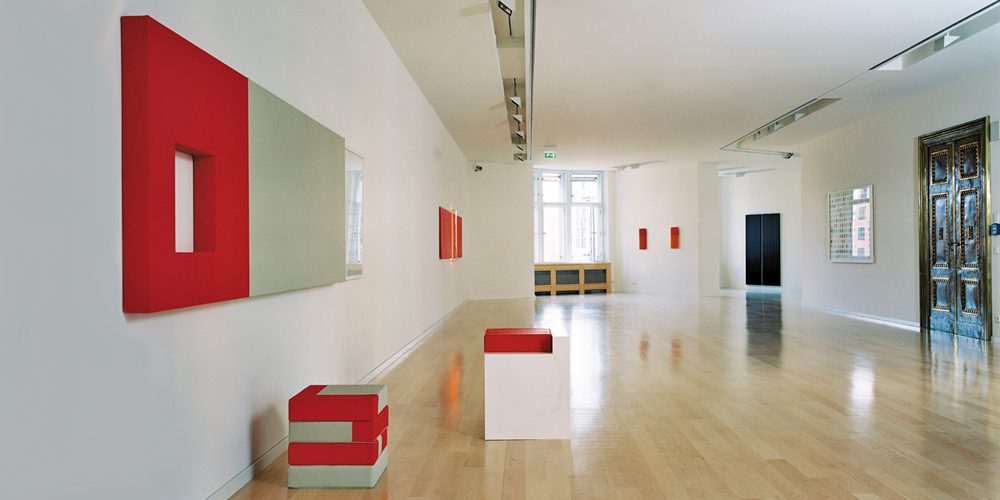
October 2001 / Geometrical Affairs
The Daimler Art Collection focuses on geometrical and abstract concepts in 20th century art, and shows how these ideas are developing on the contemporary art scene world-wide.
The Geometrical Affairs exhibition includes selected works spanning six decades, starting with classical pictures by artists like Josef Albers or Adolf Fleischmann and ending up with “Sculptural Situations” by the young Australian artist Gail Hastings. It also juxtaposes essentially black-and-white serial painting and object art with pictorial ensembles ablaze with color and vitality. This selection of works shows that conceptual, minimalist and constructive questions can interact in very exciting ways, and that strong ideologies can lose some of their force when faced with an opposite view stated in visual form.
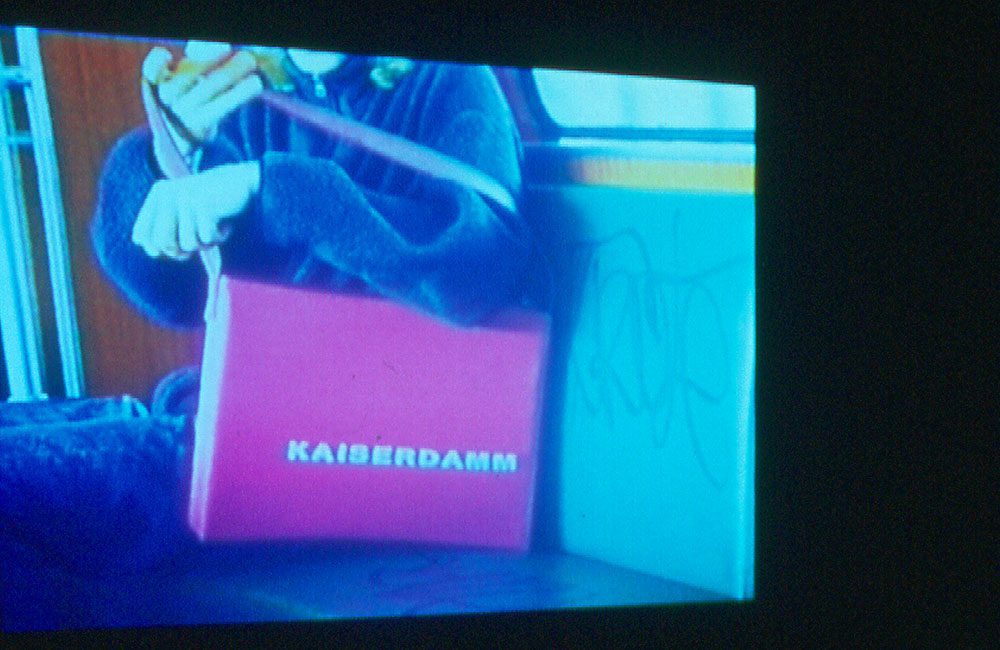
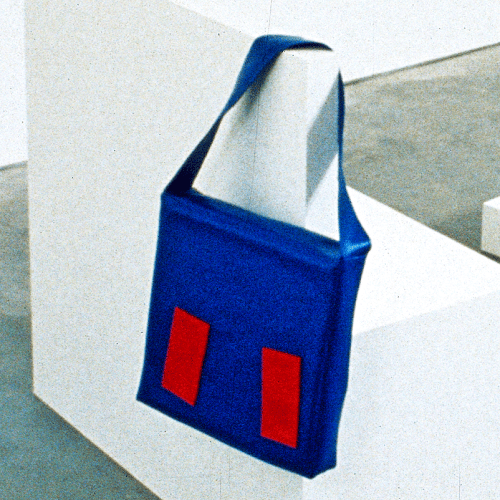
mission: untitled (blue)
It used to be said of experimental art that it didn’t really need an audience to view it…. Experimentation for its own sake was to be sufficient … Of course this was before — or despite — some people reckoning that the value of art was actually something produced in the exchange between artists and audience, in between the work being made and being received. So, they argued, there really isn’t a work until that happens, since the work of art is that happening. … Gail Hastings’ work frames similar questions … or really, as she says it ‘sets a scene’ — for generating a kind of self-consciousness about looking at art …
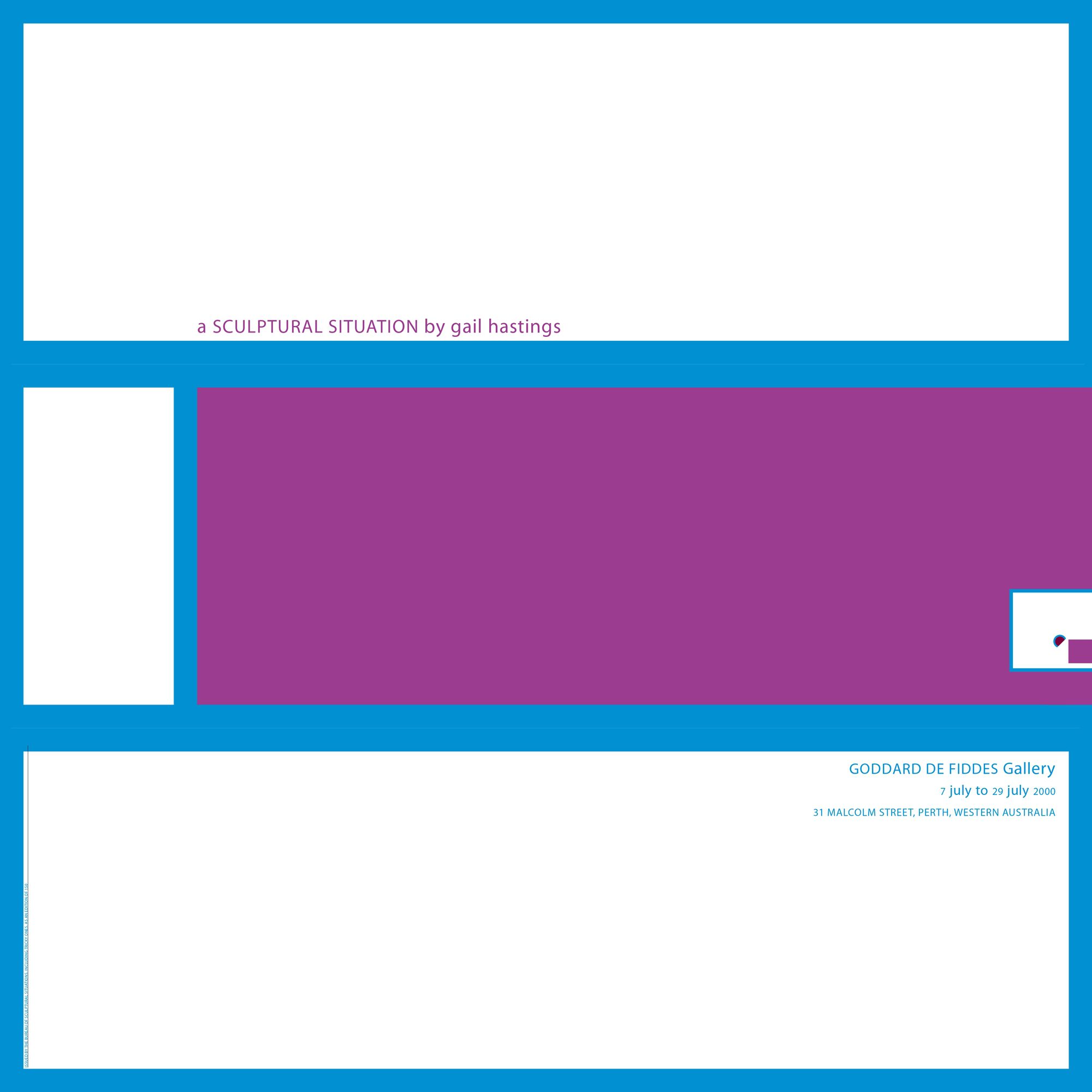
Gail Hastings: Sculptural Situation 1989–2000
Included sculptuations:
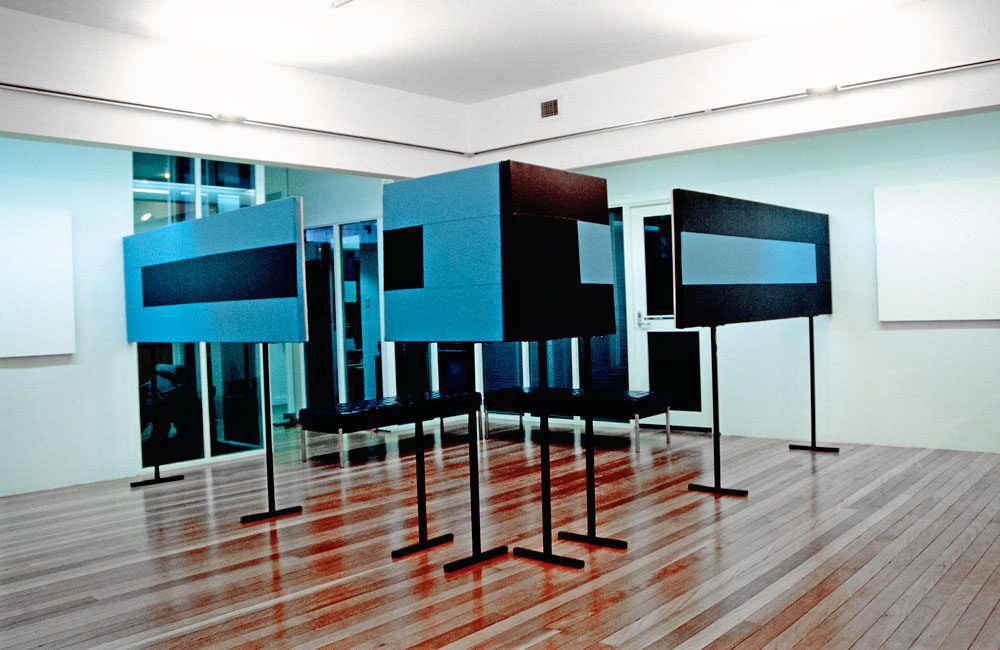
a sculptural situation to enter, and to leave, 2000
a sculptural situation, drawn in, 2000
a sculptural situation’s architectonic colour-space, 2000
Encyclopaedia of possibilities: Mon 14.9.95, 1995
magazine – mission: untitled (blue), 1999
Movie directions for secret agents, 1994
pattern book five, 1996
poster: a sculptural situation (drawn in), 2000
stare two, 1997
untitled (with kitten), 1989
untitled (with magazine), 1989
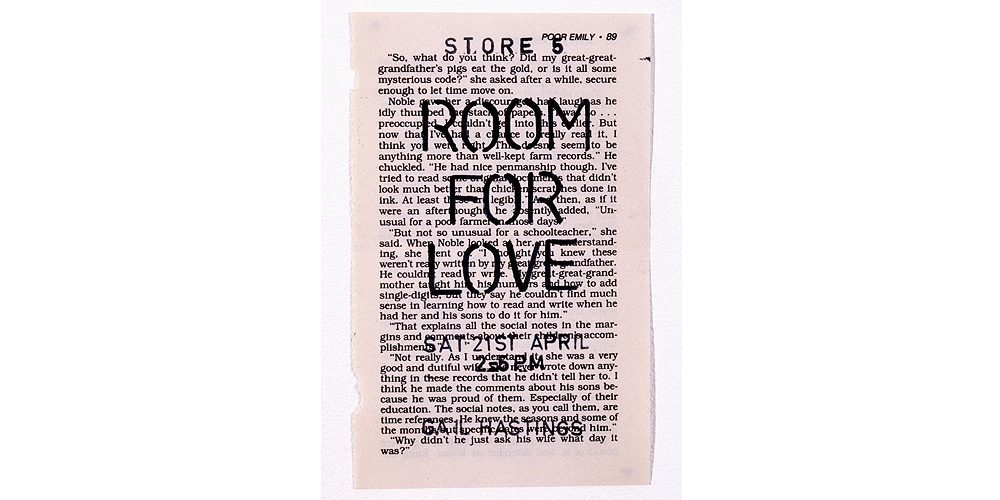
Open House
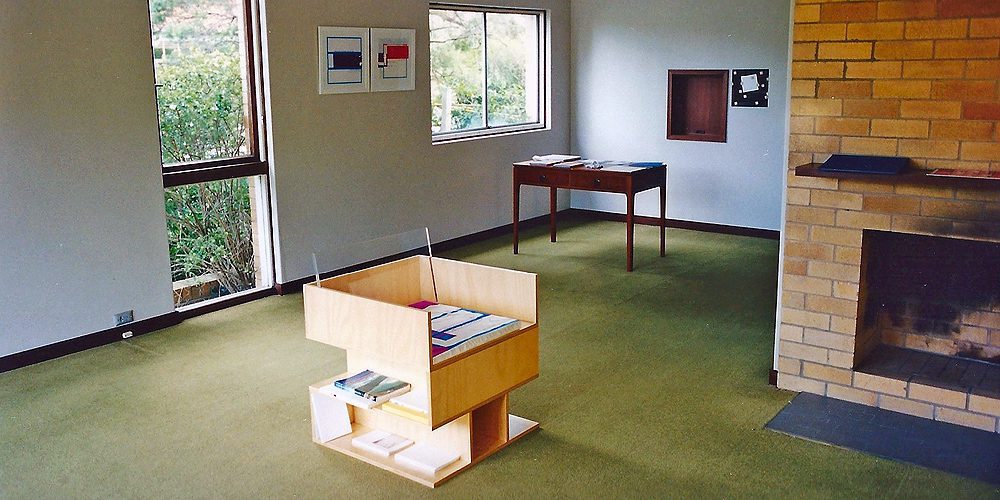
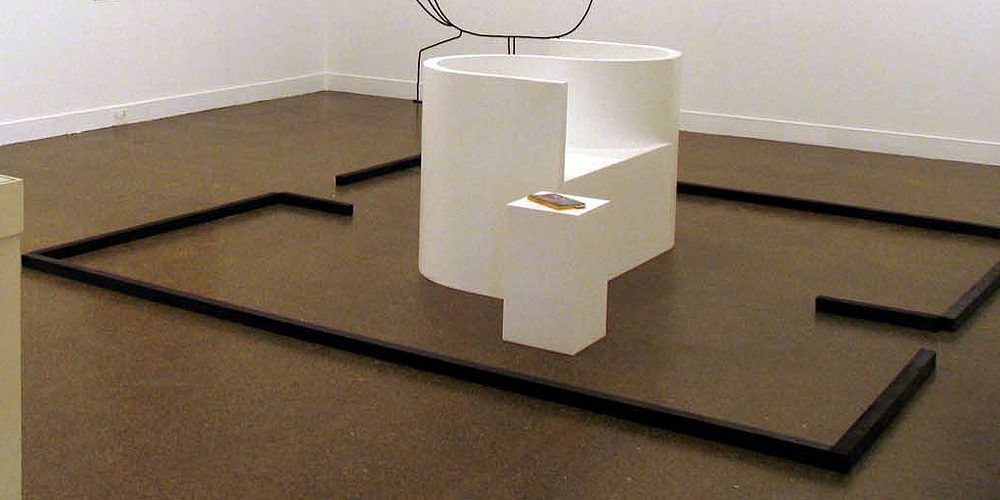
A different example of such temporal-spatial puzzles is found in Room for love 1990, which contains a conversational or ‘tête-à-tête’ chair, an S-shaped two-seater sofa, sometimes called a ‘love chair’. In such a chair, two people sit in close proximity facing in opposite directions, although they can also converse face-to-face. For Hastings, the analogy alludes to the often-fraught dynamics of social interaction as well as to the reception of art: ‘the chair was intended as a conversation with oneself when one looks at a work of art – where two opposing views are struck – literally –while there is also this third, reconciliatory view of turning halfway toward the oppositeview’.1
The analogy is highly suggestive. For instance, this piece of writing aims to explicate the work for a reader who may have already experienced it, but like the ‘tête-à-tête’ chair it aims to turn the viewer around again to face the work, although differently. It may even extend the understanding of the work beyond conceptions ordinarily entertained by the artist. The analogy also recalls the puzzled status of art in the wake of post-minimalist art, which prompts questions such as: what is the ordinary, quotidian object and what is the artwork? What does it do? As the art historian Thierry de Duve notes of the minimalists, ‘far from freeing themselves “from the increasing ascetic geometry of pure painting”, the minimalists claimed it and projected it into real space’.2 This is what Hastings does, except that she stage-manages this extended state of puzzlement over the status of art.
1. Gail Hastings, private communication with author.
2. Thierry de Duve, Kant after Duchamp, MIT Press, Cambridge, MA 1996, p 218.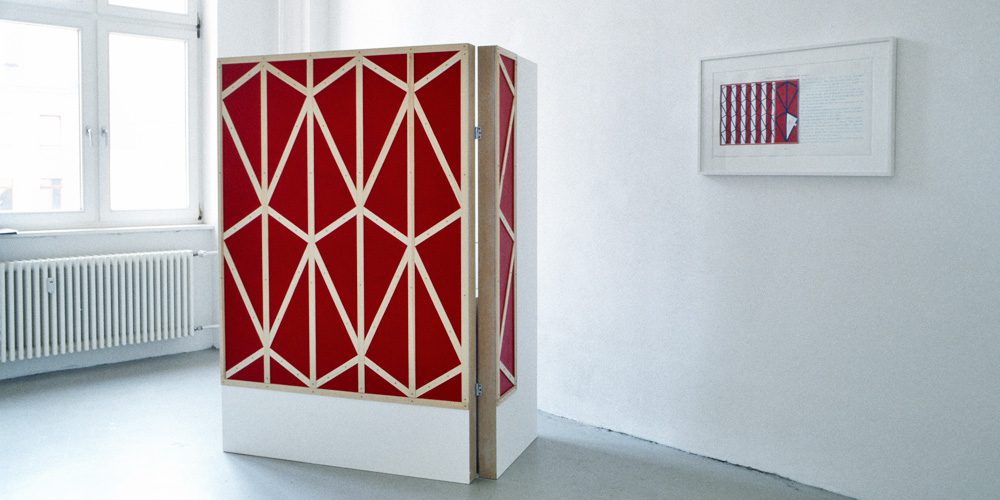
apparently not
The Director said, ‘action’, he acted, he said ‘apparently not’, then the Director said, ‘cut’.
This ‘take’ was done 10 times. Then, at night for ten nights, he dreamt each take in detail.
One take was selected and the movie completed.
For ten weeks the movie was shown at the movie house in his nome town. For ten weeks the movie was then shown in ten other towns.
He counted the times that is one appearance on film was repeated.
He likened the repetition to a patter, a lattice, in which was meshed all of the unfixed moments of his days and nights.
Feeling alienated by the pattern’s netting effect, its reduction, he spoke to a finer. The friend advised he treat the pattern as a fabric that he could fold this way or that. He folded his fabric and left it behind the red patterned screen while he appeared in 10 more movies.
He wondered if anyone noticed, then happily said to himself, ‘apparently not’.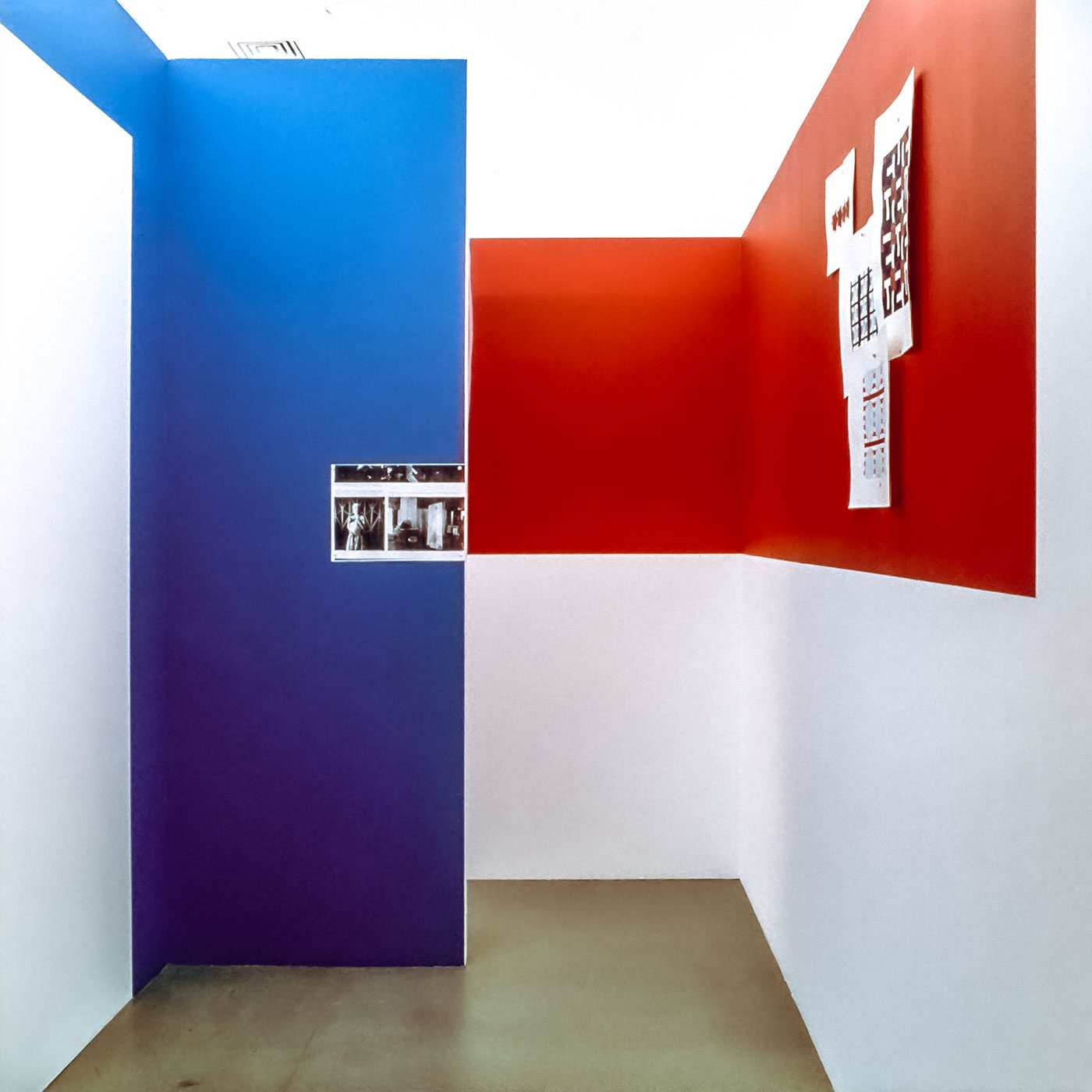
art idea no. 8,582,048
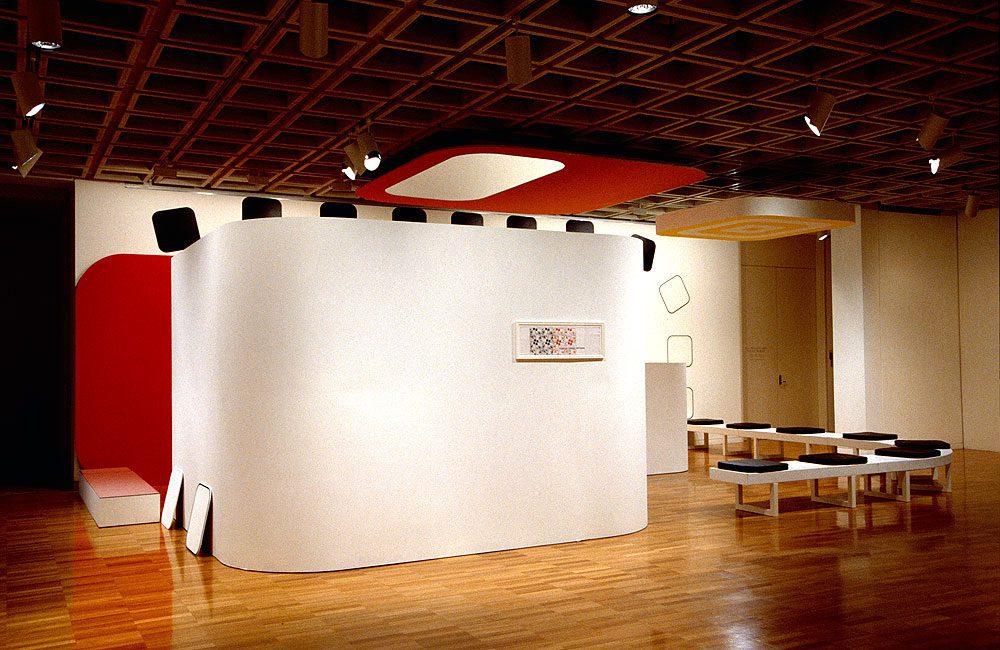
Hastings takes up artistic idioms and presentational forms of conceptual art and charges them sensually. She combines conceptual strategies with the language and aesthetics of action-related, factual texts … and stages these through the employment of a markedly material aesthetics. Her art opens up a dialogue on the origins, significance and function of ‘works’ and hands over the responsibility for the open ‘product’ of reflection and action to the viewer.
For her most recent work … [t]wo square white seats, formally referring to the classical works of Minimal Art, are positioned so that viewers see each other through the missing centre of the object. … One of the patterns is repeated in an accompanying photocopy as the fabric of a dress worn by the artist Varvara Stepanova, a protagonist of the Russian avant-garde whose textile designs, typographical sketches and spatial constructions were among the pioneering achievements of her time.
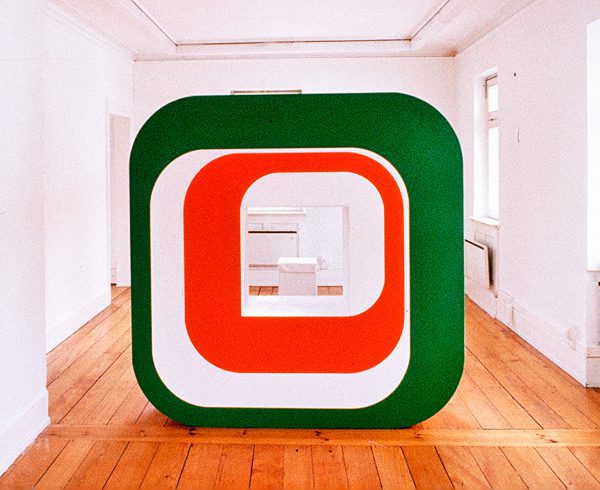
art idea no. 8,582,048
Hastings takes up artistic idioms and presentational forms of conceptual art and charges them sensually. She combines conceptual strategies with the language and aesthetics of action-related, factual texts … and stages these through the employment of a markedly material aesthetics. Her art opens up a dialogue on the origins, significance and function of ‘works’ and hands over the responsibility for the open ‘product’ of reflection and action to the viewer.
For her most recent work … [t]wo square white seats, formally referring to the classical works of Minimal Art, are positioned so that viewers see each other through the missing centre of the object. … One of the patterns is repeated in an accompanying photocopy as the fabric of a dress worn by the artist Varvara Stepanova, a protagonist of the Russian avant-garde whose textile designs, typographical sketches and spatial constructions were among the pioneering achievements of her time.
Moët & Chandon Australian Art Foundation Touring Exhibition 1998
Moët & Chandon Australian Art Foundation : touring exhibition 1998
Moët & Chandon Australian Art Foundation Touring Exhibition 1998
Moët & Chandon Australian Art Foundation : touring exhibition 1998

Australia Council Künstlerhaus Bethanien studio residency
The history of the Künstlerhaus Bethanien as well as its trademark name are closely linked to the building it occupied on Mariannenplatz in Kreuzberg, the so-called “Central Deaconess Institute and Hospital Bethanien” (Central-Diakonissenanstalt und Krankenhaus Bethanien) commissioned by King Frederic William IV of Prussia in the mid-19th century. “Bethanien” was then a common name for welfare and healthcare facilities, most of which were run by church organisations, as it evoked the Biblical town in which Jesus raised Lazarus from the dead.
In 1974 the defunct hospital was scheduled for demolition, but the opposition of political interest groups sharpened public awareness for the building’s history, thereby paving the way for preservationists to propose a series of redevelopment plans. Among them was Dr Michael Haerdter, the founding director of the Künstlerhaus Bethanien GmbH and its managing director until 2000. Under his leadership the institution grew into an internationally renowned project and presentation platform for contemporary art.
Moët & Chandon Australian Art Foundation Touring Exhibition 1998
Moët & Chandon Australian Art Foundation : touring exhibition 1998