Event Type: Exhibition
-
Redlands Konica Minolta Art Prize
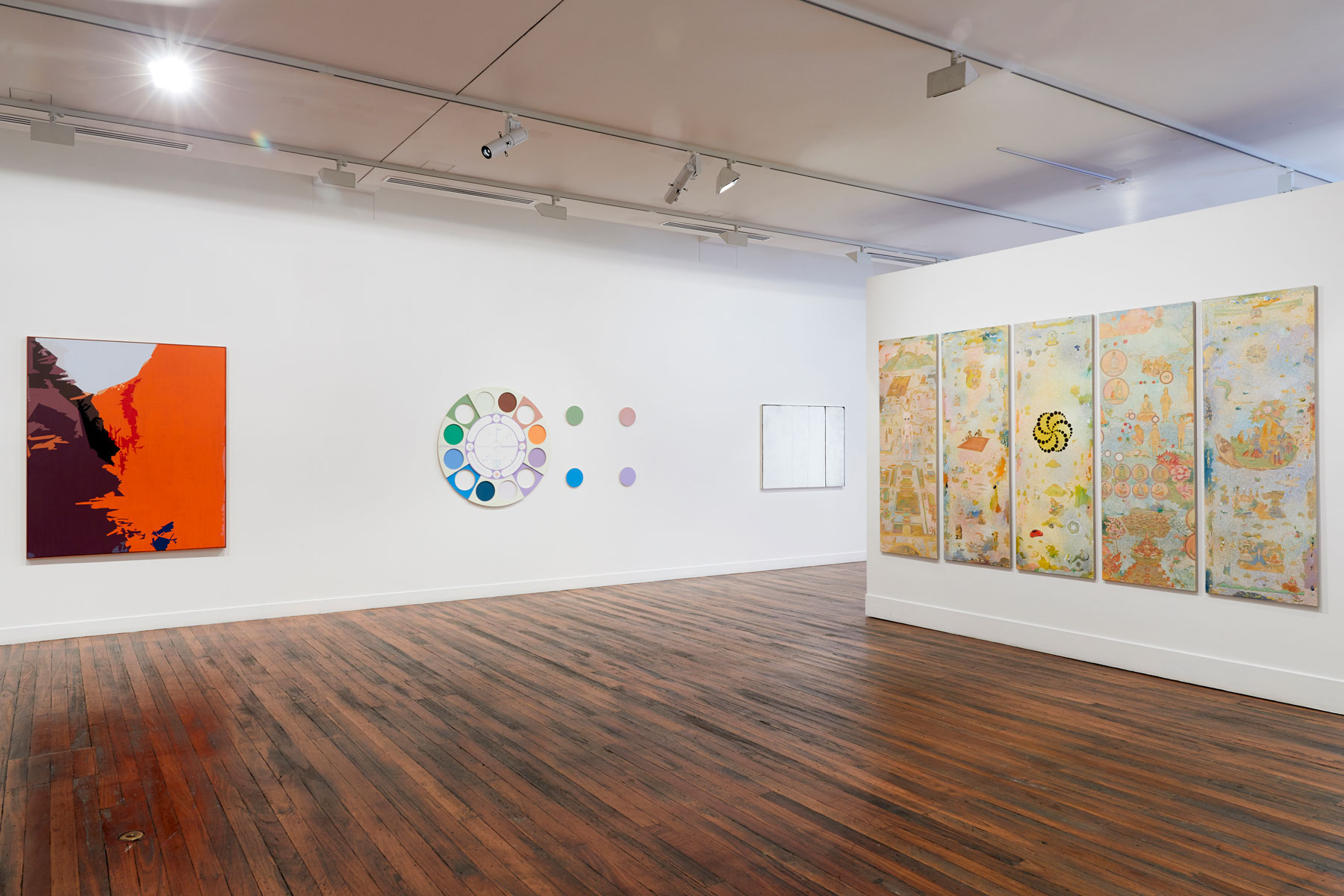
The 2018 Redlands Konica Minolta Art Prize was today awarded to Melbourne-based artist Gail Hastings and Sydney-based emerging artist Adrian McDonald. Celebrating its 22nd year, the Prize is among Australia’s best-known art awards, spanning all mediums and offering a total of $36,000 in prize money. Hastings was awarded the established artist category ($25,000) for colour circle: four colour scheme for a room (2018) and McDonald was awarded the emerging artist category ($10,000) for Approximating a Circle (2018).
-
9 X 5 NOW Exhibition: ART150
9 X 5 NOW, at the Margaret Lawrence Gallery, Melbourne, 16–25 June, showcases generations of practicing artists who have studied or taught at the National Gallery School or VCA Art. The most experienced artist represented attended the National Gallery School in the 1940s, and the youngest completed studies at the Victorian College of the Arts just one year ago.
The exhibition title and concept references the famous 9 by 5 Impression Exhibition held at the Buxton Rooms, Swanston Street Melbourne in 1889. All seven artists in that exhibition, Tom Roberts, Arthur Streeton, Frederick McCubbin, Charles Conder, C. Douglas Richardson, R.E. Falls and Herbert Daly, were National Gallery School alumni. McCubbin was also a staff member and Louis Abrahams, also a former student, supplied the 9 x 5 inch cedar cigar box lids on which the works were painted.
-
Taking it all away: MCA collection
Exhibition curatorial
Natasha Bullock
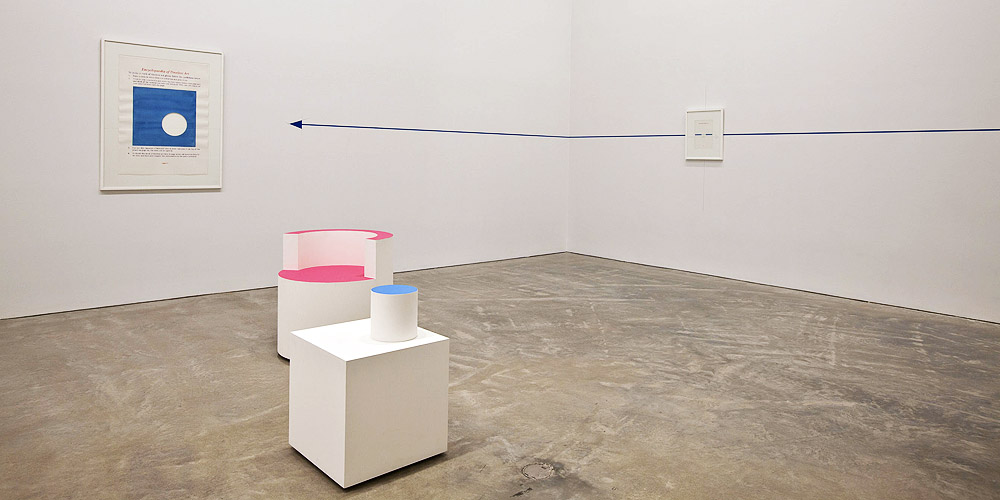
Taking it all away [is] an exhibition of works drawn from the collection of the Museum of Contemporary Art Australia.
Diverse in form and character, the works in Taking it all away set the dynamics of space and time against the complexities of modern existence. Together, these works speak to the importance of art history and to the vigorous, evolving nature of contemporary art.
The Museum of Contemporary Art Australia dedicates this exhibition to the memory of artists Gordon Bennett and Robert Hunter, who sadly passed away during its development.
Natasha Bullock, curator, 2015
-
Exhibition: To Do
A review
by Chloé Wolifson
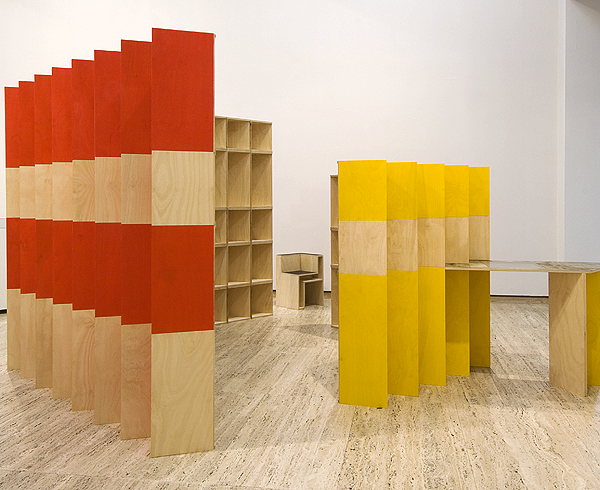
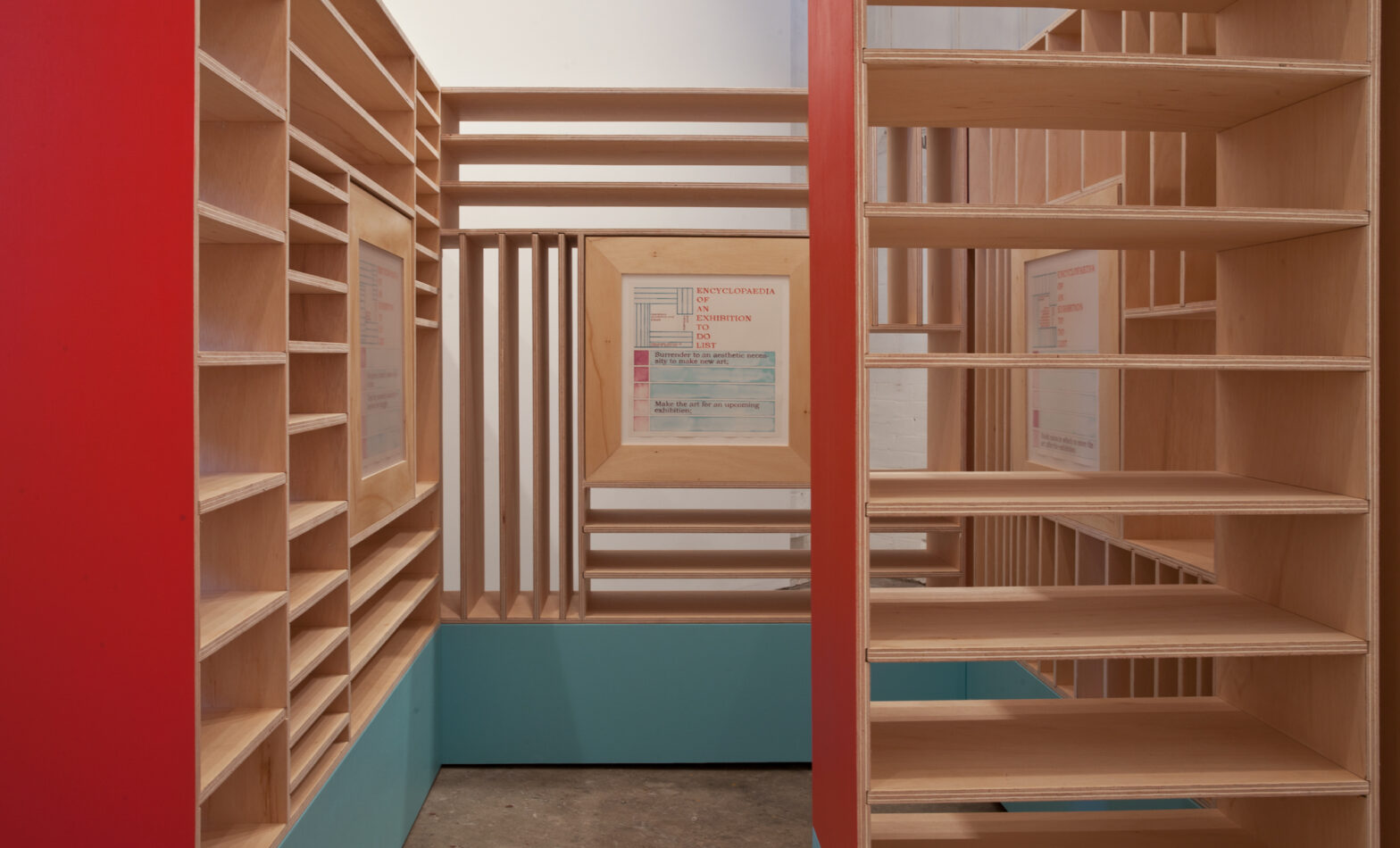
Gail Hastings’ major new work Exhibition: To Do is anchored around a large square plywood structure that sits on the earth’s axis – the walls respectively facing north, south, east and west.
The visitor is invited to enter the structure, also entitled Exhibition: To Do, via an opening in its eastern wall. This has the effect of placing the viewer at the centre of Hastings’ universe. The surrounding construction is an assemblage of partitions of varying height, which expand incrementally and symmetrically on the pre-existing dimensions of the plywood (18 millimetres thick).
Only once standing inside the work, Exhibition: To Do, can the visitor view three works on paper created specifically to sit inside the structure. Hastings’ two-dimensional works appear to act as blueprints or drafts for the sculptural components of the artist’s practice, both in the sense of their execution but also their subject matter.
Delicately rendered in watercolour with ruled pencil lines emerging from the edges of the translucent wash, these pieces depict the To Do list in question. One such reminder, the instruction: ‘Build racks in which to store the art after the exhibition’, speaks volumes about the established systems of the art world, and the particular approach artists must take when they create work which sits outside the conventionally commercial.
Exhibition: To Do is grounded in an awareness of space. It is a show which, while rooted in existing patterns and geometries, maintains a sense of humanity and emotion within each ruled, sawed, sanded and watercoloured line.
Excerpt from Chloé Wolifson, ‘Gail Hastings – Exhibition: To Do’, in Deborah Stone (ed.), Visual Arts Hub: Reviews, 2014, http://visual.artshub.com.au/news-article/reviews/visual-arts/exhibition-to-do-243240, accessed 23 September 2016.

This project has been assisted by the Australian Government through the Australia Council, its arts funding and advisory body.
-
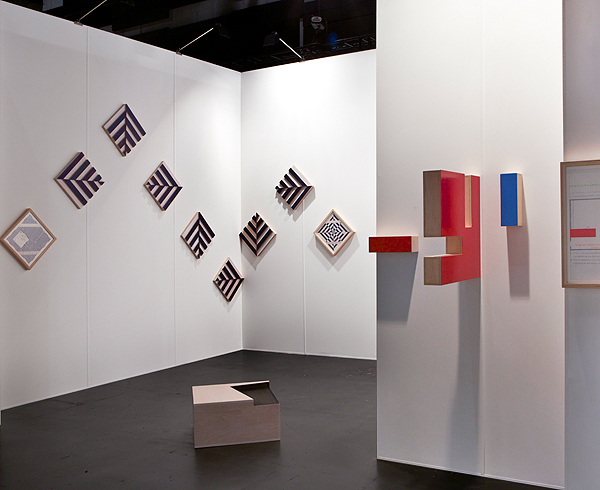
Sydney Contemporary 13
It is with great pleasure that The Commercial Gallery announces it now represents Gail Hastings and will present a solo exhibition of her work at the inaugural Sydney Contemporary art fair between 19 and 22 September at Carriageworks, Sydney (Booth PC102). It is exciting to be showing new work by this important mid-career Australian artist at what will be the first presentation for the gallery at an art fair.
Press Release: The Commercial Gallery
-
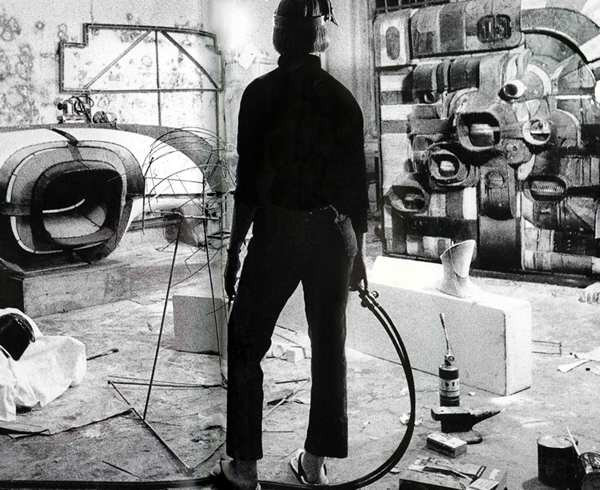
JANIS II
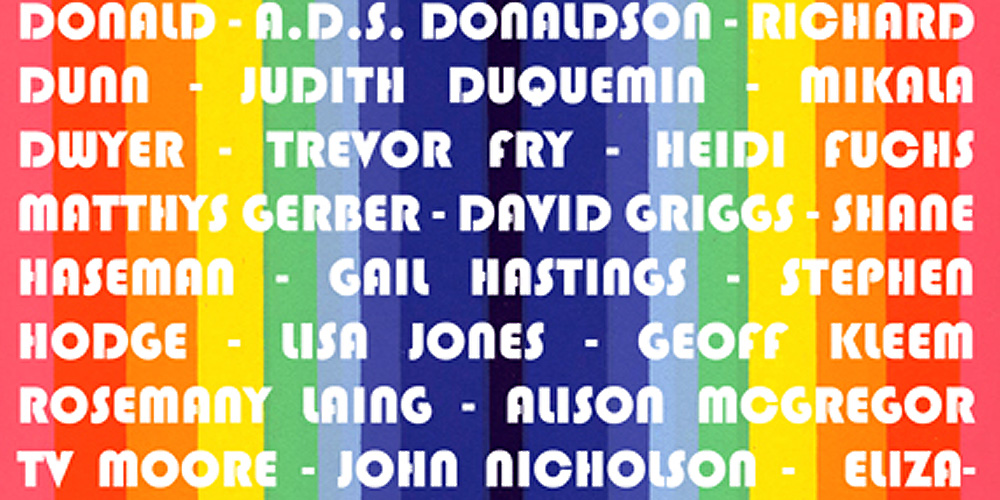
Janis encompasses a range of activities initiated by Kelly Doley (a member of Brown Council) focusing on female artists, writers and thinkers allowing them “to be heard a little louder, to take up more space and more time in the world” (website). She has teamed up with Amanda Rowell to curate the second Janis exhibition spanning two Sydney inner city galleries, The Commercial and MCLEMOI. Janis II features abstract, conceptual and minimalist work by Bonita Bub, Jenny Christmann, Sarah Goffman, Gail Hastings and Sarah Rodigari (who will be performing at the opening, 26 July). A publication featuring short pieces by an impressive list of female artists and thinkers will also accompany the exhibition. (For the amusing significance of the Lee Bontecou image read Gail Hastings’ insightful essay Thank goodness Donald Judd wasn’t a misogynist.)
by Virginia Baxter and Keith Gallasch, ‘In the loop July 24: quick picks‘, Realtime, issue 115, Sydney, June-July 2013.
-
Direct Democracy
Exhibition curatorial
by Geraldine Barlow
As Individuals we are capable, but so much more so when we act together. The collective body is a complex mechanism: a layering of systems, societies, generations, inheritances and innovations. Groups of human beings have developed numerous models to identify with each other, work together, build societies and exercise power. Democracy is just one of these; with a long history of development. […] How can we actively revitalise, rebuild and own this collective body? What is the place of democracy in the process and what opportunities are there for the development of existing and jew democratic mechanisms?
Direct Democracy explores these questions through the work of nineteen contemporary artists and artist collectives. […]
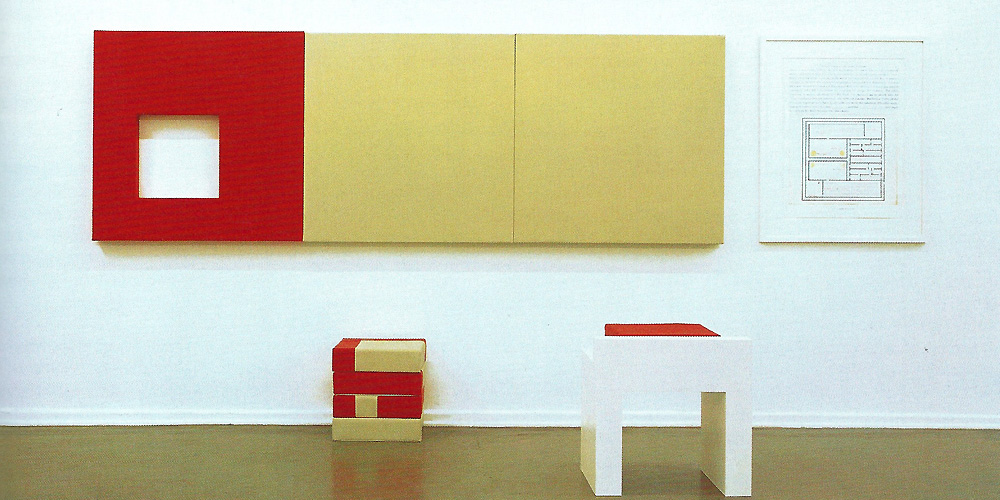
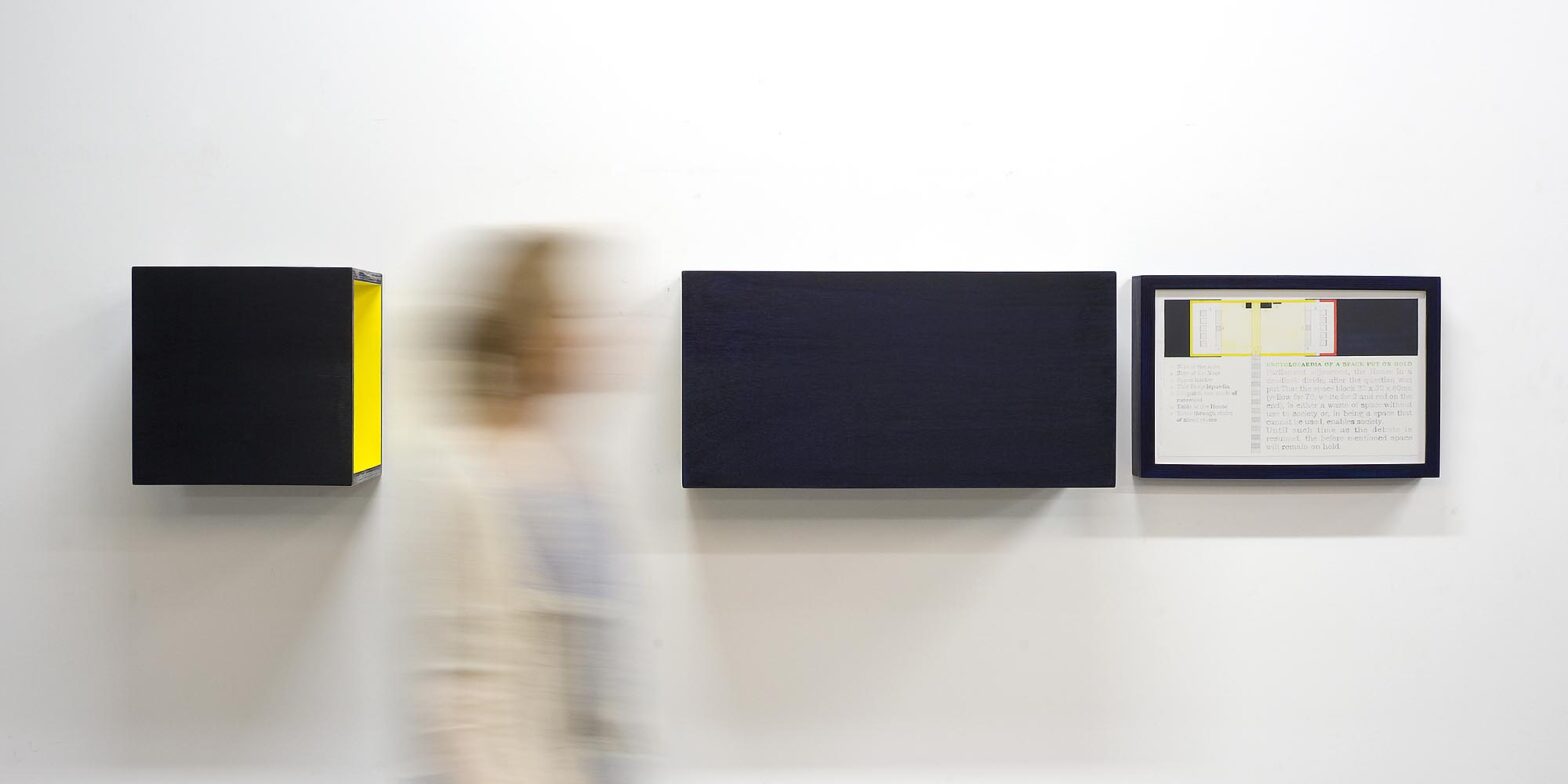
Gail Hastings offers an abstracted map of the ayes (yellow), the nos (in red) and a space in between in white, in her 2012 work Space holder for a yellow, white and red space. What is the purpose of this space in between? Hastings maps out a sculptural volume for each side of the proposition […] As Hastings’ work states, ‘Until such time as the debate is resumed, the before-mentioned space will remain on hold’.
Excerpt from Geraldine Barlow, ‘Direct Democracy’, in Geraldine Barlow (ed.), exhibition catalogue, Monash University Museum of Art, Melbourne 2013, p. 91, 98-98.
A review
by Suzanne Fraser
The modern development of a “good form of government”, as articulated by John Stuart Mill in the sixteenth century, finds contemporary articulation in an infinitely fascinating sculpture by Gail Hastings entitled Space holder for a yellow, white and red space (2012). Here the mechanisms of voting, competition, representation, and bureaucracy are lent an elegant and quietly humorous disposition that contorts the understanding of the viewer through ambiguity and metanarrative.
Excerpt from Suzanne Fraser, web review, Melbourne, 28/05/2013.
-
![Less is More: Minimal and Post-Minimal Art in Australia [withdrawal]](https://gailhastings.au/wp-content/uploads/2014/05/Less-is-More-page-91.jpg)
Less is More: Minimal and Post-Minimal Art in Australia [withdrawal]
01/09/2012 withdrawal of ABC art: red cube from the exhibition upon receiving the exhibition’s catalogue and reading the curatorial premise for the work’s inclusion, where I gave reasons for the withdrawal that include:
[The curatorial essay mentions] my art (with reference to Floor plan: Empty, except) within the context of Robert Morris’ essay. Not only is this misrepresentative of the place from which my art stems, but I hadn’t even read his notes on Sculpture at that time! Not until some years later.
The text in my art is not narrative. It does not tell a story about Jack and Jill running over a hill that exists externally to the sculptuation it is in. If it were narrative, it would not read the way it does, often stilted, chopped, awkward, blocky, non eventful, monotonous, etc. […] The text is not a bad nor a good story — it’s not a story at all. It functions as a spatial aspect of the sculptuation, that’s all. So people walk away disappointed with my art, with the conclusion I’m a bad writer. But the text has nothing to do with being a writer.
Gail Hastings, excerpts from email to the curator, 31 August 2012
-
![Notes towards contemporary post-minimalism [withdrawal]](https://gailhastings.au/wp-content/uploads/2012/07/NOTES-TOWARDS-CONTEMPORARY-POST-MINIMALISM.png)
Notes towards contemporary post-minimalism [withdrawal]
Several ideas stemming from Minimalism, though controversial in the 1960s, are now widely accepted as part of the landscape of contemporary art: for example, the artwork can be fabricated by someone other than the artist; it can comprise modules or units used singularly or repeated, and its governing concept is more important than any craft or technical skills. Minimal artists dispensed with plinths, frames and other distancing devices, thereby activating real space with their works and more directly addressing the viewer. Heide curator Sue Cramer talks with artists Janet Burchill, Gail Hastings, John Nixon and Kathy Temin about the reworking of Minimalism within contemporary art today. The evening will begin with a film viewing, wine and cheese.
-
Space you can’t sit on: The space in Today
Half exhibition, half archival room – this exhibition presents a number of sculptuations that focus on the creation of space. The exhibition’s title refers, in part, to an included work in which the spatially isolated letters of the word ‘today’ invoke a daily fragmentation that nevertheless come together as one in the end – as ‘Today’. Called a sculptuation, these watercolour floorplans appear, at first, to be far from ‘sculptural’. Yet a sculptuation consists not of solid but of spatial objects that we, admittedly, cannot sit on but which, nevertheless, are just as concrete in guiding the passage of our day.
Gail Hastings, exhibition statement, October 2011
-
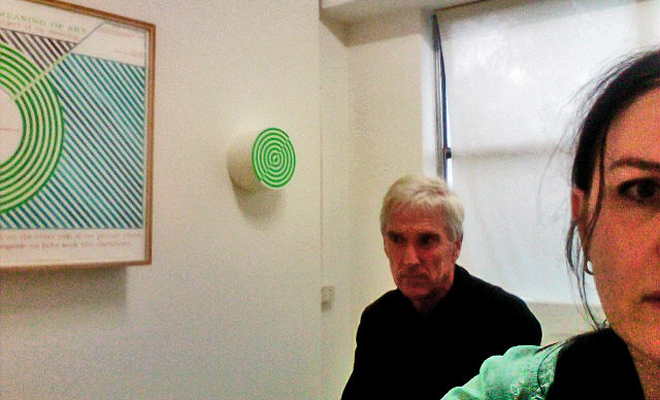
Encounter: Stephen Sinn
In this exhibition there is one work, ‘encounter: Stephen Sinn’. The word ‘encounter’ surfaced during discussion after Fr Steve spent some very long moments silently looking at the work for the first time. For him, the term tended to encapsulate not only the movement happening in the work, but its parallel with what was most meaningful for him in his work with others, especially the homeless – the encounter. It is, as he describes it, the heroic dignity of street people that takes his breath away every day and gives him breath: where it is this encounter that forms him, that makes him Stephen Sinn.
Gail Hastings, exhibition statement, June 2011
-
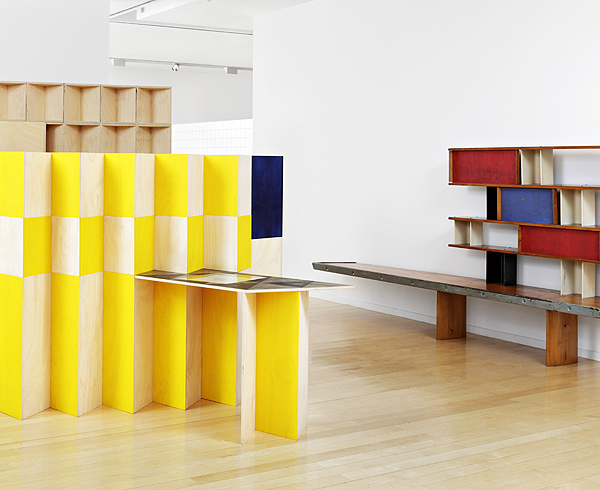
Minimalism And Applied II: Dialogues of contemporary art with aspects of 20th century design and architecture

photos:
(upper) Gail Hastings, Charlotte Perriand/Jean Prouvé
(lower) Gail Hastings, Charlotte Perriand
Mercedes-Benz Art Collection -
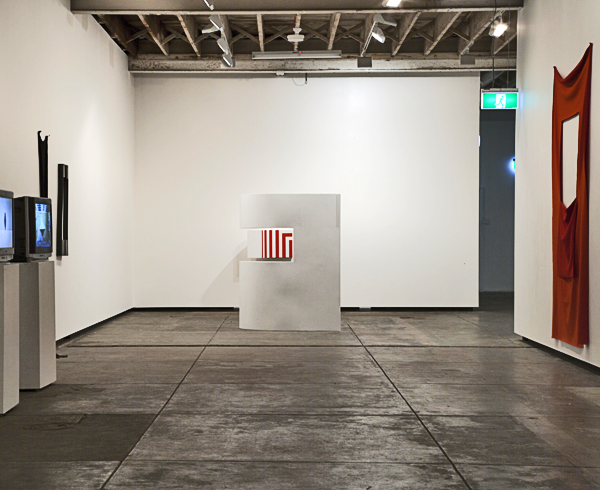
Taint
Taint observed the continued currency of minimalism through the work of six contemporary Australian artists. Formal and conceptual links can be made between their work and the Minimal project of the 1960s; their art is spare with an emphasis on geometric form, their works articulate space and in doing so acknowledge the audience and their role in creating meaning. These tendencies are shared with Minimalism, and yet these works are ever conscious of the archive.
-
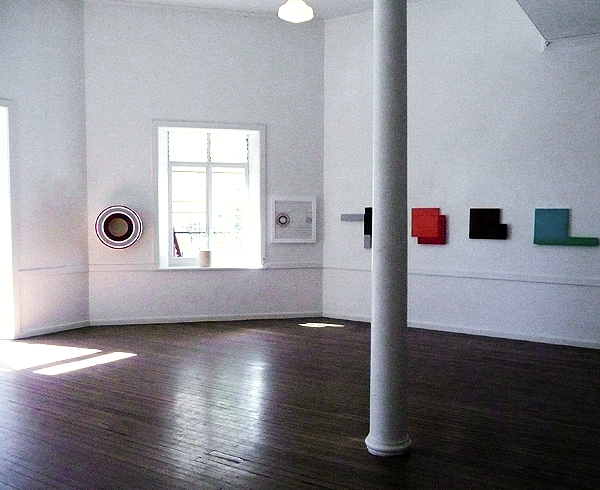
Leave the line standing
After much squabbling over how best to cut the piece of wood, with jigsaw in hand I decided to ignore Mick and get on with the job as I always do — uncomfortable with his audience but, nevertheless — when Mick made a last ditched effort and said, ‘leave the line standing’. Standing? Line? I put down the jigsaw and added ‘baffled’ to annoyed and uncomfortable. I asked what he meant. ‘You either cut the line off or leave the line standing’. Suddenly I realised there was no line standing between us, we had been saying the same thing, just differently. I had been building a wall at the time. When, months later, I came to exhibit my art in the same room, our agreement seemed the right type of line to leave standing.
-
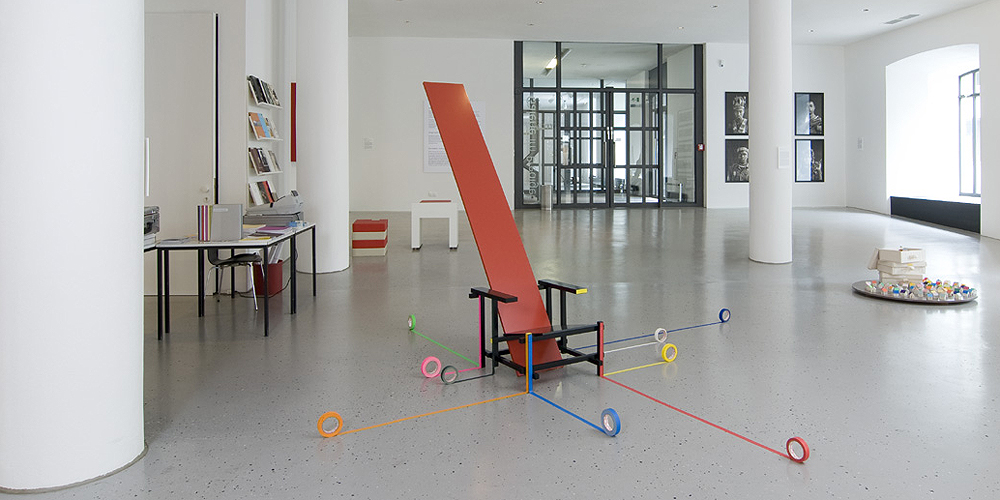
Art from a Hundred Years 1909–2009: Highlights of the Daimler Art Collection
The third presentation of the Daimler Art Collection in South Germany (following the extensive survey at ZKM Karlsruhe 2003 and at the Galerie der Stadt Sindelfingen 2004) at Museum Prediger Schwäbisch Gmünd concentrates on Highlights from the Collection with around 100 works spanning nearly 10 decades – from Adolf Hölzel, the main teacher in the area of South West German classical movements, through to young New York sculptor Vincent Szarek; from classical Modernism through to international contemporary art; from painting and drawing via photography to Installation and Video Art. [… ] Contemporary international art is represented in our exhibition with famous names as well as with young upcoming artists. Their work most often can be read as a continuation of abstract-minimal positions. Artists forming part of Classical Modernism and the avant-gardes of the 1960s/70s—like Josef Albers, Daniel Buren, Friedrich Vordemberge-Gildewart, Richard Artschwager or Robert Ryman—are positioned beside leading contemporary artists as John M Armleder, Sylvie Fleury, Gail Hastings, Kirsten Mosher, Simone Westerwinter or Andrea Zittel.
-
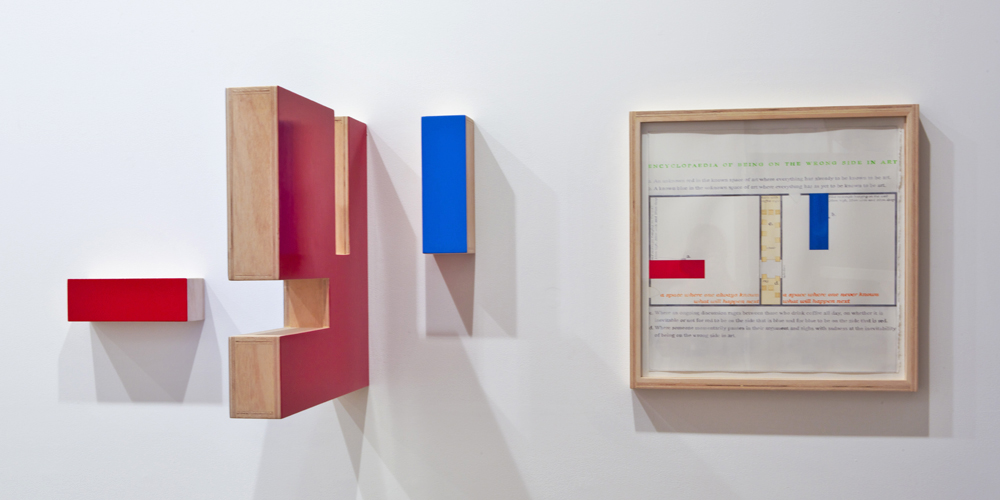
Faith and Lust: Various Approaches to Formalist Abstraction
Faith and Lust: Various Approaches to Formalist Abstraction takes as a departure point Bruce Nauman’s Vices and Virtues of 1988, which features ‘Faith and Lust’ in neon light, wrapped around a major building at the University of California in San Diego. The exhibition will explore the psychological implications of various modes of production in formalist art.
The exhibition brings together artists from the early years of Australian hard-edged abstraction (Sydney Ball & Tony McGillick) with contemporary artists from Europe (Frank Altmann, Christoph Bruckner & Guido Münch) as well as mid career and emerging artists from Australia who are influenced by and engaged with the legacy of formalist abstraction.
-
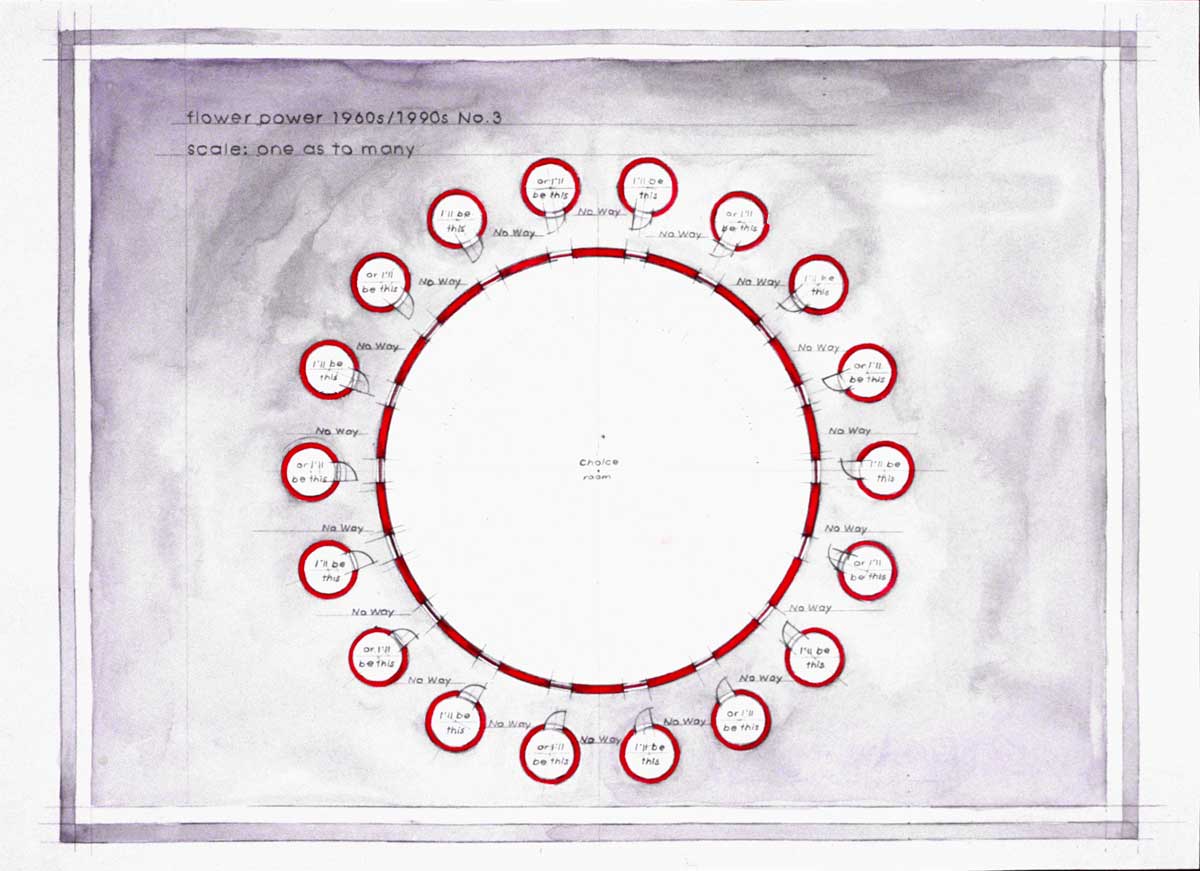
To make a work of timeless art: MCA Primavera Acquisitions
The decision to acquire the work of Primavera artists began in 1993, the first purchase being a suite of works by Gail Hastings, an artist included in the inaugural Primavera exhibition.
Everyone wants to be close to ‘the wheel of history’, to be remembered, to occupy a place within the wider schema of recent art history; and yet, it is only with the benefit of hindsight that the relative importance of an artist’s work can be determined. The exhibition aims to reflect this tendency by taking its title from one of Gail Hastings’ ‘sculptural situations’ being exhibited here for the first time.
Isabel Finch and Clare Lewis, ‘To make a work of timeless art’, in To make a work of timeless art: MCA Primavera Acquisitions, exhibition catalogue, Museum of Contemporary Art, Sydney 2008, p.2.
-
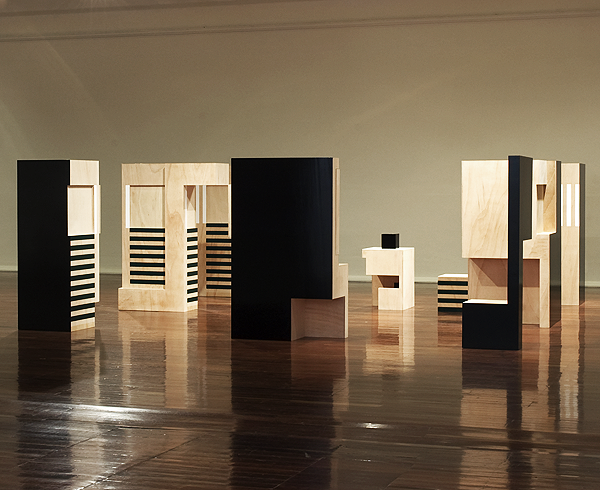
Sculptural Situations: Gail Hastings
Perth born Hastings is a singular artist distinguished by the extraordinary focus of her practice. … Consistently describing her work as ‘a space made for others’ Hastings creates what she calls ‘invisible architectures’ that invite the viewer to enter a dialogue with what they observe. … As ‘the artist’ Hastings eschews a central position in her work in order to vacate this space for the viewer. … she has invited PICA’s Director Amy Barrett-Lennard and Curator Melissa Keys to contribute a collection of novels to this iteration of her work, further disorienting and de-stabilising the impulse to search for authorial essential meaning.
-
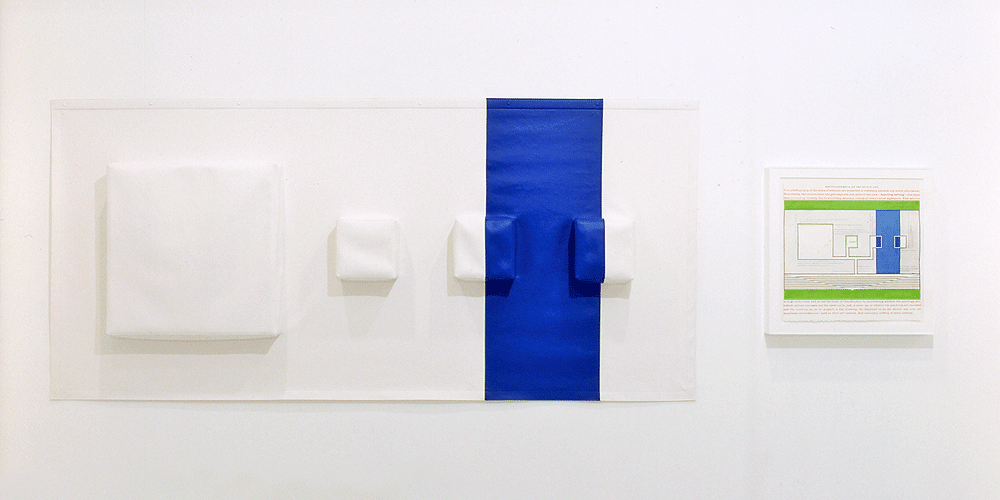
Store 5 is … ?
Other artist initiatives before Store 5 ostensibly grew from radical 1970s and early 1980s activism, where artists collaborated to stand for their rights (e.g. artists’ fees) and, thereby, contemporary art. Pre-ordained definitions of art were questioned as well as the politics of inclusion and exclusion in public programs (e.g. the exclusion of women artists). By so doing, these artists furnished a better art world that many of us younger artists lazily lounged in a little, perhaps, too unthankfully.
-
But is it art?
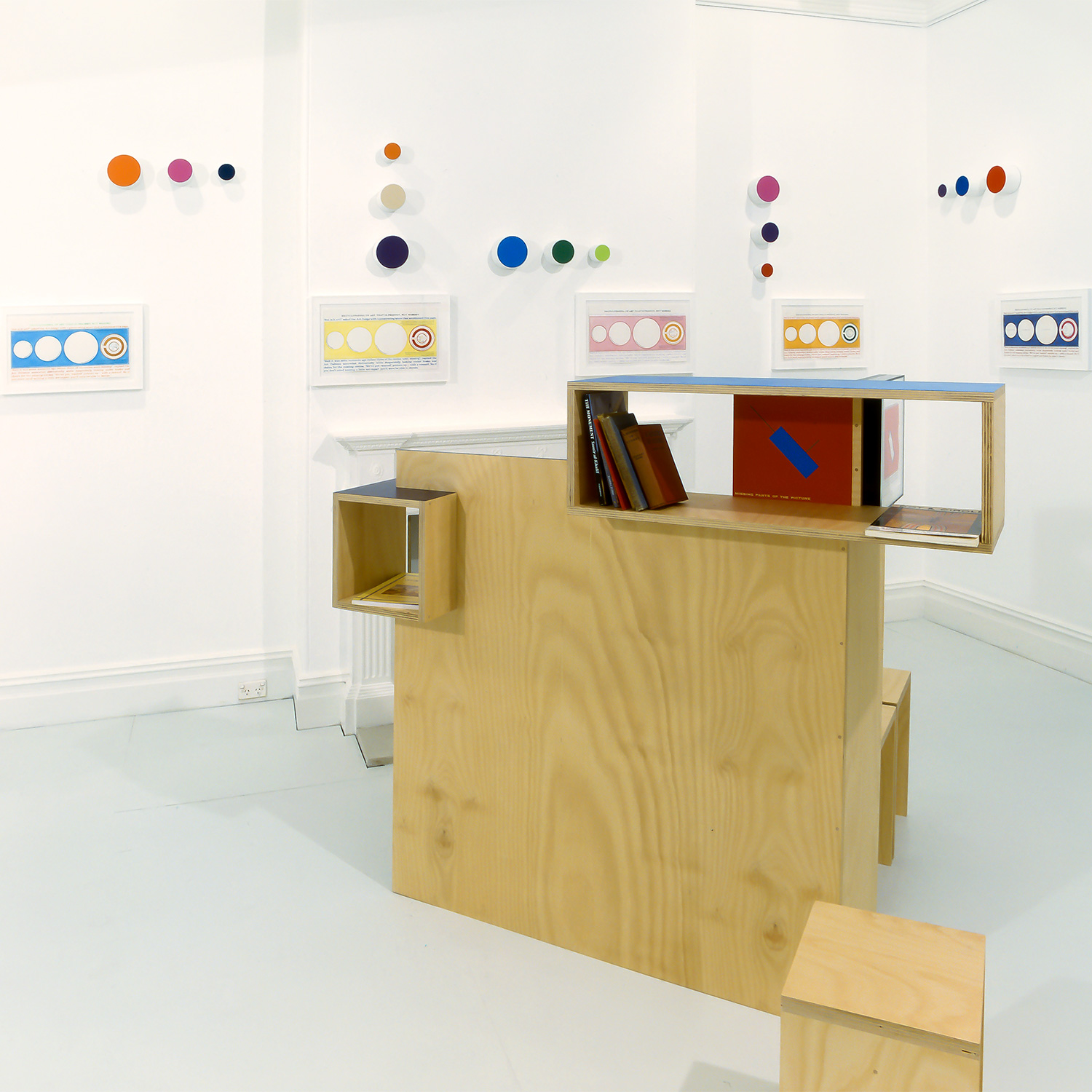
As in a detective story, or the scene of a crime, everything is primed or poised for meaning. That corridor to the library and that picture on the wall: everything in the mystery seems chosen, asking us why it is there. Everyone becomes a suspect. We bring our private eyes along and take partial views of the whole. In the meantime we interview eyewitnesses, flick through art catalogues, and try to second-guess the spooks. It’s an environment of suspicion, and we have to read between the lines. It’s a bit like our current political situation, a culture of duplicity … . Along the way Hastings calls our attention to art. To the status of the art object as material and on our own processes of production and reception.




![[space holder]](https://gailhastings.au/wp-content/uploads/2012/07/space-holder.png)