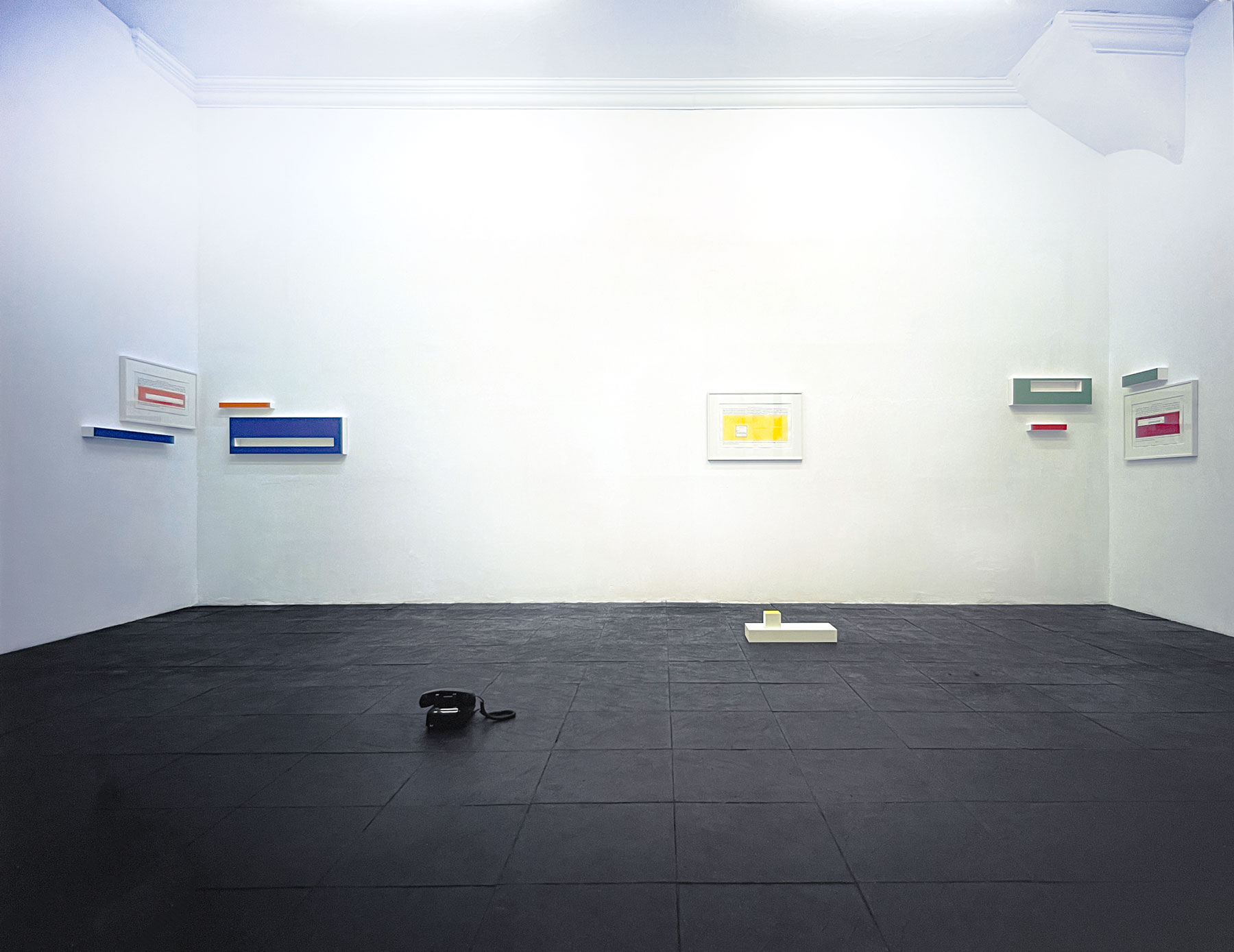
Venue Type: Independent Gallery
-
DUCHAMP & PROUST: Renaissance of Perspectives

ISBN: 978-3-86442-397-0
Mercedes-Benz Art Collection
192 pages, softcover, 230 x 150 mm, approx. 50 colour illustrations
Texts in German and EnglishTo be released spring [in Germany] 2023
-
Exhibition: To Do
A review
by Chloé Wolifson
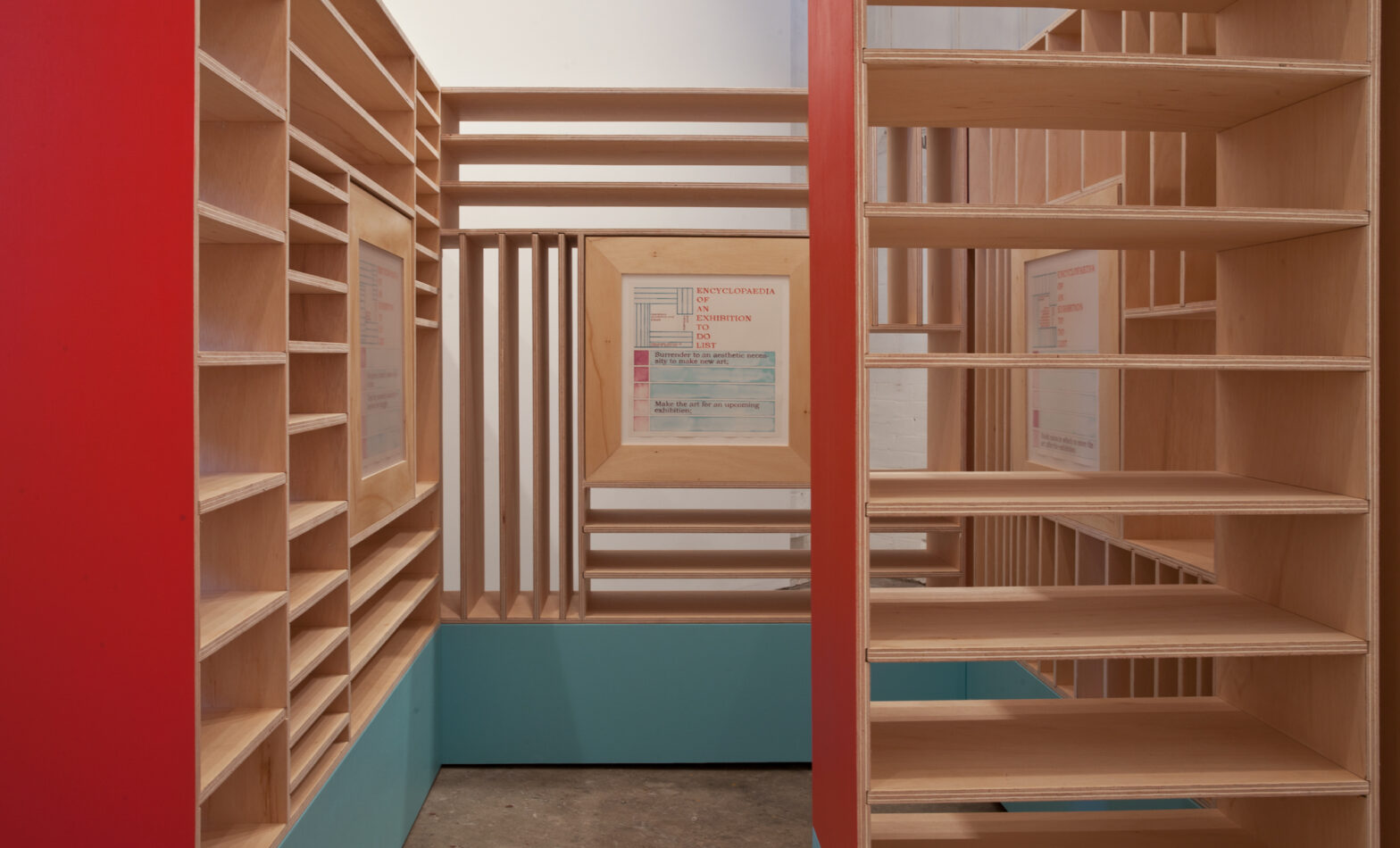
Gail Hastings’ major new work Exhibition: To Do is anchored around a large square plywood structure that sits on the earth’s axis – the walls respectively facing north, south, east and west.
The visitor is invited to enter the structure, also entitled Exhibition: To Do, via an opening in its eastern wall. This has the effect of placing the viewer at the centre of Hastings’ universe. The surrounding construction is an assemblage of partitions of varying height, which expand incrementally and symmetrically on the pre-existing dimensions of the plywood (18 millimetres thick).
Only once standing inside the work, Exhibition: To Do, can the visitor view three works on paper created specifically to sit inside the structure. Hastings’ two-dimensional works appear to act as blueprints or drafts for the sculptural components of the artist’s practice, both in the sense of their execution but also their subject matter.
Delicately rendered in watercolour with ruled pencil lines emerging from the edges of the translucent wash, these pieces depict the To Do list in question. One such reminder, the instruction: ‘Build racks in which to store the art after the exhibition’, speaks volumes about the established systems of the art world, and the particular approach artists must take when they create work which sits outside the conventionally commercial.
Exhibition: To Do is grounded in an awareness of space. It is a show which, while rooted in existing patterns and geometries, maintains a sense of humanity and emotion within each ruled, sawed, sanded and watercoloured line.
Excerpt from Chloé Wolifson, ‘Gail Hastings – Exhibition: To Do’, in Deborah Stone (ed.), Visual Arts Hub: Reviews, 2014, http://visual.artshub.com.au/news-article/reviews/visual-arts/exhibition-to-do-243240, accessed 23 September 2016.

This project has been assisted by the Australian Government through the Australia Council, its arts funding and advisory body.
-
Missing: four sculptuations by Gail Hastings
A REVIEW
by Annabel Crabb
When Charles Saatchi’s gallery opened in South Bank, with its notorious list of headliners (chunks of frozen human blood, sump oil lagoons and rooms full of chopped-up cattle), one small corner was devoted to a collection of newspaper cartoons lampooning the works.
My favourite was one in which an Eskimo, gazing at Damien Hirst’s pickled tiger shark, turned to a fellow visitor with the remark: “My five-year-old son could’ve done that.”
Interaction with art can be an occasion for hilariously multi-directional anxiety. The artist, observing someone observing her work, feels an unbearable cocktail of solicitude and vulnerability. The observer, knowing she is observed, frets that she’s missing something.
Is loud art — sledgehammer art — trying to abolish this moment of tender confusion? A message delivered by means of a decomposing rattlesnake chained to a chocolate wheel may still prove confounding to some viewers, but at least there’s something to talk about in the interim. No awkwardness need ensue, when the spectacle itself fills the silence.
Quiet art, like the work of Gail Hastings, chooses instead to inhabit that moment and furnish it with humour.
Am I missing something? — the timeless fretful self-interrogation of the enthusiastic but apprehensive gallery-creeper — becomes, in Missing, the shape of the artwork itself.
It’s funny, because everyone recognizes this tendency in the civilian art-lover; this scrupulous and obedient hunt for scraps of meaning hidden here and there by the artist, failure to spot any of which might constitute a serious inadequacy.
It’s courageous, because of all the compulsions that I imagine might grip an artist in the act of creation, the temptation to spell it out must surely be one of the hardest to resist.
And it’s generous, because the greatest expression of faith and trust an artist can possibly articulate in the unknown person who will — somewhere down the track — pause in front of her work is to invite them in to it. To allow them the run of the place. To give them the thrill of being in on the joke.
Gail Hastings’ work achieves quite a remarkable state of grace. Taut control in design and execution, coupled with an exhilarating and generous capacity to turn things over, at exactly the right time, to the viewer.

This project has been assisted by the Australian Government through the Australia Council, its arts funding and advisory body.

-
Sydney Contemporary 13
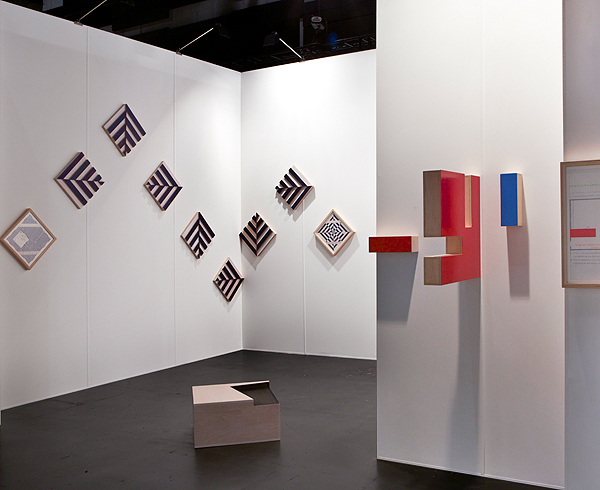
It is with great pleasure that The Commercial Gallery announces it now represents Gail Hastings and will present a solo exhibition of her work at the inaugural Sydney Contemporary art fair between 19 and 22 September at Carriageworks, Sydney (Booth PC102). It is exciting to be showing new work by this important mid-career Australian artist at what will be the first presentation for the gallery at an art fair.
Press Release: The Commercial Gallery
-
JANIS II
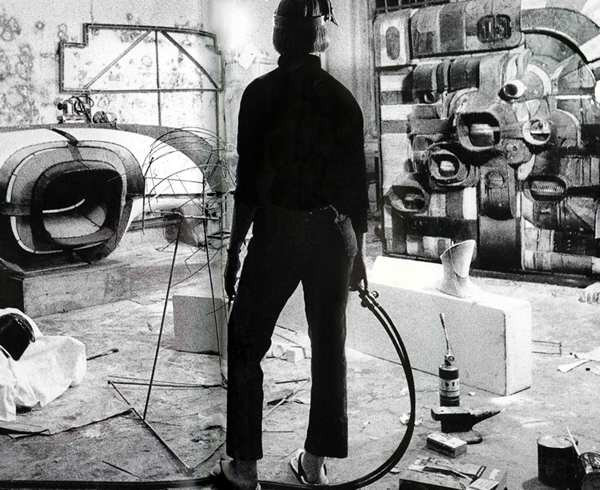
Janis encompasses a range of activities initiated by Kelly Doley (a member of Brown Council) focusing on female artists, writers and thinkers allowing them “to be heard a little louder, to take up more space and more time in the world” (website). She has teamed up with Amanda Rowell to curate the second Janis exhibition spanning two Sydney inner city galleries, The Commercial and MCLEMOI. Janis II features abstract, conceptual and minimalist work by Bonita Bub, Jenny Christmann, Sarah Goffman, Gail Hastings and Sarah Rodigari (who will be performing at the opening, 26 July). A publication featuring short pieces by an impressive list of female artists and thinkers will also accompany the exhibition. (For the amusing significance of the Lee Bontecou image read Gail Hastings’ insightful essay Thank goodness Donald Judd wasn’t a misogynist.)
by Virginia Baxter and Keith Gallasch, ‘In the loop July 24: quick picks‘, Realtime, issue 115, Sydney, June-July 2013.
-
Space you can’t sit on: The space in Today
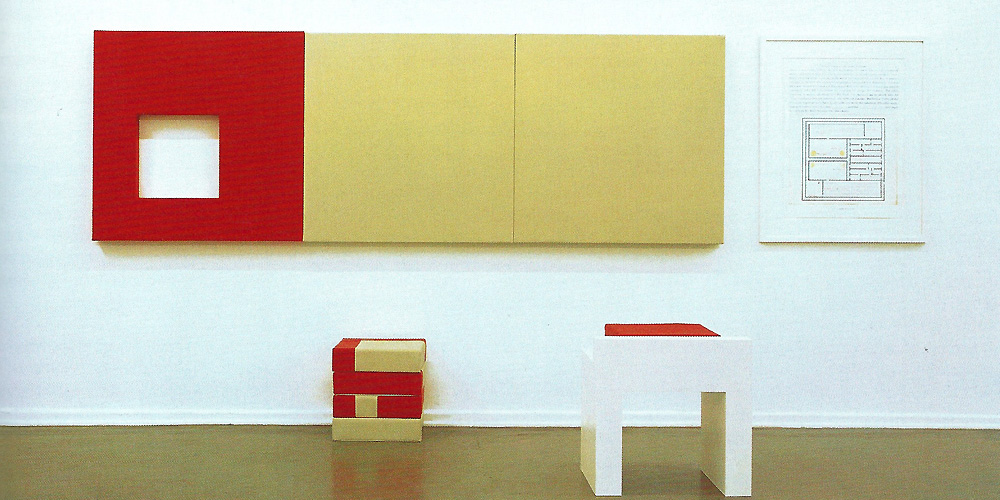
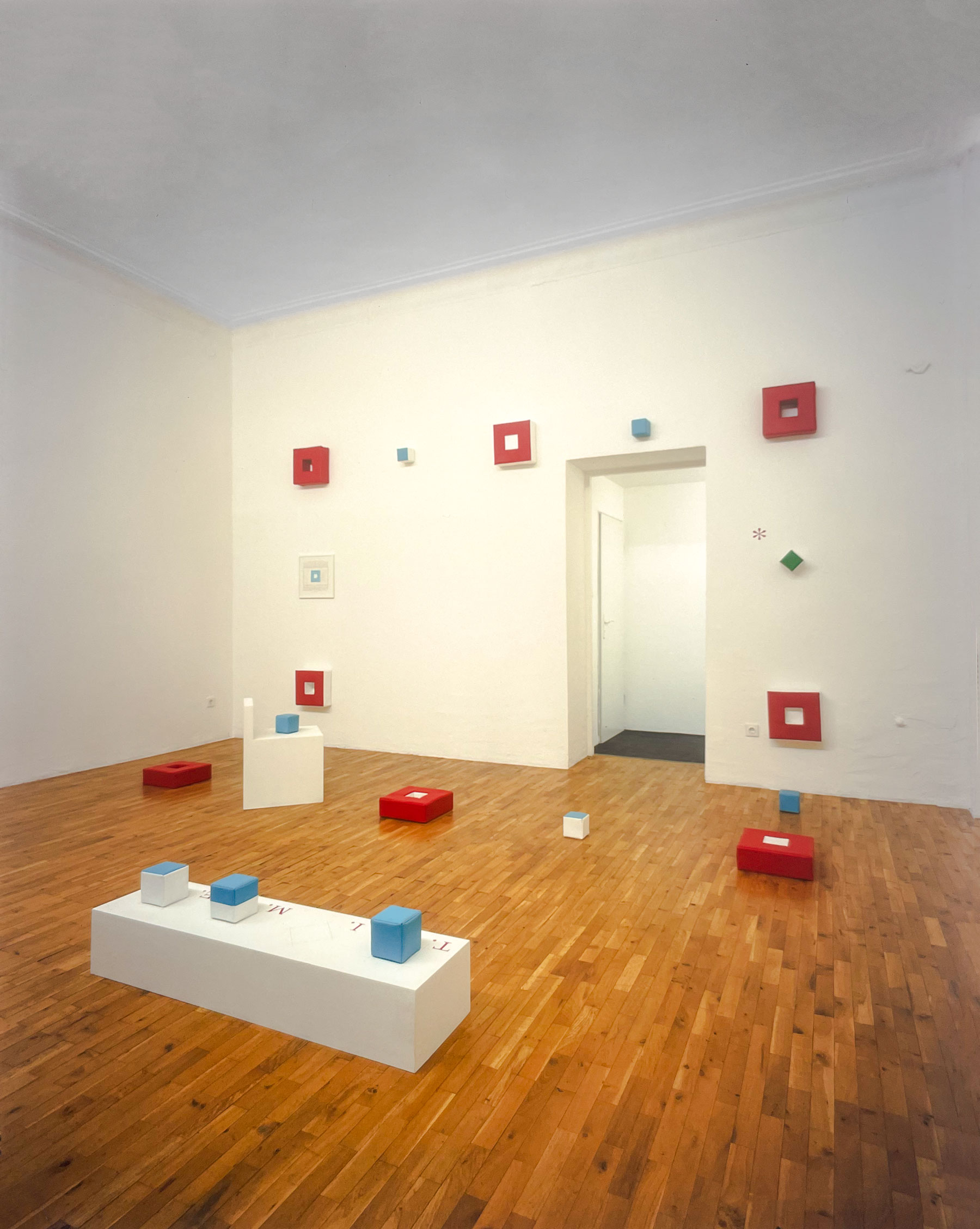
Half exhibition, half archival room – this exhibition presents a number of sculptuations that focus on the creation of space. The exhibition’s title refers, in part, to an included work in which the spatially isolated letters of the word ‘today’ invoke a daily fragmentation that nevertheless come together as one in the end – as ‘Today’. Called a sculptuation, these watercolour floorplans appear, at first, to be far from ‘sculptural’. Yet a sculptuation consists not of solid but of spatial objects that we, admittedly, cannot sit on but which, nevertheless, are just as concrete in guiding the passage of our day.
Gail Hastings, exhibition statement, October 2011
-
Encounter: Stephen Sinn
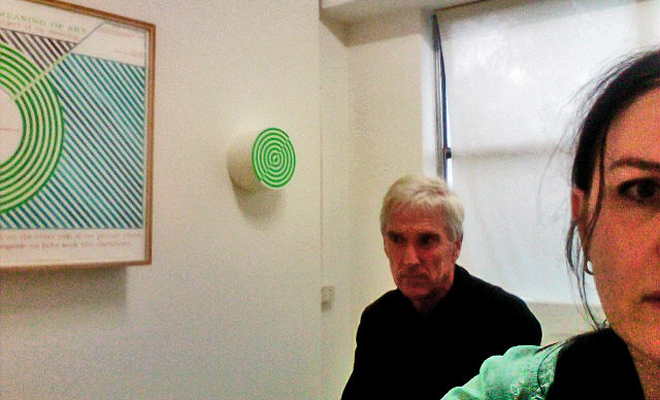
In this exhibition there is one work, ‘encounter: Stephen Sinn’. The word ‘encounter’ surfaced during discussion after Fr Steve spent some very long moments silently looking at the work for the first time. For him, the term tended to encapsulate not only the movement happening in the work, but its parallel with what was most meaningful for him in his work with others, especially the homeless – the encounter. It is, as he describes it, the heroic dignity of street people that takes his breath away every day and gives him breath: where it is this encounter that forms him, that makes him Stephen Sinn.
Gail Hastings, exhibition statement, June 2011
-
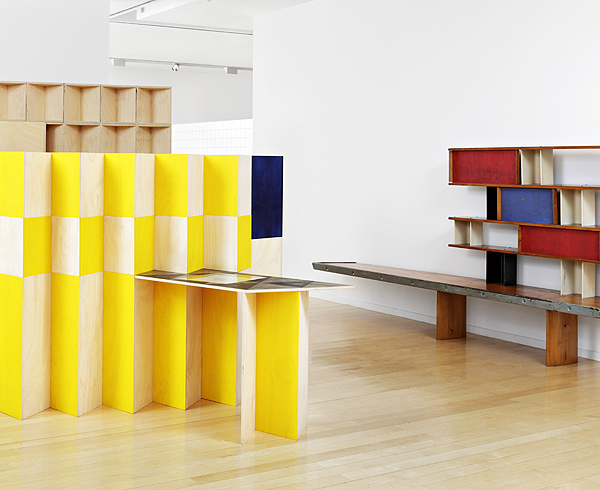
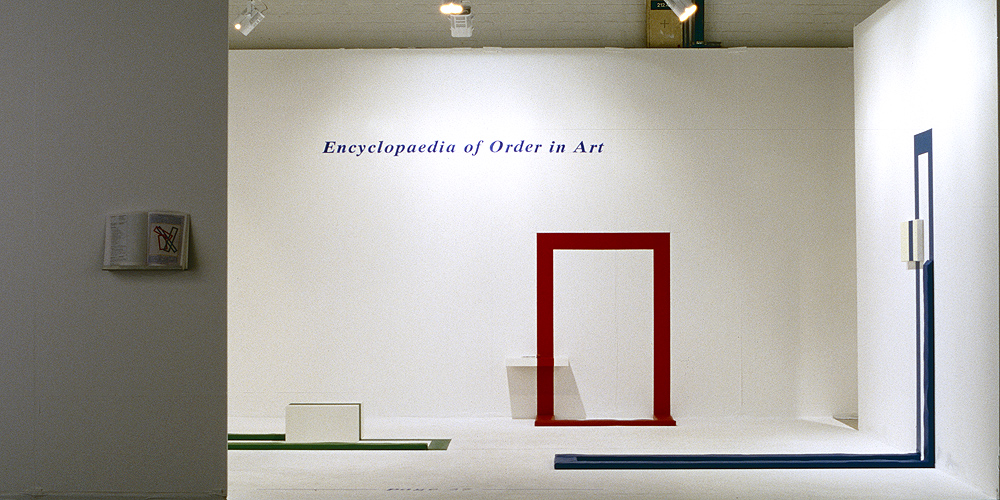
Minimalism And Applied II: Dialogues of contemporary art with aspects of 20th century design and architecture

photos:
(upper) Gail Hastings, Charlotte Perriand/Jean Prouvé
(lower) Gail Hastings, Charlotte Perriand
Mercedes-Benz Art Collection -
Taint
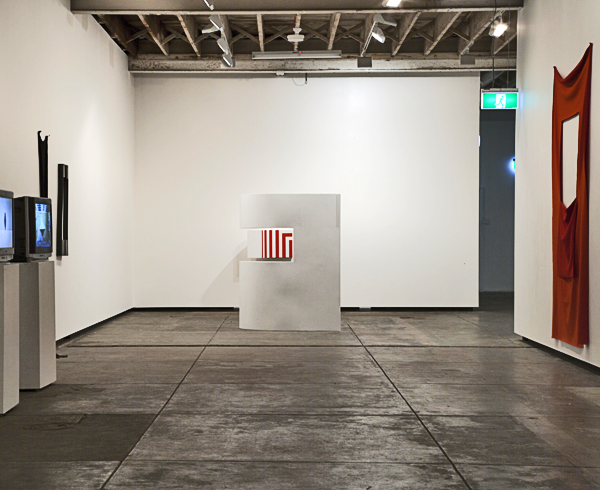
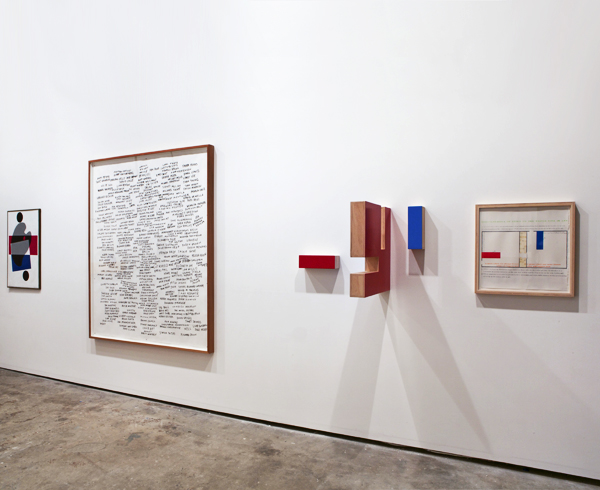
Taint observed the continued currency of minimalism through the work of six contemporary Australian artists. Formal and conceptual links can be made between their work and the Minimal project of the 1960s; their art is spare with an emphasis on geometric form, their works articulate space and in doing so acknowledge the audience and their role in creating meaning. These tendencies are shared with Minimalism, and yet these works are ever conscious of the archive.
-
Leave the line standing
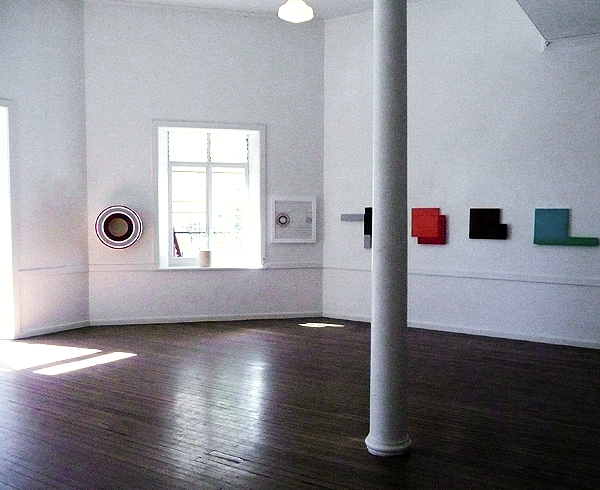
After much squabbling over how best to cut the piece of wood, with jigsaw in hand I decided to ignore Mick and get on with the job as I always do — uncomfortable with his audience but, nevertheless — when Mick made a last ditched effort and said, ‘leave the line standing’. Standing? Line? I put down the jigsaw and added ‘baffled’ to annoyed and uncomfortable. I asked what he meant. ‘You either cut the line off or leave the line standing’. Suddenly I realised there was no line standing between us, we had been saying the same thing, just differently. I had been building a wall at the time. When, months later, I came to exhibit my art in the same room, our agreement seemed the right type of line to leave standing.
-
Faith and Lust: Various Approaches to Formalist Abstraction
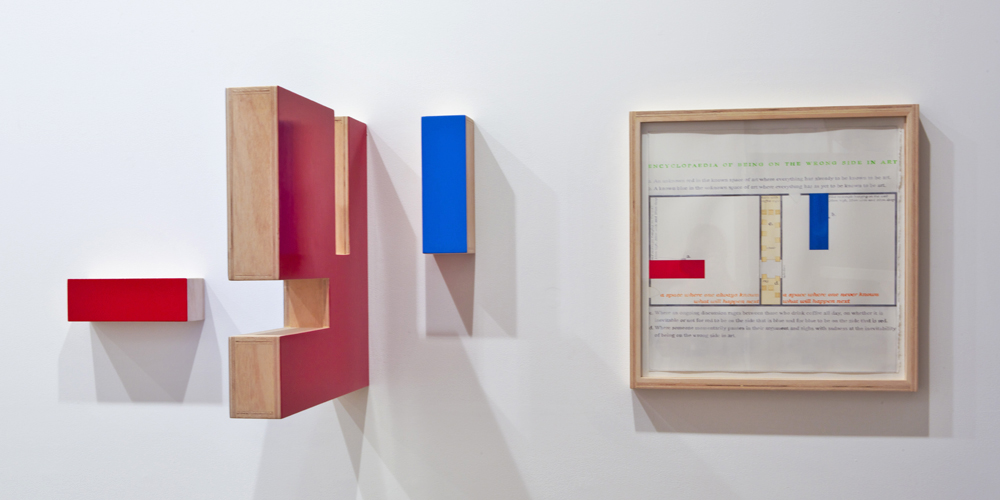
Faith and Lust: Various Approaches to Formalist Abstraction takes as a departure point Bruce Nauman’s Vices and Virtues of 1988, which features ‘Faith and Lust’ in neon light, wrapped around a major building at the University of California in San Diego. The exhibition will explore the psychological implications of various modes of production in formalist art.
The exhibition brings together artists from the early years of Australian hard-edged abstraction (Sydney Ball & Tony McGillick) with contemporary artists from Europe (Frank Altmann, Christoph Bruckner & Guido Münch) as well as mid career and emerging artists from Australia who are influenced by and engaged with the legacy of formalist abstraction.
-
Store 5 is … ?
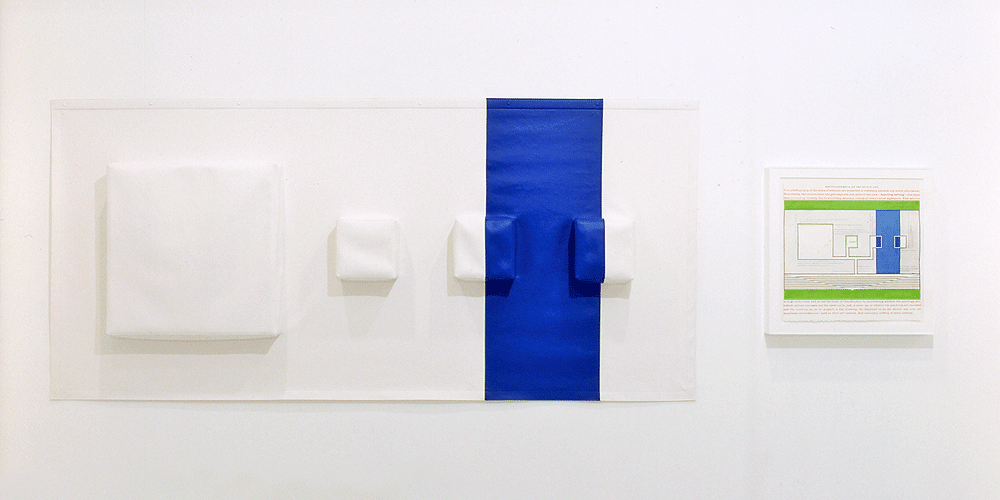
Other artist initiatives before Store 5 ostensibly grew from radical 1970s and early 1980s activism, where artists collaborated to stand for their rights (e.g. artists’ fees) and, thereby, contemporary art. Pre-ordained definitions of art were questioned as well as the politics of inclusion and exclusion in public programs (e.g. the exclusion of women artists). By so doing, these artists furnished a better art world that many of us younger artists lazily lounged in a little, perhaps, too unthankfully.
-
But is it art?
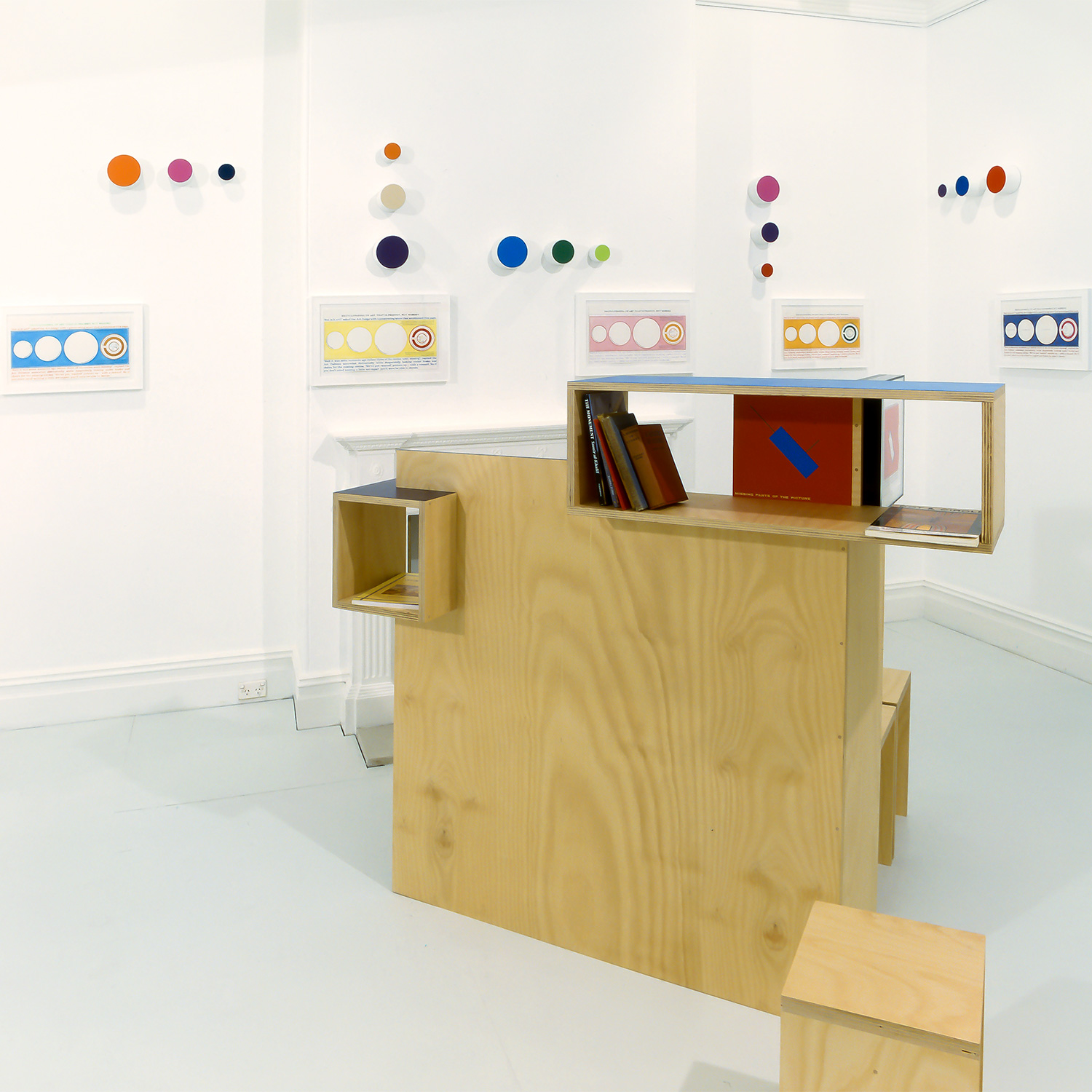
As in a detective story, or the scene of a crime, everything is primed or poised for meaning. That corridor to the library and that picture on the wall: everything in the mystery seems chosen, asking us why it is there. Everyone becomes a suspect. We bring our private eyes along and take partial views of the whole. In the meantime we interview eyewitnesses, flick through art catalogues, and try to second-guess the spooks. It’s an environment of suspicion, and we have to read between the lines. It’s a bit like our current political situation, a culture of duplicity … . Along the way Hastings calls our attention to art. To the status of the art object as material and on our own processes of production and reception.
-
October 2001 / Geometrical Affairs
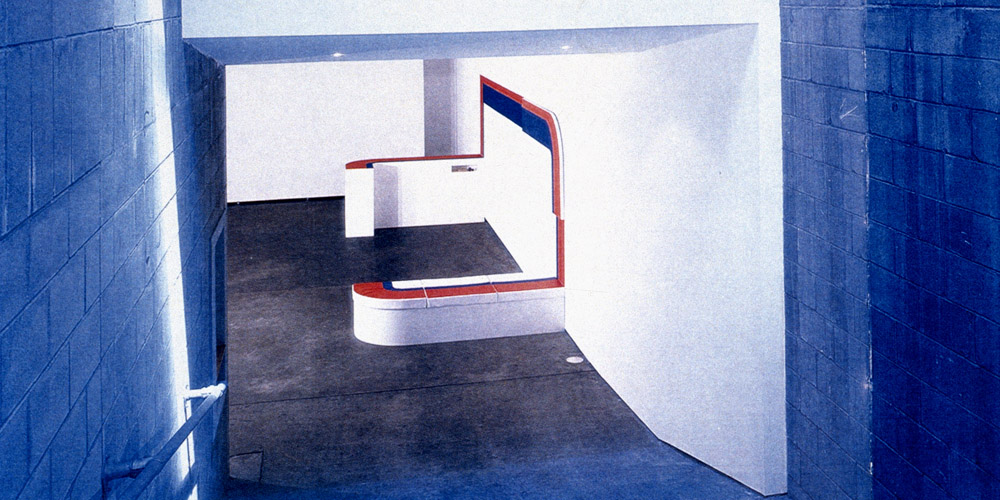
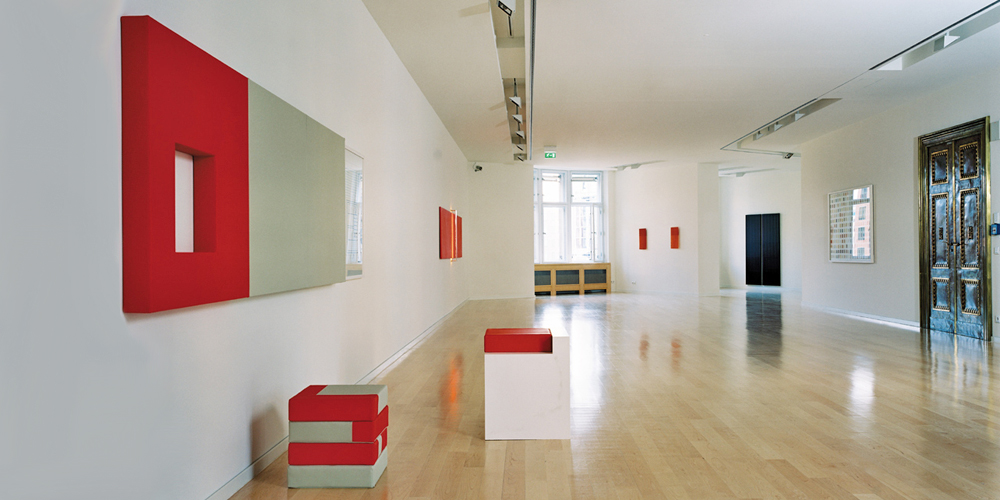
The Daimler Art Collection focuses on geometrical and abstract concepts in 20th century art, and shows how these ideas are developing on the contemporary art scene world-wide.
The Geometrical Affairs exhibition includes selected works spanning six decades, starting with classical pictures by artists like Josef Albers or Adolf Fleischmann and ending up with “Sculptural Situations” by the young Australian artist Gail Hastings. It also juxtaposes essentially black-and-white serial painting and object art with pictorial ensembles ablaze with color and vitality. This selection of works shows that conceptual, minimalist and constructive questions can interact in very exciting ways, and that strong ideologies can lose some of their force when faced with an opposite view stated in visual form.
-
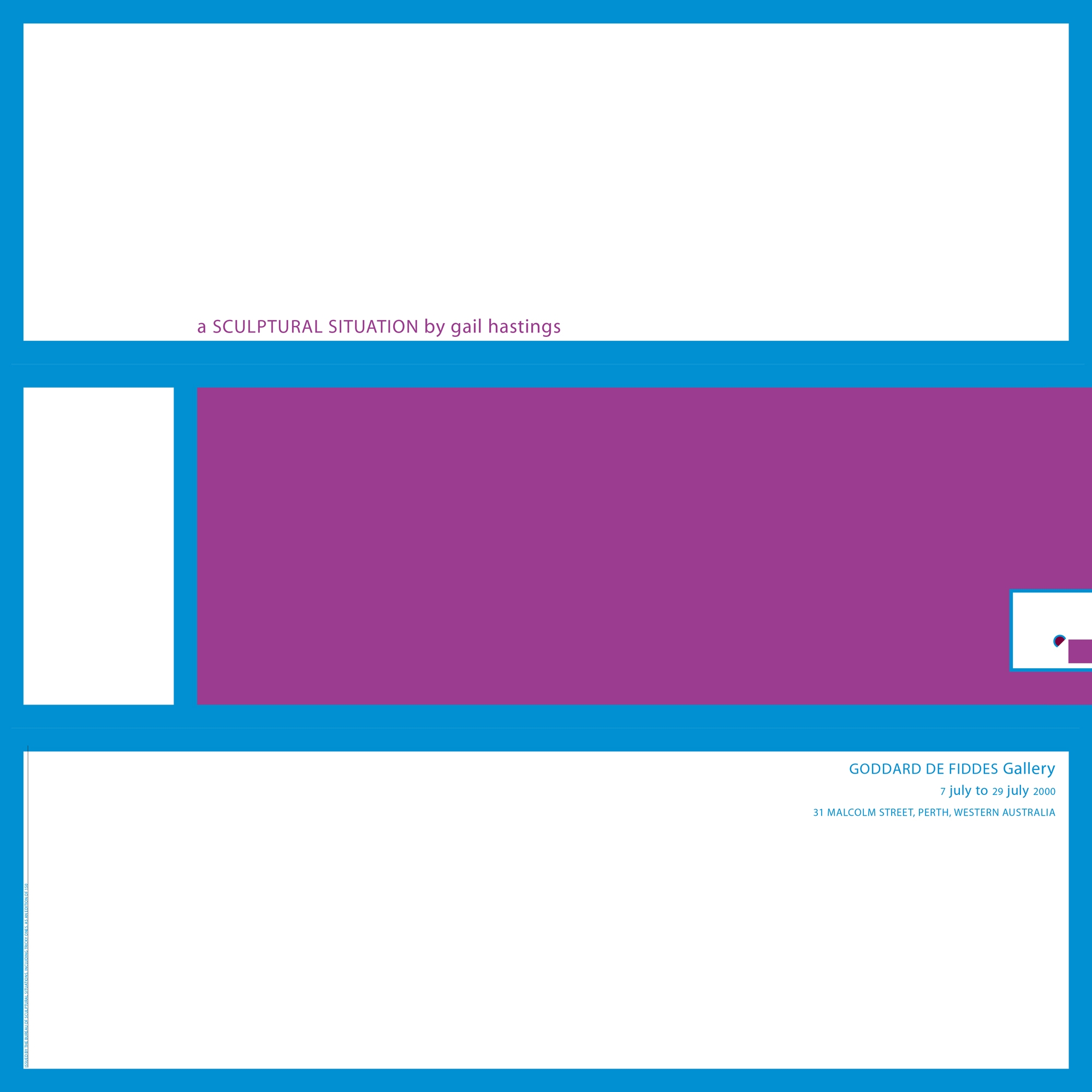
Gail Hastings: Sculptural Situation 1989–2000
Included sculptuations:
a sculptural situation to enter, and to leave, 2000
a sculptural situation, drawn in, 2000
a sculptural situation’s architectonic colour-space, 2000
Encyclopaedia of possibilities: Mon 14.9.95, 1995
magazine – mission: untitled (blue), 1999
Movie directions for secret agents, 1994
pattern book five, 1996
poster: a sculptural situation (drawn in), 2000
stare two, 1997
untitled (with kitten), 1989
untitled (with magazine), 1989
-
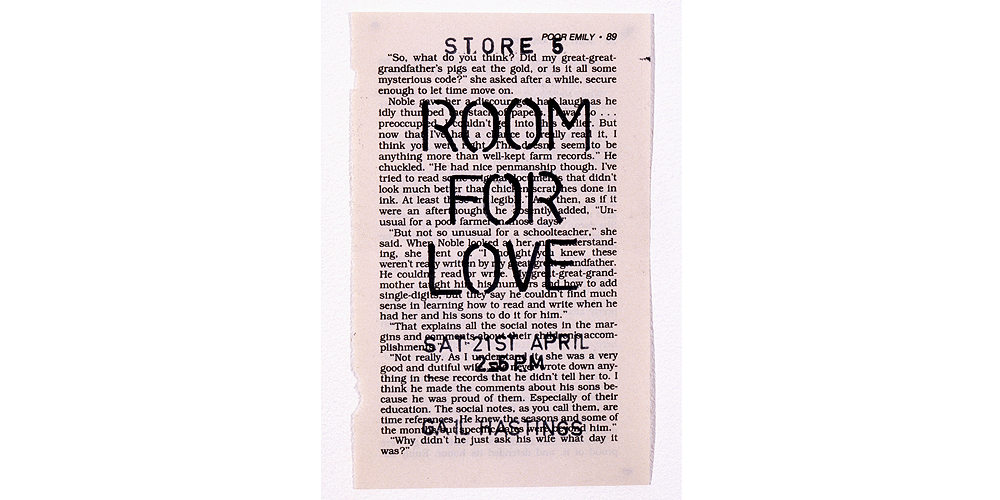
Open House
A different example of such temporal-spatial puzzles is found in Room for love 1990, which contains a conversational or ‘tête-à-tête’ chair, an S-shaped two-seater sofa, sometimes called a ‘love chair’. In such a chair, two people sit in close proximity facing in opposite directions, although they can also converse face-to-face. For Hastings, the analogy alludes to the often-fraught dynamics of social interaction as well as to the reception of art: ‘the chair was intended as a conversation with oneself when one looks at a work of art – where two opposing views are struck – literally –while there is also this third, reconciliatory view of turning halfway toward the oppositeview’.1
The analogy is highly suggestive. For instance, this piece of writing aims to explicate the work for a reader who may have already experienced it, but like the ‘tête-à-tête’ chair it aims to turn the viewer around again to face the work, although differently. It may even extend the understanding of the work beyond conceptions ordinarily entertained by the artist. The analogy also recalls the puzzled status of art in the wake of post-minimalist art, which prompts questions such as: what is the ordinary, quotidian object and what is the artwork? What does it do? As the art historian Thierry de Duve notes of the minimalists, ‘far from freeing themselves “from the increasing ascetic geometry of pure painting”, the minimalists claimed it and projected it into real space’.2 This is what Hastings does, except that she stage-manages this extended state of puzzlement over the status of art.
1. Gail Hastings, private communication with author.
2. Thierry de Duve, Kant after Duchamp, MIT Press, Cambridge, MA 1996, p 218. -

apparently not
The Director said, ‘action’, he acted, he said ‘apparently not’, then the Director said, ‘cut’.
This ‘take’ was done 10 times. Then, at night for ten nights, he dreamt each take in detail.
One take was selected and the movie completed.
For ten weeks the movie was shown at the movie house in his nome town. For ten weeks the movie was then shown in ten other towns.
He counted the times that is one appearance on film was repeated.
He likened the repetition to a patter, a lattice, in which was meshed all of the unfixed moments of his days and nights.
Feeling alienated by the pattern’s netting effect, its reduction, he spoke to a finer. The friend advised he treat the pattern as a fabric that he could fold this way or that. He folded his fabric and left it behind the red patterned screen while he appeared in 10 more movies.
He wondered if anyone noticed, then happily said to himself, ‘apparently not’.


![[space holder]](https://gailhastings.au/wp-content/uploads/2012/07/space-holder.png)