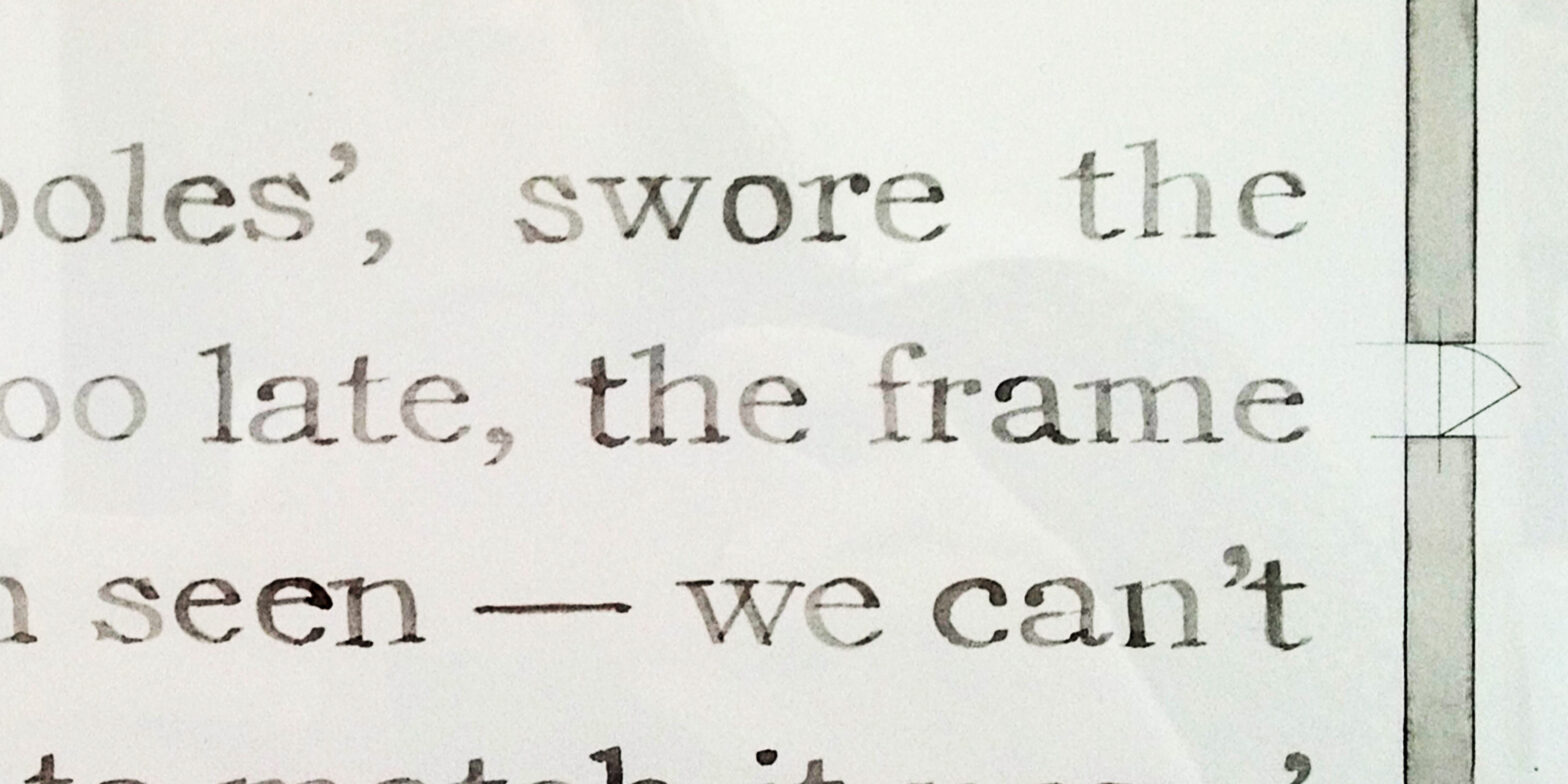
To the Lighthouse by Virginia Woolf So off they strolled down the garden in the usual direction, past the tennis lawn, past the pampas grass, to that break in the thick hedge, guarded by red hot pokers like brasiers of clear burning coal, between which the blue waters of the bay looked bluer than ever. — Penguin Classics 2019, p.24.
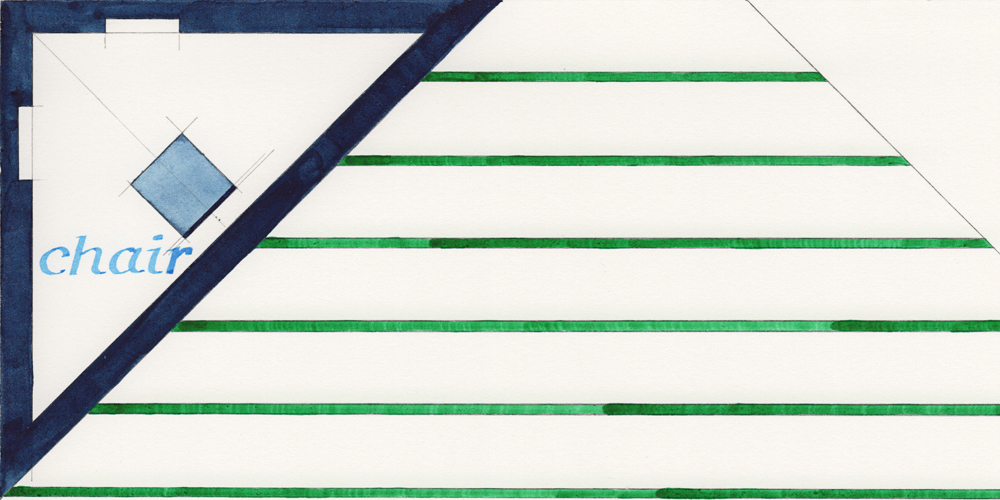
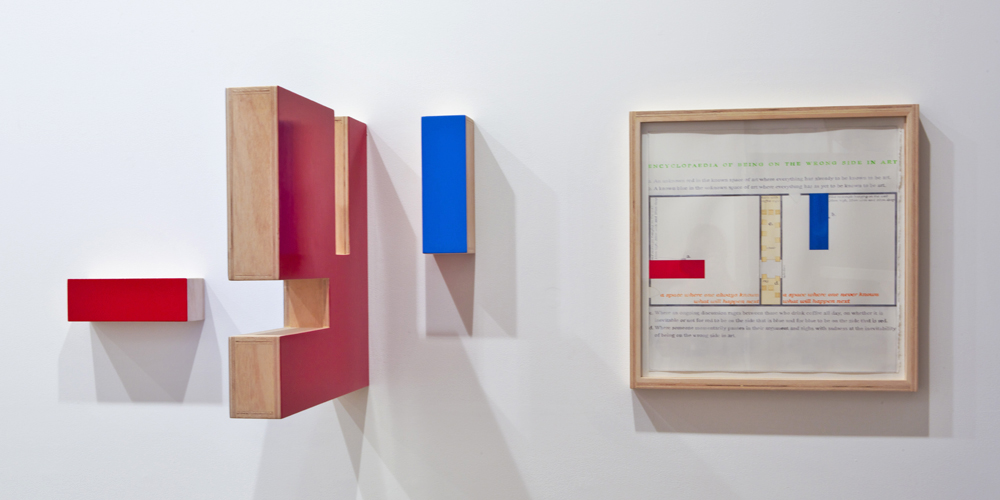
Detail A painting’s background in Virginia Woolf’s 1927 novel ‘To the Lighthouse’, 2025; Watercolour, lead pencil and varnish on paper, acrylic on wood; 102 x 82 x 4.6 By Gail Hastings —Showing the tennis court on the left, pampas grass surrounding it, and the red-hot poker plants at ‘b’.
Art historian Bernard Smith contends that a past of unwritten yesterdays does not become history until a historian attempts to write what happened in it. Yet, to find oneself in “apocalyptic jitters” at the thought of writing contemporary art history is to misidentify the need, first, for dusk to fall before the owl of Minerva can spread its wings (Smith, 2007, p. 123). For Smith, in mind of G. W. F Hegel’s philosophy, not until an art-epoch ends does its tenets form a whole worthy of a historian’s attention. At odds, however, with this notion of our contemporary suspension of the present, is its simultaneous saturation with the philosophy of Giles Deleuze. Here the present, instead, eludes existence (e.g. see The Logic of Sense). The present, divided between the past and future to infinity, is at work this way in Smith’s reference to Claude Monet’s Haystack series of 1890-91. The painter’s brushstrokes race against the changing light to become “not so much a record of time present as a personal experience of time past” (Smith, 2007, p. 69). If, however, against this, one still holds for contemporary art’s dusk before its history can begin, then there is E. H. Gombrich to contend with. In 1977, Gombrich dubbed Hegel the father of art history. Then, advocated we free art history of Hegel.
The panel will comprise three 20 minute papers on these matters or the question: Is art history ending because we cannot make historical sense of contemporary art?
Reference Smith, B. (2007). The formalesque: A guide to modern art and its history. Macmillan.
Chuffed to have just discovered Associate Professor Martyn Jolly and Associate Professor Robert Nelson’s commendation of Space Practising Tools, 2021, in the AAANZ 2022 Best Artist-led Publication list of prizes.
The two judges write: This artist’s book wittily instantiates the formalist principles it methodically elucidates. It is meticulously complete down to every detail, and the artist’s personal creative style is satisfyingly sustained across 116 pages. The book’s design, referencing modernist manuals, delivers the pleasure of several gentle jokes, such as the afterimage produced when the reader is invited to stare at a black dot on a white page. While being an integral aesthetic object, the book successfully calls in the conceptual references points that had informed Hastings’ practice as an artist.
from La Trobe Art Institute Instagram account @latrobe_ai
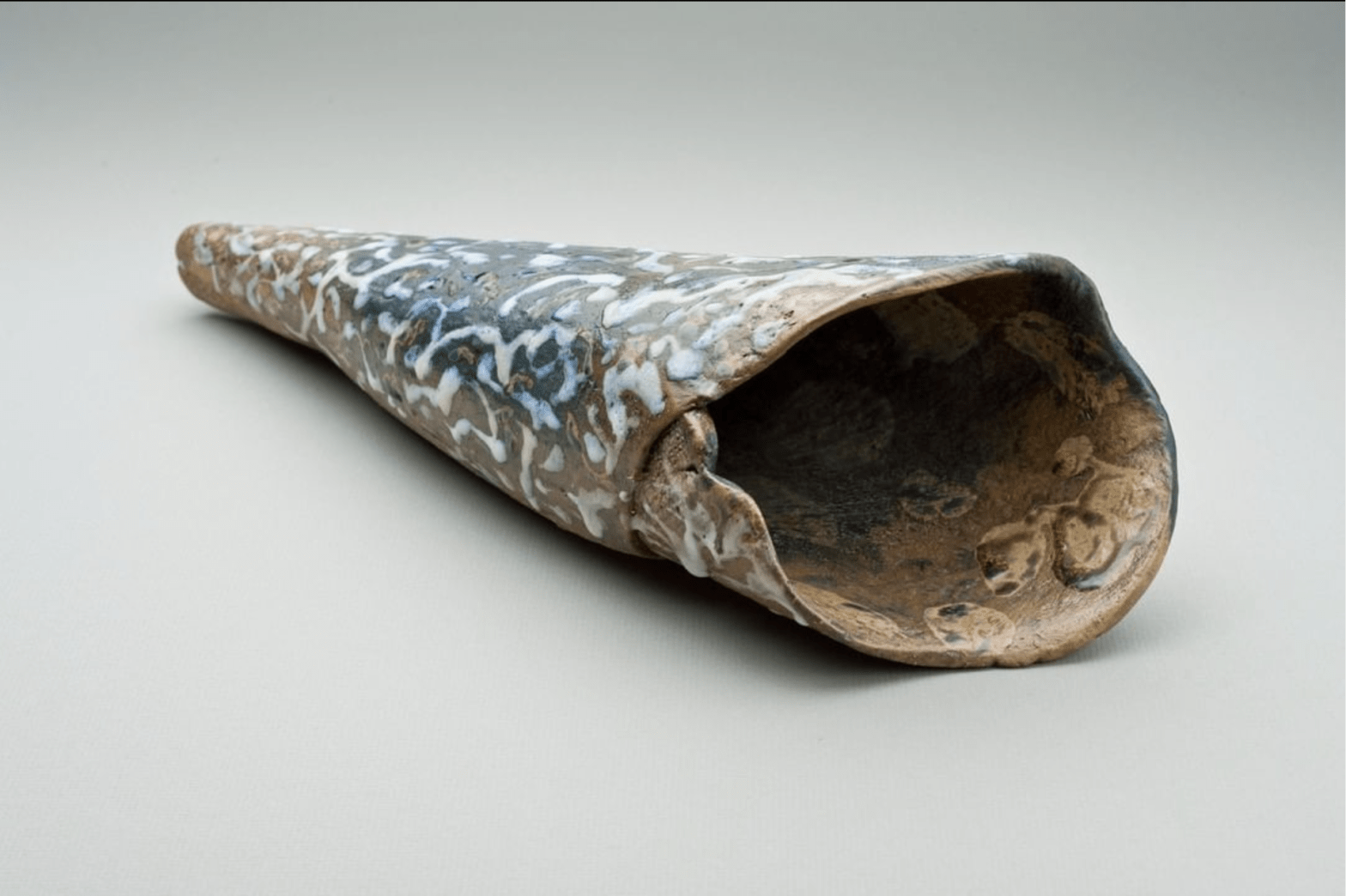
‘Citational choices’ opens 25 October ‘Citational choices’ takes La Trobe University’s Etta Hirsh Ceramics Collection as its point of departure. The exhibition unravels the biographical stories present within the collection itself — those of Etta Hirsh, of a local art scene, of La Trobe Art Institute and now, in the case of this exhibition, everyone newly involved.
Please join us for the opening celebration and a conversation led by curator Isabelle Sully on Friday 28 October at 5 pm.
Image: Milton Moon, ‘Conical form’, 1997; stoneware, glaze, brushwork decoration, 10 x 12.5 x 40 cm. La Trobe University, Etta Hirsh Ceramics Collection. Donated through the Australian Government’s Cultural Gifts Program by Anouk and Vaughan Hulme in memory of Etta Hirsh. Courtesy the estate of Milton Moon. Photo: Christopher Sanders
The Call for Papers is open from June 3 to July 29.
If you would like to speak at the 2022 AAANZ Conference, you can now apply to join one of the panels detailed at https://aaanz.info
To apply, read the instructions, and then submit your Paper Proposal Form to the relevant Panel Convenor.
– – – – – – – – – –
At this years AAANZ conference I am convening the panel ’Brunelleschi’s Demonstration of Space’. In hope you’ll propose a paper as part of the panel, the panel’s description is as follows:
– – – – – – – – – –
In Florence in the early fifteenth century, Filippo Brunelleschi demonstrated single-point perspective with a picture panel and mirror while he stood in the central portal of Santa Maria del Fiore. Painters adopted the demonstration’s technical ramifications, and the Church celebrated their more life-like paintings. Yet the demonstration’s philosophical and scientific ramifications promulgated by Nicholas of Cusa led Giordano Bruno to be burned at the stake. It presented questions on the nature of space that contradicted an Aristotelian Universe with anisotropic matter-filled places, not isotropic space. Much, nevertheless, remains contested. Not only Brunelleschi’s method but also perspective’s replacement of a theocentric viewpoint with a subjective or anthropocentric point of view in today’s ‘posthuman’ world.
The panel welcomes 20-minute papers that explore the history of perspective and the ensuing nature of space in contemporary art.
This includes, for instance, its first art historical treatment by Erwin Panofsky in his essay ’Perspective as Symbolic Form’. Here, perspective’s ‘reality’ accords with a Kantian dichotomy in which space is an empty ‘form’ of thought separate from any content of the world outside. Yet, in 1960s New York, artists contested ’a priori space’ with the art of the real. Were they unrealistic to do so?
Biggest thanks to the National Assistance Program for the Arts for the one-off payment I received in May.
I spent lockdown writing in-depth applications for assistance from federal, state, local and subscriber arts agencies, to be continually rejected one after the other. At one stage I submitted my name, only — frustrated by the time, thought, hope and expectation each application extracted — to see that rejected too.
Nothing worse than spending time on an activity that generates continual rejection during a pandemic lockdown that has caused most to ride its various waves of panic. Governmental safety nets were stoically put in place to avoid this type of degenerating despair for many in society — except for artists.
The last sentence of the letter from the National Assistance Program for the Arts still makes me emotional: ‘We see you and we value your contribution to life in Australia’.
Thank you.
Participating Philanthropists and Philanthropic Entities:
Andrew Myer AM & Kerry Gardner AM Ann & Warwick Johnson Berwyn Roberts & Jennifer Mackenzie Carrillo Gantner AC and Ziyin Gantner Creative Partnerships Australia Darin Cooper Foundation Day Family Foundation Doc Ross Foundation FWH Foundation Inner North Community Foundation James and Diana Ramsay Foundation Kate and Stephen Shelmerdine Family Foundation Kathryn Fagg AO Kim Williams AM Lindisfarne Foundation
Mandy and Edward Yencken & Family Mark and Louise Nelson Minderoo Foundation Nunn Dimos Foundation Robert Bishop Philanthropy Australia Sarah Myer and Baillieu Myer AC Sidney Myer Fund Simon Mordant AM and Catriona Mordant AM Spinifex Trust Tim Fairfax AC The Skrzynski Family Sky Foundation Vallejo Gantner Yulgilbar Foundation
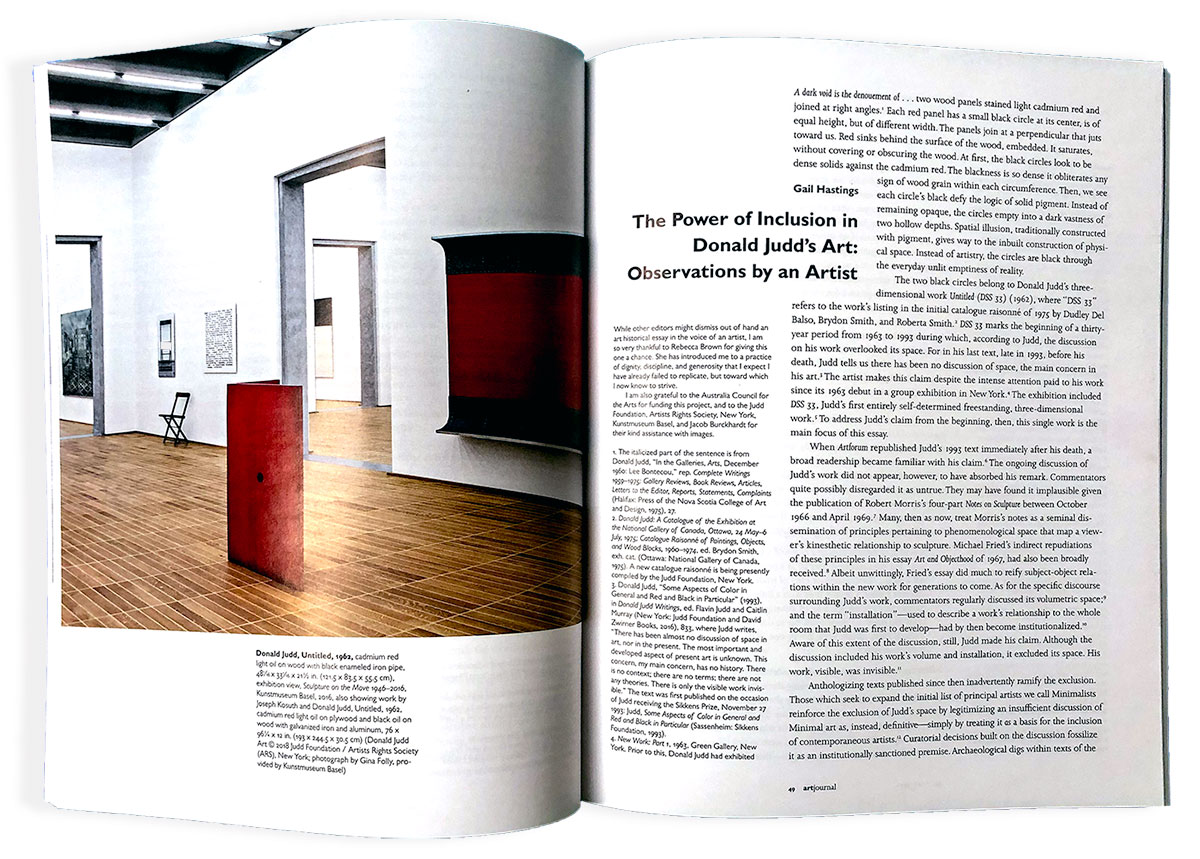
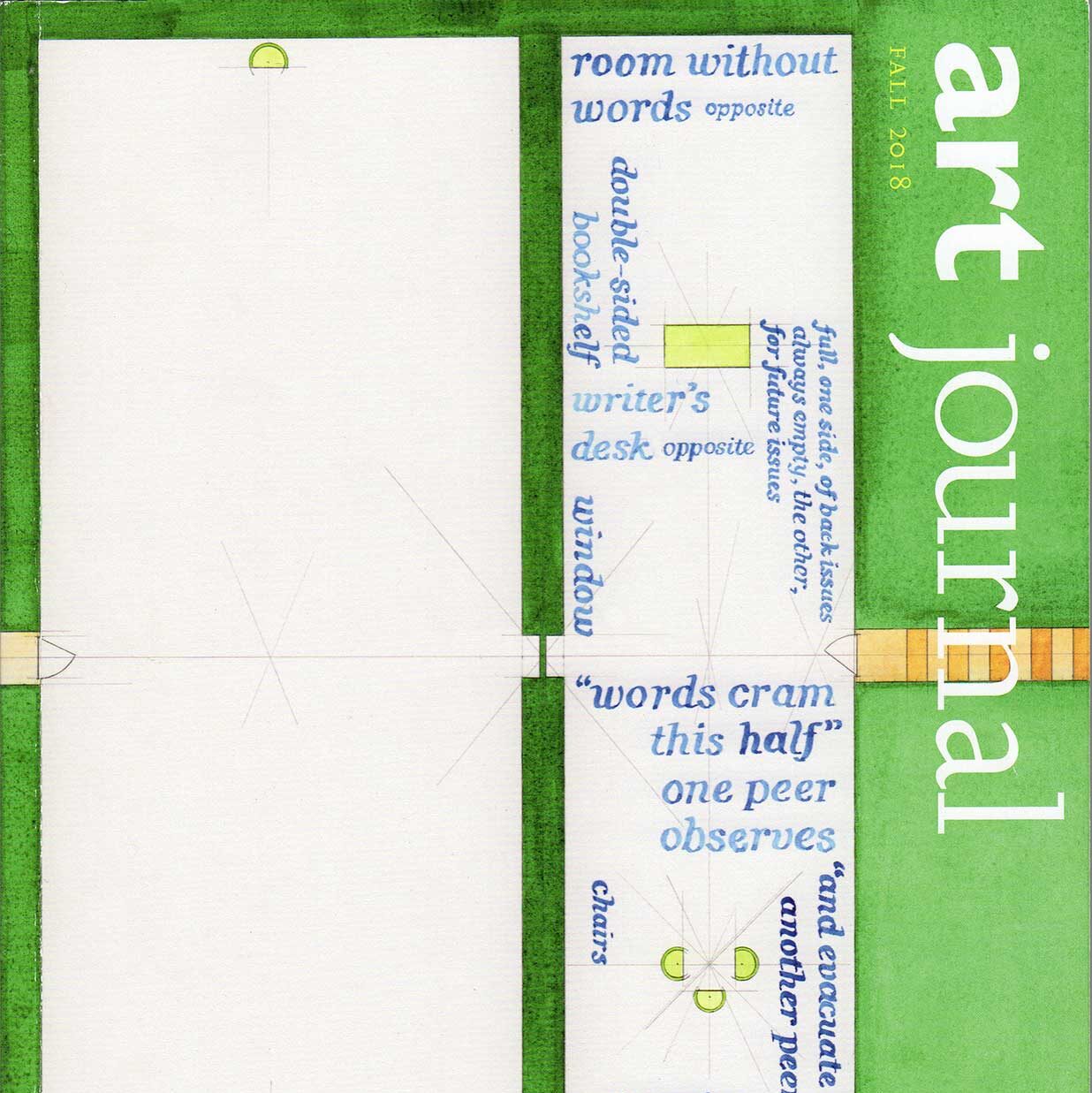
Art Journal, College Art Association, New York, Vol. 77, no. 3 Fall 2018
The Power of Inclusion in Donald Judd’s Art: Observations by an Artist, Gail Hastings, pp. 48-62. Artist’s Project: Space Practising Tools, Gail Hastings, pp. 63-75.
Gail Hastings notes that sometimes artworks seem to be reticent teachers, “muttering a lesson,” which we have to pry out of them. As both an artist and scholar reading the material and spatial in Donald Judd’s sculpture Untitled (DSS 33), Hastings rejects this metaphor, stating …
Rebecca M. Brown, ’In This Issue: Muttering and Listening‘, editorial, Art Journal, College Art Association, New York, Vol. 77, no. 3 Fall 2018.
Rebecca M. Brown writes: Editorial work involves listening, opening one’s sense to silenced voices, to the quiet whispering at the porous edges of our consciousness.Gail Hastings notes that sometimes artworks seem to be reticent teachers, “muttering a lesson,” which we have to pry out of them. As both an artist and scholar reading the material and spatial in Donald Judd’s sculpture Untitled (DSS 33), Hastings rejects this metaphor,
When the night has come And the land is dark And the moon is the only light we’ll see No I won’t be afraid, no I won’t be afraid Just as long as you stand, stand by me So darlin’, darlin’, stand by me, oh stand by me Oh stand by me, stand by me If the sky that we look upon Should tumble and fall Or the mountains should crumble to the sea I won’t cry, I won’t cry, no I won’t shed a tear
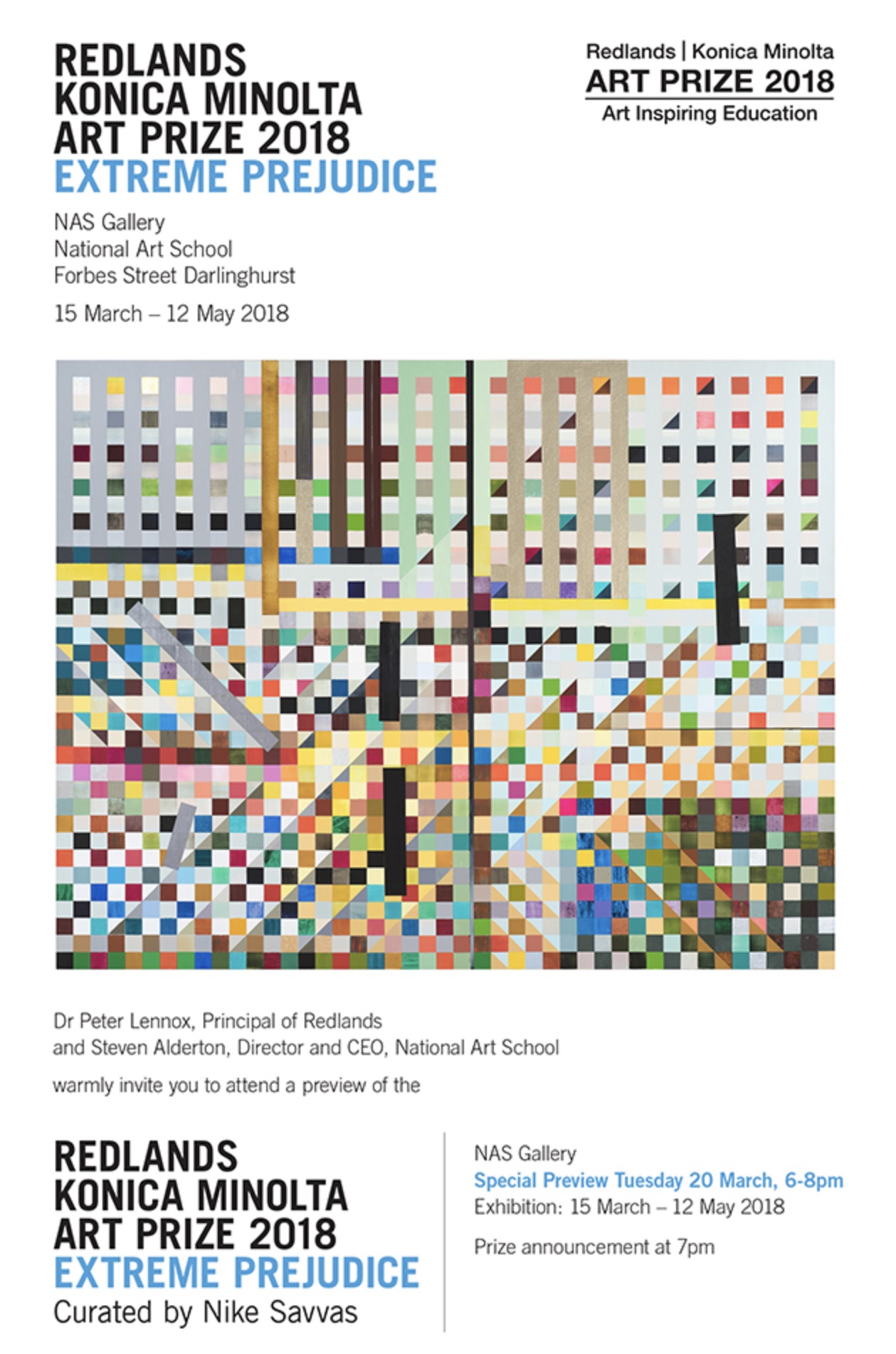
Gail Hastings and Adrian McDonald awarded 2018 Redlands Konica Minolta Art Prize
The judges for this year’s Redlands Konica Minolta Art Prize – Natasha Bullock (MCA Senior Curator), Judith Blackall (NAS Gallery Curator), Mark Harpley (Visual Arts Coordinator, Redlands School) and Fabian Byrne (Visual Arts Teacher, Redlands School) – announced the award at the opening of the exhibition of finalist works presented at the National Art School Gallery in Sydney.
Natasha Bullock said: “Gail Hastings’ work is playful and inventive, and distinguished by its aesthetic rigour. It is an exquisitely-made object, which questions the definition of minimalism, and the movement of everyday space.”
The prize exhibition will be held at the National Art School Gallery in Sydney from 15 March until 12 May 2018.
Nike Savvas writes, ‘I have selected artists whose practices evidence discriminating, uncompromising and highly individualist approaches to art making. In a cultural climate beset by hype, hits, corporatisation and swinging social agency, the next iteration of this exhibition titled Extreme Prejudice seeks to highlight the personal and critical imperatives that belie and drive such single-minded work’.
Judges of the Best Artist Book for the AAANZ Prize, 2017 — Martyn Jolly and Christopher LG Hill — write that this ‘publication pushes the format of Artist book the most, and is engaged with its format. As one of the few projects not heavily engaged with research as a format, it is important. It is good that art can step outside of a retrospective mode, and this does that engaging with media of it’s time but not for the sake of it’.
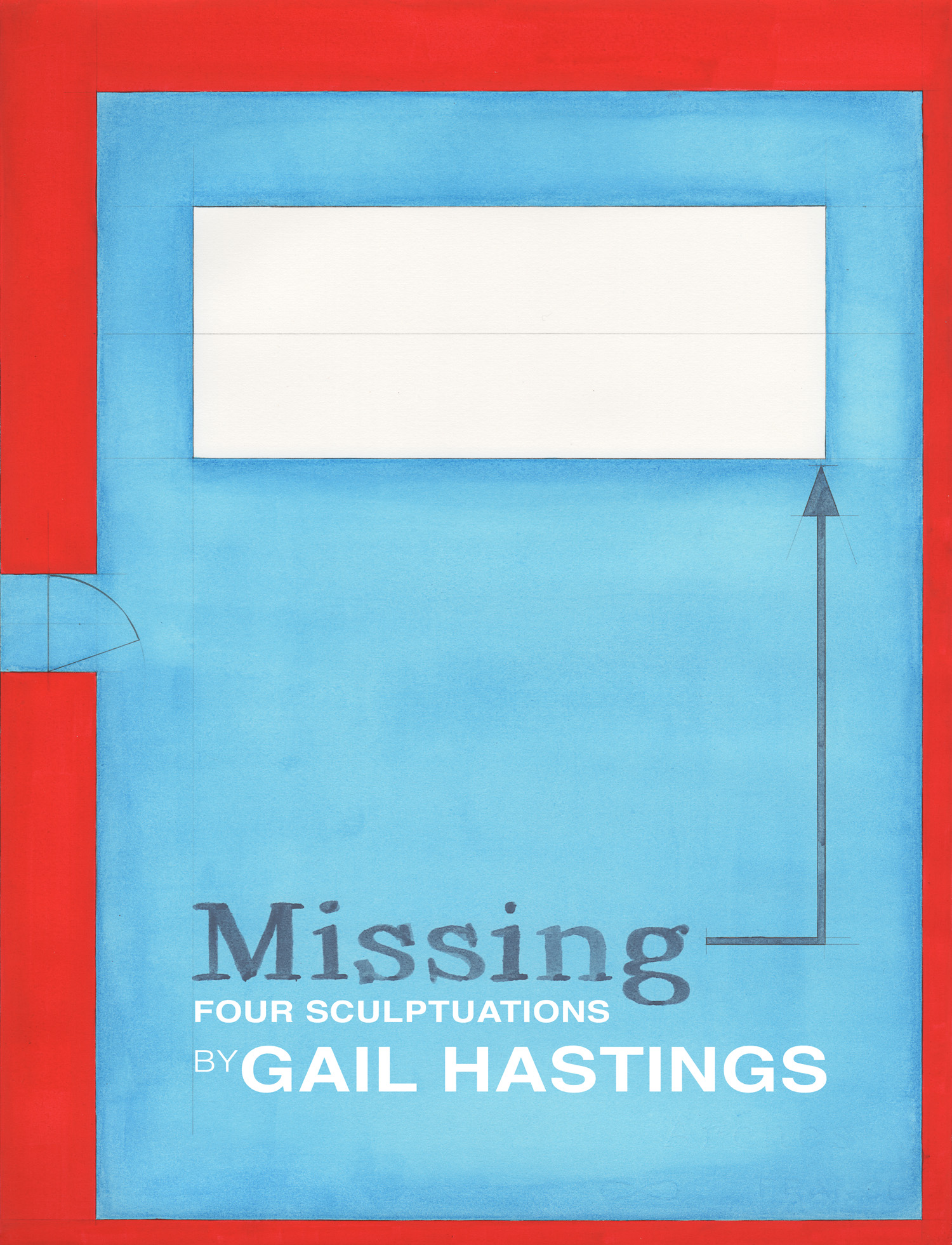
Missing includes a brief foreword by art historian Richard Shiff, who ruminates on how a ‘“copy” exists in two different modes, two different kinds of spaces, two different realms of experience’.
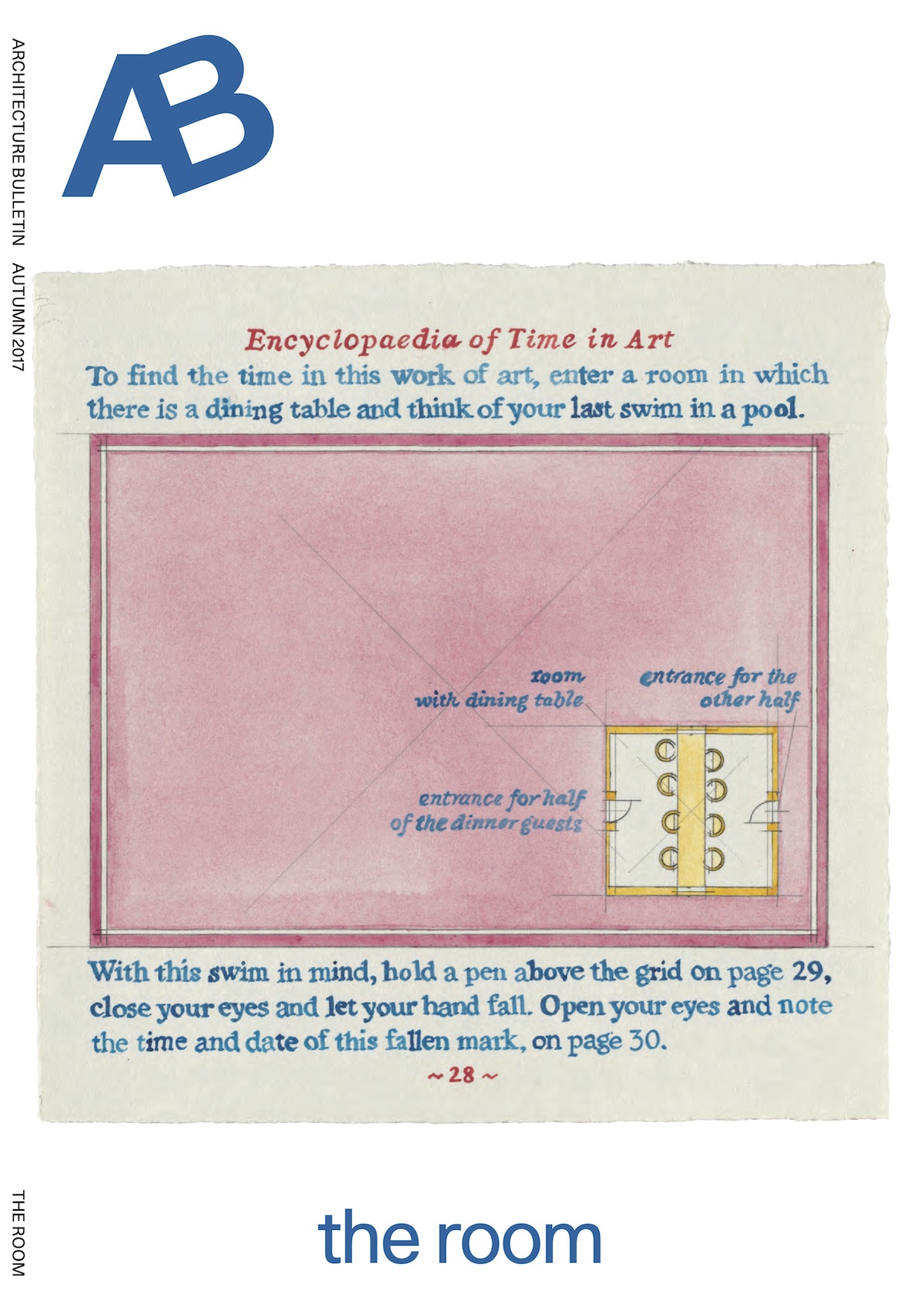
Gail Hastings‘ page 28 from ‘Encyclopaedia of Time in Art: pp. 28–30’ graces the cover of the upcoming Architecture Bulletin – The room issue, Autumn 2017, available in mid-March.
Most regard phenomenological space made popular in the 1960s as the only type of space introduced by Minimal art. Few are aware of an alternate self-determined space made by the art, itself, that is a concrete, material space. An account of this space is missing.
The six interviews of The Missing Space Project debate the cause of this oversight.
To describe what one sees is fundamental to being aware of what one sees. Without a vocabulary with which to describe material space one, effectively, cannot see it.
The Missing Space Project explores the potential development of a vocabulary with which to describe the differentiated space of art since its emergence in the early 1960s.
Interviews are with: Marianne Stockebrand, Egidio Marzona, Daniel Marzona, Gregor Stemmrich, Richard Shiff and Renate Wiehager.
Replica of an original space: yellow green and Replica of an original space: blue light are two wall sculptuations in the group exhibition ‘A Few Pieces’ at Taubert Contemporary in Berlin. Work by artists in the exhibition include: Lars Arrhenius, Geissler & Sann, Gail Hastings, Markus Linnenbrink, Mutter & Genth, Jan van der Ploeg, Markus Weggenmann, Beat Zoderer. The exhibition dates are 17/01/2015 to 07/03/2015. Taubert Contemporary is located at Lindenstraße 35, D – 10969 Berlin.
Gail Hastings travels to Berlin and New York to participate in a group exhibition at Taubert Contemporary and to interview participants for a project supported by an Australia Council Grant.
To make a work of timeless art, 1996, is in the MCA collection exhibition ‘Taking It All Away‘ curated by Natasha Bullock. ‘Diverse in form and character, the works in Taking it all away set the dynamics of space and time against the complexities of modern existence. Together, these works speak to the importance of art history and to the vigorous, evolving nature of contemporary art. The Museum of Contemporary Art Australia dedicates this exhibition to the memory of artists Gordon Bennett and Robert Hunter, who sadly passed away during its development.‘ The exhibition dates are 18/12/2014 to 22/02/2015.
Upcoming exhibition ‘Taking It All Away’ curated by Natasha Bullock at the Museum of Contemporary Art (MCA) will include a work of mine from the collection.
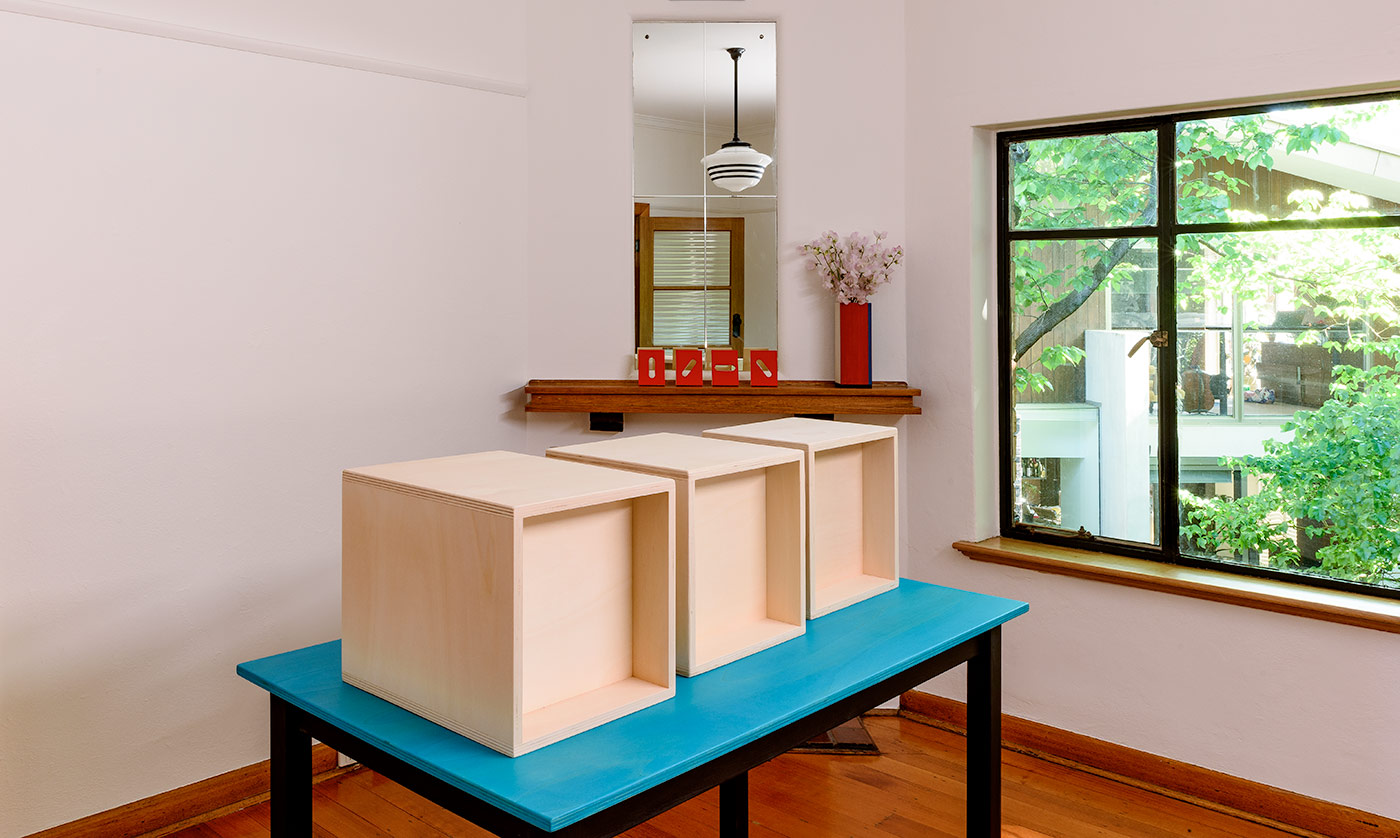
Image: Gail Hastings, Exhibition: To Do, 2014, acrylic on plywood, plywood, watercolour and lead pencil on paper, 185.4 x 225 x 225cm (photo: Sofia Freeman)
Exhibition: To Do
Closing Launch: Saturday 3 May, 4-6pm
with the work’s spatial score performed by clarinetist
Gail Hastings’ Exhibition: To Do is a ‘to-do list’ for making art not yet done, a task-at-hand still at-hand, except for the construction of storage shelves that await the art, aligned in the gallery along the Earth’s cardinal axes.
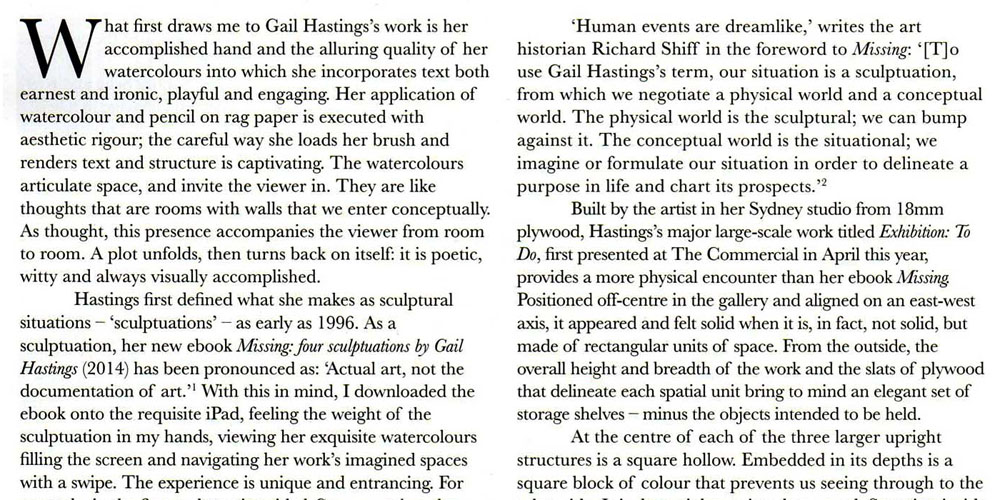
Hastings uses the term ‘sculptuation’ to define her practice. This is a term that marries ‘sculpture’ with ‘situation’ so as to shift focus away from the individuated sculptural object and towards the spatial scheme it delineates. […] We dip in and out of the space of the work; interpreting it from afar as distanced observers while simultaneously occupying territory contained within its circumference. Whether consciously or not, we are implicated in the work. We inhabit its topography. Can an e-book be enlisted to perform the same function as these object-based works? Can its screened images — floating inaccessible in the data cloud — coerce the viewer into the same tidal pull as their physical counterparts? […] Why should a virtual book ape the form of a physical book? Surely it can possess its own architecture and pioneer its own pathways. Hastings’ work not only recognizes the possibility of such an architecture, it lays the foundations.
Delicately rendered in watercolour with ruled pencil lines emerging from the edges of the translucent wash, these pieces depict the To Do list in question. One such reminder, the instruction: ‘Build racks in which to store the art after the exhibition’, speaks volumes about the established systems of the art world, and the particular approach artists must take when they create work which sits outside the conventionally commercial.
Cholé Wolifson, 19 April 2014.
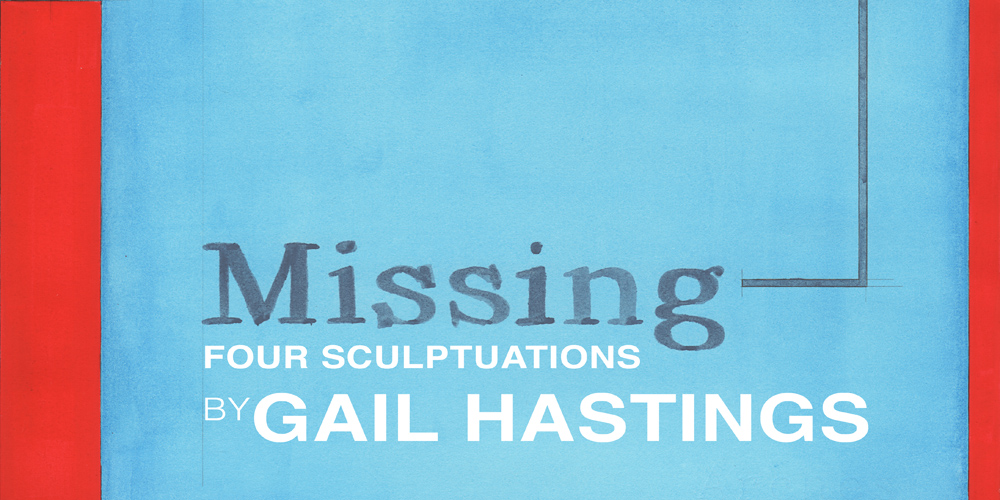
Corner caretakers, 2014, one of the four sculptuations in the ebook Missing purchased through iBooks, is also mentioned.
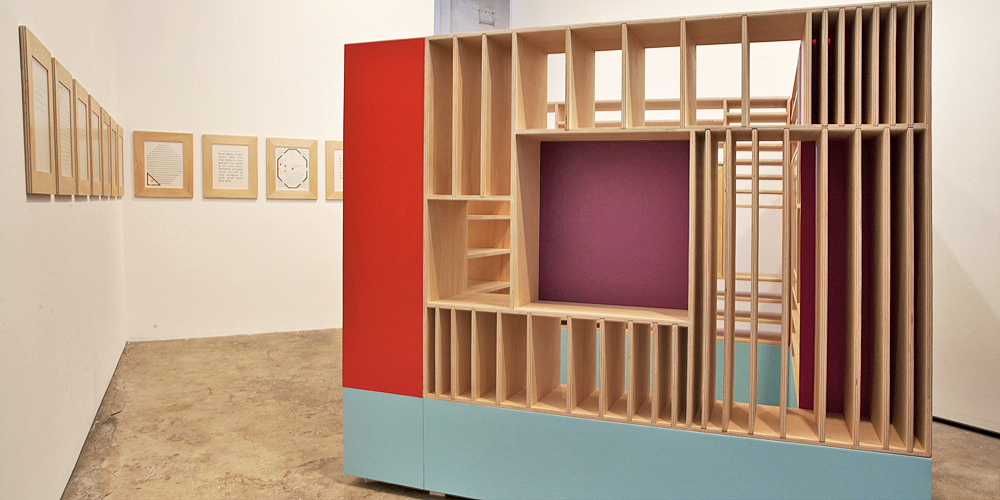
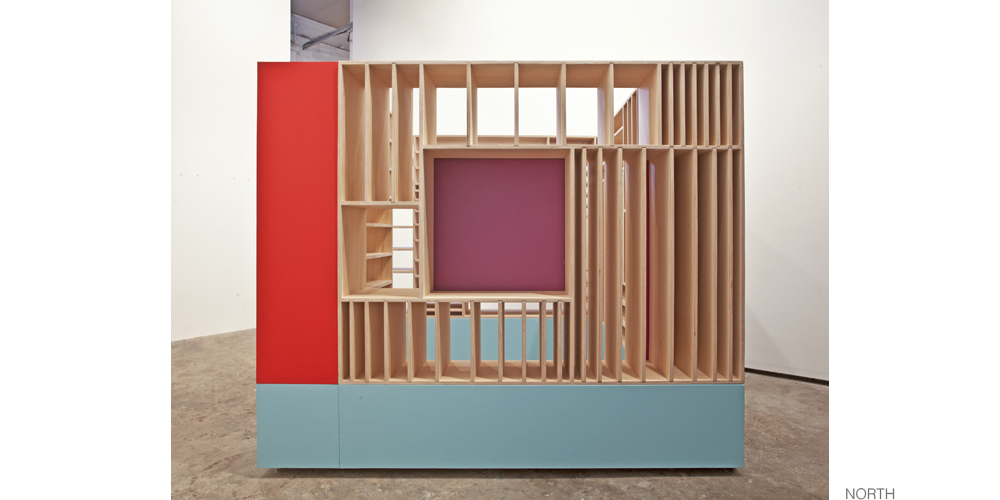
Images 1-4 Gail Hastings, Exhibition: To Do, 2014, acrylic on plywood, plywood, watercolour and lead pencil on paper, 185.5 x 225 x 225cm; image 5 exhibition installation view; images 6-7 Gail Hastings,Corner caretakers, 2014, watercolour and lead pencil on paper in plywood frames, 12 components, each 55 x 46.5 x 1.8cm (Corner caretakers is a sculptuation from Gail Hastings’ eBook, Missing, 2014)
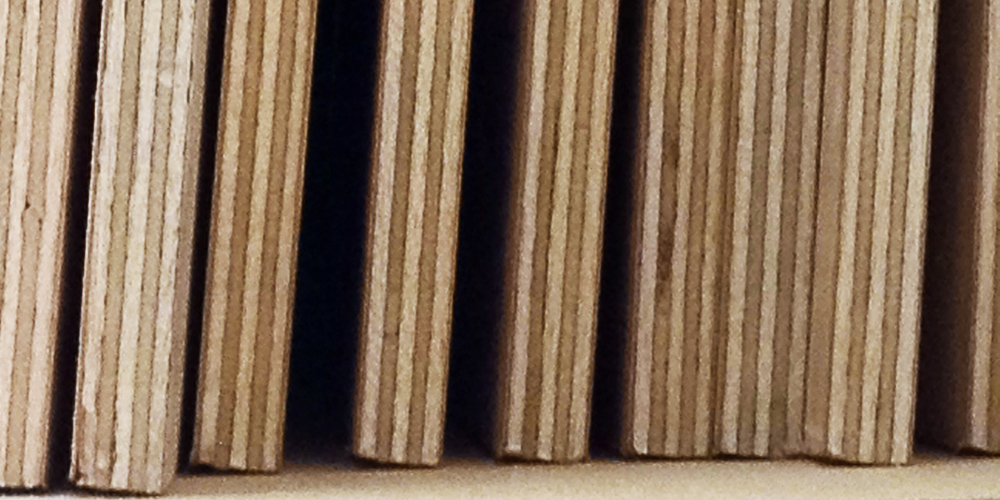
The four walls that make up Gail Hastings’ Exhibition: To Do are oriented within the gallery along the Earth’s axis — coordinates and a rudimentary geometry shared by all. Each wall bears geometric patterns of shelves — small units of space — made of intervals and intersections described and located along x, y and z axes. The pattern of spatial intervals has been determined by the material thickness of the wood used — 18mm; wherein solidity and space play interchanging parts (e.g. solid, space, space, solid, space, space, solid, space, space, solid …) along the height and length of each object. In these ways, Hastings has eliminated extraneous moments of decision-making, lending a sense of givenness to the exhibition but also its need to be made. […]
Space is generally thought of in its ideal form — as empty. Notions, such as needing space to breath, space to move, space to be free and outer space (uninhabited) point this way. In being empty, space is thought of as missing something, something that can fill it. It is why space is spoken of with such potential.
The conundrum, then, is how does one retain this potential when one makes art that creates space — an aesthetic space that is not missing something but is, instead, a something: a concrete thing?
Some time ago I was in a cafe in Melbourne, in St Kilda, enjoying a cup of coffee when I could not help but overhear two conversations on art taking place on either side of me. . .
20/200 is group exhibition at Sarah Cottier Gallery that marks 20 years and over 200 exhibitions for the gallery. Gail Hastings is delighted to contribute a sculptuation to the exhibition for having participated in the 1996 exhibition ‘Road to Love’ (20.03.1996–30.03.1996) curated by Mikala Dwyer. The gallery, then, was located at 36 Lennox Street, Newtown, Sydney. The two sculptuations by Gail Hastings included in the 1996 exhibition were untitled 1995 (four pages from the Encyclopaedia of Words), 1995 (private collection, Brisbane) and To make a work of forgetful art, 1996 (private collection, Brisbane). More on 20/200 can be found in the20/200 exhibition record and the Sarah Cottier Gallery website. (photo: habit’s pattern: orange and black, 2010)
With a foreword by art historian Richard Shiff—widely known for his writing on certain Impressionists while lesser known, yet just as profound, for his writing on the art of Donald Judd—Missing‘s52 pages include watercolour moments from the Encyclopaedia of Taking Care in Art, Encyclopaedia of Doubt in Art and Encyclopaedia of Looking for the Plot in Art.
‘Art frame: red’, 2011, by Gail Hastings will be on view in James Roland and Becky Spark’s contribution to Art Month’s Collectors’ Space..
Art Month Presents Collector’s Space
A hidden urban space filled with museum quality artworks never seen together in public before… or ever again.
Curated by Natalia Bradshaw, the Collector’s Space is a unique pop up exhibition which explores personal collecting journeys. Experience highlights from significant and diverse private art collections, free and open to everyone in March. …
The 2014 Collectors:
James Roland and Becky Sparks are a dynamic young couple with a unique collecting vision – they are committed to collecting the art of their contemporaries. Becky and James started actively collecting and supporting contemporary art in 2006. Since that time, they have amassed a significant collection of works, mostly Australian, with a deliberate focus on artists of their generation and younger emerging artists.
At 4pm, 07/02/014 I will be at The Commercial gallery to speak with people as they look at sides: red versus blue, 2009, currently on view in the group exhibition OUI we at The Commercial. GH
From the press release:
Gail Hastings will speak about her exhibited work, the sculptuation ‘sides: red versus blue’and the creation of space. Hastings’ work is both subject and object. It expounds itself. At the same time as being itself, it explains itself. Within this spatial circuit a viewer finds themselves where, perhaps, they least expect to be.
Happy to announce that space holder for a yellow, white and red space will be in the upcoming exhibition at MUMA—Direct Democracy—opening 26/04/2013 https://gailhastings.au/event/direct-democracy/ …
Let me first describe how I met you. One of the homeless at St. Canice’s had taken up daily station outside my window where I sat to write my PhD, smoking while watching from just a couple of metres as though I were a TV. Unable to work, I one day asked if he might sit further back. Through punctuating puffs of his cigarette he dramatically said, ‘Darling, everyone tells me to move on’: with which he stayed put. I first met you when I knocked on your door to complain.
Unexpectedly, you invited me in. After some talk you proceeded to show me the art you had inside. The last was by you. Hanging on the staircase landing, vertical, its thick rustic wooden structure was clad with slate tiles originally transported from Wales 130 years ago for St Canice’s roof, but replaced during renovations. Guttering ran from one side to the other along the lower edge of the piece, as though it still functioned.
Stunned by the art, by our discussion, by the visit – generally — for not following the expected pattern of making a complaint, after giving me your direct line and telling me to phone whenever the problem reoccurred, I trundled out the door in dazed awkwardness. Subsequently, I admit, I took complaints to the office next door whereupon I met Elizabeth and where the procedure was a little more typical.
Once you mentioned whenever you read a typo in a poem reproduced in the church’s bulletin, you feel it physically, as though hit. Can you tell us how art came to be in your life?
Stephen Sinn: My sister Maryrose is a sculptor. My mother didn’t buy art so much as wear it. She would always wear beautiful French clothing, she had a lot of style and we had beautiful homes. All of us have, I think, inherited from my parents a sense of order, a sense of beauty, a sense of space, a sense of hospitality.
Art is often about hospitality – inviting people into a space that is beautiful, creating that space.
In particular, though, I owe my sister Maryrose a great deal. She used to say to me she felt things and she taught me actually to look, to see and to feel things. I remember once sitting at a restaurant with her and someone was pulling a branch off a tree and she was feeling it as though her arm was being pulled off. She taught me that sense of connectedness with our world and the beauty of it that surrounds us.
GH: Was the engagement always easy in that you might have at first found your sister’s reaction strange?
SS: No, it was an insight into how she felt. Yet, engagement with art is never easy, it is always challenging – someone wants you to see differently. That’s what I love about it, it is like coming across something new for the first time. It opens up a whole new world that I hadn’t been in before.
It also challenges me. I can look at something and feel what on earth is happening here – I am not engaged, I don’t know where to start. At which time I like to think two things. Someone has put this out – my sister used to use the language ‘putting a work out’, which is to put yourself out. Someone has put themselves out here, so I want to pay attention just as I would to you, any person that I am talking with, which is the same relationship you have with a piece of work. You give that person space, you become open to that person, you want to attend.
Secondly, when I get a bit stumped I like to think of clothes and what would that piece of work look like as someone’s clothing – you know, as a jumper. So that helps me to see that it is not so serious. People put all sorts of things – patterns and designs – on their clothing and you don’t think twice, just ooh, I like that. It doesn’t have to be important. That’s what helps me when I am stumped.
You notice how artists wear black because they don’t want to make a statement. You are making a statement when you wear something.
In the end, it is about care, it’s about attentiveness, it’s about beautiful materials, it’s about proportions, it’s about a statement, it’s about passion – someone wanting to say something and really say it. It’s about so much.
When I once worked in a factory a poor unfortunate carpenter who probably couldn’t make his living as a carpenter, was working with a gun machining sections of particle board into cheap furniture. Now he could make furniture, he had the skills, but he had to do this. He couldn’t put his heart into his work. Artists put their heart into their work.
It diminishes us to surround ourselves with work that is just opportunistic, that is without any thought for the person using it.
It is a great delight, for instance, to have a carpenter working at the moment to restore the old school chairs that were built in the 1940s. They are wooden, fantastic wood veneer moulded onto strong frames that you could never buy now since they are all steel. The kids had torn bits off the corners while bored in class.
Now, you could just throw them away, but the carpenter has taken the veneer seats off, rounded off the torn edges and turned the seats around and you’ll get a hundred years from those chairs. Who wants to buy plastic chairs – yet, I almost did.
GH: What struck me about the piece you’d made, where a small portion of the outside, the church’s roof, had been brought inside, was that that which had given shelter for over 100 years was now, itself, being sheltered: the outside protected inside, the excluded included, the trashed treasured.
The piece, however, has since changed, the guttering removed. Now more geometrically abstract, hues of steely tinted dark greys aren’t painted but are real slate, without illusion. Each tile is generally regular while particularly irregular. Yet, this irregularity becomes regular in comparison to the randomly sprouted dried moss florets still clinging to the tiles. The spiralling centrifugal force of the moss opposes the geometry of the tiles. Nevertheless, overriding similarities make fragile a cacophony of striking differences. What brought about this change and has there been a broader change for you, more generally?
SS: I have to admit here, in terms of change, what happened is the guttering got knocked off when we were moving beds up and down those stairs and I haven’t been able to put it back on yet. I’ve still got it because, you know, that guttering was original, it is copper from the 1880s, and I’ve kept the old handmade nails used to make the piece.
But you are right, it does still look interesting. I love that piece. Mind you, I got Ray Ashfield the roofer to build it because he knows how to do it. I didn’t build it. I had the idea, but he understood the slate.
Not only did the slate come from Wales, but it came from the ground in Wales — just as we return to the ground. That’s how elemental that product is. It came across as ballast, for boats. So I thought it was interesting to see its history as material, beautiful material, as a piece; how it has aged over a hundred years. You can see the moss, as you have mentioned. You can see the watermarks on the copper guttering. The slate itself is a lovely surface — I kind of fell in love with it, and Ray made it.
GH: Likewise, has your understanding of you being at St Canice’s perhaps changed by accident — just as the guttering was knocked off unintentionally?
SS: Certainly, over the years, I have changed. My understanding of myself at St Canice’s has changed, yeh, that’s true. I suppose it’s like anything. When you come into a community, you wonder where’s my place here. You might have a role – I’m the priest – but it’s hard to find a place immediately.
What is much more to the forefront now isn’t that question, but these people in the community: what a sacred, core group of people they are and how their presence makes me grow. Their presence has grown bigger and stronger and it has taken me into their graced field, you could say. That takes time. So it doesn’t matter about making my place anymore because they have given me a place.
GH: During mass, when you walk towards the pulpit to read the gospel and give your homily, you are often barefoot. While this may be to evoke the simplicity of attire associated with Jesus Christ, I wonder also whether it allows you to have physical contact with the place from which you speak – a grounding of your spirituality. Is this so? Is it something you have always done? Has it ever raised eyebrows at St Canice’s, have you received comments?
SS: Look, I often receive comments, I must say. I didn’t make a deliberate choice. I can’t remember the first time I did it.
The thing I do remember is my friend Chris Laming came back from India. I was teaching at St Aloysius’ College boys school. There was a big school mass and he was the celebrant. He came in with bare feet and I wept. It was just so beautiful. For him, though, it was the way they always did it.
So that was the first thing. I think the second thing is — when I was at Corpus Christi Greenvale, a home for homeless alcoholic men so they were off the streets, I would walk into the chapel dressed in vestments as a priest, and I remember once one fellow calling out that I looked like a tranny.
For people from the streets, you do look a bit strange as a priest, dressed in all that gear. I just felt, no matter all the gear I am wearing, I am a human being. So I take my shoes off which, when you think about it, are big clodhoppers with mud and dirt that have no place when you come into the presence of the great mystery – it’s just a thing to do in reverence.
The scripture talks about Moses coming before the burning bush and, in a sense, the Eucharist is that bush in whose presence you take your shoes off. It’s exposure to his Presence. Behind this dressed up to the nines person is a human being of the earth. It connects me to the earth. Instead of roaming around in all this garb, it connects me, it grounds me to the earth. They say when you pray, sit on the earth — because that’s truthfulness.
They’re the sorts of things behind it. It’s a statement.
GH: And the comments you’ve received?
SS: Oh, people always ask why, but I just say why not – that’s the way it is. So it’s not a head thing, it is an emotional thing: originally, I wept when I saw my friend Chris. He is such a beautiful, vulnerable and truthful man.
I wish we could all leave our shoes at the door of the church but, you know what, the people from the streets would pinch them. I have often thought of putting up little niches for people’s shoes, it would be good, but they would get pinched for sure.
GH: You have mentioned the care within which you grew up; care, in part, expressed through the environment, the houses, you lived in, the objects that surrounded you, the care your mother took with her clothes. During your time at St Canice’s you have put a lot of creative effort into not only restoring the church but enhancing its beauty. Can you describe for us some of the changes made and their importance?
SS: The first thing I wanted to fix up was the kitchen. It was a cockroach infested health risk. It was not pleasant to be in and it was not well organised; it wasn’t laid out in a manner that was friendly to people and efficient. A floor with cracks in it is difficult to clean and to keep clean. I could go on.
But, you know, I’ve had such great support from people. Headed by Greg Woodburne, five or six parishioners and their friends, some old school friends of Greg and some of the boys I used to teach at school who put on a fundraiser, did the job on that old kitchen. Now, we basically have a new kitchen that is very satisfying to go into, it is quite beautiful. Along the way, I learned a lot about kitchens. Now, we can have parish functions there as well as provide hospitality for street people.
So my focus was first on that and the retreat centre for refugees – to get both places up and going.
The church is the last thing I got to, actually. Not the least important, but if you have one or two hundred homeless people coming for lunch a day, you want to do it properly. You don’t want them to eat in a place that is not fit for them and for the people who volunteer. People are happier there because it is such a beautiful area to be in.
The church, itself, has grown into being something I have really enjoyed because it has such good bones. Someone there in the 1880s, an architect John Bede Barlow, put his heart and soul into that building. Yet, the building had become obscure because of all the damp and water running down the walls, the leaking, the lighting – fluorescent lighting and aluminium additions. Tallow floorboards as thick as my fist were covered in lino that was all marked.
As with most things, I am sure every renovator started by saying I’ll just do the guttering. Well, the guttering became the roof that became the cleaning of the walls that became moving this and changing that and grew into being something I had never really quite imagined.
I think renovations need to be done by someone who loves the building. Fortunately, I had a wonderful architect advising me out of the goodness of his heart, John Moran. And he loved the building. If it is a business for someone where, basically, it is their pay and they don’t like that building, you can get lost. They are only interested in trying to produce money and that puts pressure on me. In the end, I left that.
Basically, I learnt to do it bit by bit myself with advice from friends. We did some very fundamental things like the roof, the guttering, the flashings, the lighting, the sound, the floor. Cleaning made a huge difference, especially with the internal brickwork and stonework. You could see the architect highlighted light and darkness with a dark roof against whitish bricks that had become dark. Once they were cleaned, the whole place became luminous. You could see what the architect was trying to do.
It is wonderful for me to see how beautiful it is now, for people to really experience that. No one walks into that church without feeling it is something quite special.
Yet, you know, it’s not the building, fundamentally, it’s actually the community that prays there. There is a real sense of community, prayer and a presence of the divine.
The space encourages that feeling of love.
GH: In terms of a much more broader community, thankfully, the face of mental illness has drastically changed of late so that those who suffer it do so without stigma. Yet, an extreme mental illness such as schizophrenia is, however, still highly problematic — socially — for a host of reasons, let alone its lack of cure. While denial is often a corner stone of schizophrenia, it is easy for us to criticise those in denial given the tragic circumstances schizophrenia can lead to, while at the same time ignoring our own practise of denial in our so-called healthy lives where it causes indifference, hardship, injustice and isolation.
Having felt deeply for so many people who suffer the repercussions of denial — in your work at Corpus Christi before coming to St Canices and then, again, at St Canices – have you a hint at how we might recognise denial in ourselves; and how we might benefit if we were fearless in facing it?
SS: My critics would say that is the one thing I practise, denial. When I see the street people sleeping on the steps with their mattresses and clothing and dogs I don’t see something squalid, messy, disgraceful. I see something beautiful. In doing so, I am said to be in denial and people get very angry with me.
With people with mental illness, we say they are in denial because we can see something they refuse to admit e.g. that they are schizophrenic. Their refusal is a part of their pathology; they blame someone else for their grievances.
We can be in denial about the deepest needs we have — to be loved, to receive and give love, to be affirmed. When you see two people who are happy and in love with each other you can see that their deepest needs are being met. They can say whatever they need without fear of rejection – there’s no fear.
GH: This denial is not only active privately but also publically in corporate Australia where liability appears to rest on any admission of fault to cause a loss of face, a loss of status, a loss of possible promotion, a loss of profit. Denial, one might say, keeps the cogs of society turning.
Yet, if society was more fearless in facing denial both publicly and privately, might this create a better role model for schizophrenics to face their illness, mend and save themselves and loved ones from so much tragedy?
SS: Schizophrenics are often people who have set up – because their deepest needs haven’t been met – a persona and way of life that is so far away from their feelings and needs. They may not remember them anymore. They just live out of this kind of created persona they have made, that they have built up so they can remain in control. People in denial are always controlling and in control. When you see two people loving one another, there’s no control, they give one another space to be free.
There is that theory that schizophrenics are schizophrenic because there is no place for them to settle. In our society, you have to be so sophisticated, so skilled in the survival skills and you become less than human to survive. With people who are so-called successful you sometimes think hells bells, I wish they were happy, I wish they were human being. They have learnt a lot of skills to do the survival thing but have I met someone? For schizophrenics, where can they land within all this – they have to protect the persona they have created to remain in control. In doing so, of course, they lose touch with any sense of self and groundedness.
GH: Central to works entered into Archibald Prizes is the subject of the work, the person portrayed. That is to say the sitter of a portrait is, literally, central in the picture plane. In the entry, however, I submitted the work’s centre is not located within this symbolic space of privilege, but outside the picture plane in real space, the space in which we stand but where, generally, few look for meaning. This parallels the movement of compassion I have observed of you where, rather than be found in the priestly position of meaningful privilege you are found on the other side, on the side of the other you face – in their space with them, recognising them. In this way, meaning happens in the space within which we stand.
I raise this as many may think recognition happens daily when instead, it is rare. One can spend much time with another but fail to recognise them. Knowing their name and perhaps much more, the gossip, doesn’t mean one recognises them. In a recent YouTube clip entitled ‘You know him’ you describe a woman who frequents St Canice’s, who was at the centre of a raucous upon your return from a retreat. It seemed to me you recognised her, you went beyond yourself to her side to call for her but found she wasn’t there. In speaking with her it seemed she recognised this too, recognised she was at odds with herself. What does the encounter mean for you?
SS: It’s everything. Whether it is called being alongside the other person or being inside their shoes, it is another way of saying love, which means sharing your life. The thing about people living around here on the streets is that I don’t really stand in their shoes – I don’t sleep with them on the steps. Generally, I am not in their position.
Yet I think they know that I am on their side and that I’ll defend them, I’ll give them space so that, if need be, they know they can come to me and I’ll give them a hearing. It’s my life with them.
Just recently a woman on the streets died and her family don’t want anything to do with her, they are not prepared to pay anything for her funeral. So her friends have come to me because they know I’ll be in their corner. I think people need faith in that solidarity. They fundamentally are there for one another, but they do need the outsiders to be on their side, too.
The real reason why they matter so much is that they, first of all, challenge my prejudices and, secondly, they call forth my generosity. They actually ask me or place me in the position of asking myself whether I live for my self, my family, friends — or for others. They challenge me. Not unlike a work of art. I know I can’t and certainly don’t want to change them.